

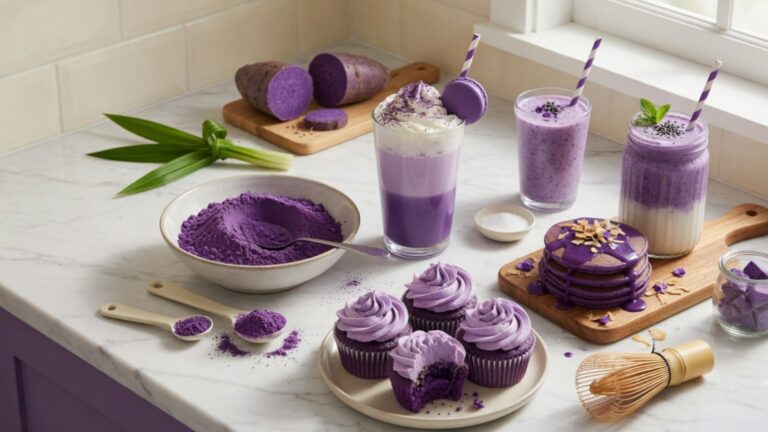
For home bakers, café owners, dessert lovers, and anyone curious about colourful natural ingredients, ube powder is one of the most exciting pantry staples to explore in 2026. Made from purple yam, ube powder brings a naturally vibrant violet colour, mild sweetness, and subtle nutty-vanilla flavour to drinks, cakes, pancakes, cookies, ice cream, and traditional Filipino desserts. It is especially popular because it offers a convenient way to use ube without peeling, boiling, mashing, or storing fresh purple yams.
Ube has long been loved in Filipino cuisine, where it appears in desserts such as ube halaya, cakes, ice cream, pastries, and festive sweets. Today, it has become popular worldwide because it looks beautiful in photos, works well in modern recipes, and adds a distinctive flavour that is different from taro, purple sweet potato, or regular yam.
This guide explains what ube powder is, how it tastes, how to use it, what to check before buying, and how to store it properly for the best results.
What Is Ube Powder?
Ube powder is made by drying and finely milling purple yam, also known as ube. The result is a shelf-stable powder that can be added to recipes for colour, flavour, and texture. It is commonly used in baking, drinks, desserts, and café-style creations.
Unlike fresh ube, the powder is easier to store and measure. This makes it useful for people who do not have regular access to fresh purple yam or want a consistent ingredient for repeated recipes.
Ube powder may be used in:
- Lattes
- Smoothies
- Cakes
- Cupcakes
- Cookies
- Pancakes
- Waffles
- Ice cream
- Ube halaya
- Bread and pastries
- Mochi-style desserts
- Buttercream and frosting
- Dessert sauces
Not all ube powders are the same. Some products may contain only dried purple yam, while others may include sweeteners, flavouring, colouring, or additives. Always check the ingredient list if you want a natural or organic option.
What Does Ube Powder Taste Like?
Ube powder has a gentle, naturally sweet flavour with earthy, nutty, and vanilla-like notes. It is not usually overpowering, which makes it easy to pair with milk, coconut, vanilla, cream cheese, white chocolate, condensed milk, butter, and baked goods.
Many people compare ube to sweet potato, but the flavour is usually softer and more dessert-like. It is also different from taro. Taro tends to be starchier and milder, while ube has a more recognizable purple colour and sweeter aroma when prepared well.
Because ube powder is subtle, recipes often include sweetener, milk, coconut milk, vanilla, or butter to bring out its best flavour.
Ube Powder vs. Fresh Ube
Fresh ube and ube powder can both be used in recipes, but they behave differently. Fresh ube has moisture and needs to be cooked, peeled, and mashed before use. Powder is already dried, so it is more concentrated and needs liquid to rehydrate.
Fresh ube may offer a more traditional texture in some recipes, especially ube halaya. However, powder is easier for everyday use because it is shelf-stable, lightweight, and quick to measure.
Ube powder is ideal when you want:
- Easy storage
- Faster preparation
- Consistent colour
- Simple measuring
- Less waste
- Year-round availability
- Convenient café or bakery use
For best results, some recipes require the powder to be mixed with warm liquid first. This helps reduce clumps and improves texture.
How to Use Ube Powder in Drinks
Ube drinks are one of the most popular ways to enjoy purple yam powder. Ube lattes, iced ube milk, smoothies, milkshakes, and bubble tea-style drinks all benefit from the powder’s colour and flavour.
To make a basic ube latte, start by mixing ube powder with a small amount of warm water or warm milk to create a smooth paste. Then add steamed milk, cold milk, or plant-based milk. Sweeten to taste with sugar, maple syrup, condensed milk, honey, or another preferred sweetener.
Helpful drink tips include:
- Whisk the powder into a paste first
- Use warm liquid to reduce clumping
- Add vanilla for a dessert-style flavour
- Try coconut milk for a tropical taste
- Use a milk frother for a smoother texture
- Adjust sweetness gradually
- Strain if you want an extra-smooth drink
For iced drinks, prepare the ube base first, then pour over ice and milk. This helps the powder blend better.
Ube Powder for Baking
Ube powder works beautifully in baked goods because it adds colour and a gentle flavour. It can be used in cakes, muffins, cookies, brownies, pancakes, waffles, doughnuts, bread, and pastry fillings.
When baking with ube powder, remember that it absorbs moisture. If you add too much powder without adjusting liquid, the recipe may become dry or dense. Start with a small amount and test the texture.
Good baking uses include:
- Ube sponge cake
- Ube cupcakes
- Ube cookies
- Purple pancakes
- Ube cinnamon rolls
- Ube cheesecake
- Ube buttercream
- Ube loaf cake
- Ube brownies
- Ube-filled bread
For stronger flavour, pair ube with vanilla, coconut, butter, cream cheese, or white chocolate. These ingredients help highlight the natural sweetness of the purple yam.
Ube Powder in Filipino Desserts
Ube is deeply connected to Filipino dessert traditions. One of the most famous recipes is ube halaya, a thick purple yam jam often made with milk, sugar, and butter or coconut milk. It can be eaten on its own or used as a filling and topping.
Ube powder can also be used in modern versions of traditional desserts such as:
- Ube halaya
- Ube ice cream
- Ube cake
- Ube pandesal
- Ube crinkles
- Ube flan combinations
- Ube dessert bars
- Ube pastries
When using powder for traditional recipes, rehydration is important. The texture should be smooth and fully blended before cooking or mixing into desserts.
Is Ube Powder Healthy?
Ube powder can be part of a balanced diet, but it should not be treated as a miracle food. Purple yam naturally contains carbohydrates, fibre, and plant compounds that contribute to its colour. Depending on the product and processing method, it may also provide small amounts of vitamins and minerals.
However, the healthiness of an ube recipe depends on the full ingredient list. An ube latte with a lot of sugar or a rich ube cake with frosting is still a sweet treat. The powder itself may be naturally derived, but recipes can vary widely in calories, sugar, and fat.
For a more balanced approach, use ube powder in:
- Smoothies with fruit and yoghurt
- Oatmeal
- Chia pudding
- Unsweetened lattes
- Wholegrain pancakes
- Lightly sweetened desserts
Always check product labels for ingredients, allergens, and nutrition details.
How to Choose Quality Ube Powder
Choosing quality ube powder makes a big difference in flavour, colour, and recipe results. A good product should have a clear ingredient list and provide enough information about how it is made and stored.
Before buying, check:
- Ingredient list
- Whether it contains additives or colouring
- Country of origin
- Colour and aroma
- Packaging quality
- Storage instructions
- Best-before date
- Whether it is sweetened or unsweetened
- Texture and fineness
- Suitability for baking or drinks
If you want full control over your recipe, unsweetened ube powder is usually the most flexible option. Sweetened mixes may be convenient for drinks but less adaptable for baking.
How to Store Ube Powder
Proper storage helps preserve quality. Ube powder should usually be kept in a cool, dry place away from direct sunlight, heat, and moisture. Once opened, the pouch or container should be sealed tightly.
Storage tips include:
- Keep it airtight
- Avoid humid areas
- Use a clean dry spoon
- Do not store near strong-smelling foods
- Follow the package’s best-before date
- Reseal immediately after use
- Check for changes in smell, colour, or texture
If moisture enters the container, the powder may clump or spoil faster. Always follow the manufacturer’s storage instructions.
Common Mistakes When Using Ube Powder
Ube powder is easy to use, but beginners often make a few mistakes.
Common mistakes include:
- Adding powder directly to cold milk without mixing first
- Using too much powder in baking
- Forgetting to adjust liquid in recipes
- Expecting it to taste like artificial ube flavouring
- Confusing ube with taro or purple sweet potato
- Buying sweetened powder without realizing it
- Storing it in a humid place
- Not whisking enough for drinks
The best approach is to start small, mix thoroughly, and adjust based on taste and texture.
Creative Ube Powder Recipe Ideas
Once you understand the basics, ube powder becomes very versatile. It can be used for both simple home recipes and more polished café-style creations.
Try these ideas:
- Iced ube latte with coconut milk
- Ube overnight oats
- Ube protein smoothie
- Purple pancake stack
- Ube cream cheese frosting
- Ube white chocolate cookies
- Ube milk bread
- Ube chia pudding
- Ube cheesecake bars
- Ube ice cream topping
Its colour makes it especially useful for birthdays, brunch menus, dessert boxes, and social media-friendly recipes.
Conclusion: Why Ube Powder Belongs in a Creative Kitchen
Ube powder is a convenient, colourful, and versatile ingredient for anyone who loves baking, drinks, desserts, and creative cooking. It brings the natural purple beauty of ube into everyday recipes without the extra preparation required for fresh purple yam. Whether you are making an ube latte, cake, smoothie, halaya, frosting, or café-style dessert, ube powder can help create a unique flavour and eye-catching presentation. For the best results, choose a quality product, check the ingredient list, mix it properly, store it carefully, and experiment with recipes that balance colour, texture, and taste.
FAQs
What is ube powder?
Ube powder is dried and finely milled purple yam used to add natural purple colour and mild sweet flavour to drinks and desserts.
Is ube powder the same as taro powder?
No. Ube comes from purple yam, while taro is a different root vegetable with a milder flavour and usually lighter colour.
How do you use ube powder in drinks?
Mix it with a small amount of warm liquid first to form a smooth paste, then add milk, ice, sweetener, or other ingredients.
Can ube powder be used for baking?
Yes, ube powder works in cakes, cookies, pancakes, bread, frosting, and pastries, but recipes may need extra liquid.
Does ube powder have added sugar?
Some products are unsweetened, while others may contain sugar or flavouring. Always check the ingredient label before buying.
How should ube powder be stored?
Store it in an airtight container in a cool, dry place away from sunlight and moisture, following the package instructions.


