

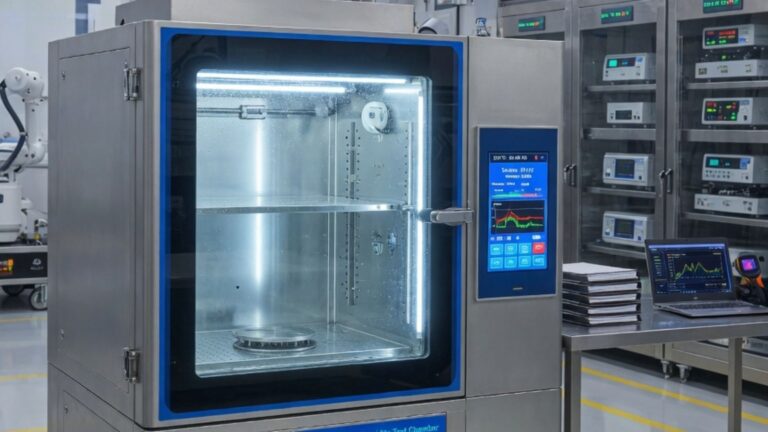
In today’s highly competitive and regulated manufacturing landscape, ensuring that a product can withstand the rigors of its intended environment is not optional—it is a fundamental prerequisite for market survival. From extreme heat and freezing cold to oppressive moisture and arid dryness, environmental stressors are the primary culprits behind premature product failure, warranty claims, and catastrophic safety hazards. To mitigate these risks, engineers rely on a Constant Temperature And Humidity Test Chamber to simulate real-world climatic conditions within a controlled, repeatable laboratory setting. By subjecting materials, components, and fully assembled products to accelerated aging and thermal cycling, manufacturers can identify design flaws long before mass production begins. OTS Technik has established itself as a premier provider of these sophisticated testing solutions, delivering equipment that empowers industries to achieve uncompromising quality assurance and strict regulatory compliance.
The Science Behind the Constant Temperature And Humidity Test Chamber
Understanding how these chambers function requires a brief look at the thermodynamic and mechanical principles that govern environmental simulation. A climate chamber is essentially a closed-loop system designed to manipulate two of the most critical environmental variables: temperature and relative humidity.
Precision Temperature Uniformity and Control
Temperature manipulation is achieved through a combination of robust heating elements and mechanical refrigeration systems. Heating is typically executed via high-efficiency nickel-chromium wire heaters, which provide rapid and responsive thermal escalation. Cooling, on the other hand, relies on vapor-compression refrigeration cycles, often utilizing cascading compressor systems to achieve extreme sub-zero temperatures. The true measure of a chamber’s quality, however, is not its absolute temperature range, but its temperature uniformity. OTS Technik engineers their chambers with advanced aerodynamic airflow designs—often utilizing centrifugal blowers and carefully positioned ducting—to ensure that the temperature at the center of the workspace is identical to the temperature in the corners, eliminating localized hot or cold spots that could invalidate a test.
Advanced Humidity Control Mechanisms
Simulating moisture is significantly more complex than heating or cooling air. Humidity control in a Constant Temperature And Humidity Test Chamber is typically managed through two primary methods: steam generator injection and the water vapor pressure method (often utilizing a dew point system). Steam generators boil water to introduce moisture rapidly, while dew point systems carefully mix dry and saturated air to achieve precise relative humidity percentages. OTS Technik utilizes advanced PID (Proportional-Integral-Derivative) control algorithms and solid-state relays (SSRs) to modulate these systems with microscopic precision. This ensures that the humidity sensor—usually a high-accuracy capacitive or wet-bulb/dry-bulb psychrometer—maintains the setpoint without the severe oscillations that can cause condensation or unintended drying of the test specimen.
Key Features of the OTS Technik Chamber
Investing in industrial testing equipment requires a focus on long-term reliability, operational safety, and data integrity. OTS Technik differentiates itself by integrating several critical features into their testing chambers.
Robust Construction for Industrial Testing Equipment
The physical construction of a climate chamber must withstand years of thermal expansion, contraction, and moisture exposure. OTS Technik constructs their chambers with high-grade, SUS304 stainless steel for the inner workspace, ensuring exceptional resistance to corrosion and chemical off-gassing from test samples. The exterior is typically finished with powder-coated galvanized steel for structural rigidity. Furthermore, the insulation material—usually high-density polyurethane or glass wool—is critical for maintaining thermal efficiency, preventing heat loss, and protecting laboratory personnel from extreme surface temperatures.
Intuitive HMI and Data Acquisition Systems
Modern reliability testing is heavily reliant on data. The Human-Machine Interface (HMI) on an OTS Technik chamber features a high-resolution color touchscreen that allows operators to easily program complex test profiles, including ramp rates, dwell times, and cyclical humidity steps. More importantly, the onboard data acquisition system records every parameter at sub-second intervals. With secure digital storage, USB export capabilities, and Ethernet connectivity for remote monitoring, engineers can seamlessly integrate the chamber’s output into their broader quality management systems, ensuring full traceability for compliance audits.
Critical Applications Across Industries
The versatility of a Constant Temperature And Humidity Test Chamber makes it indispensable across a wide spectrum of highly regulated sectors.
Electronics and Semiconductor Testing
Moisture and heat are the natural enemies of electronic components. Thermal cycling can cause micro-cracks in solder joints due to differential coefficients of thermal expansion (CTE), while high humidity can induce corrosion, dendritic growth, and dielectric breakdown. Semiconductor manufacturers utilize these chambers for highly accelerated stress testing (HAST) and moisture resistance evaluations, ensuring that circuit boards, microprocessors, and encapsulated modules can survive in tropical climates or high-heat server rooms.
Pharmaceuticals and Stability Testing
In the pharmaceutical industry, stability testing is mandated by global regulatory bodies such as the ICH (International Council for Harmonisation). Drugs, vaccines, and biological products must be proven to maintain their efficacy, potency, and safety over their stated shelf life. A Constant Temperature And Humidity Test Chamber is used to conduct long-term, intermediate, and accelerated stability studies. By exposing pharmaceuticals to conditions such as 25°C/60% RH or 40°C/75% RH, scientists can mathematically predict degradation rates and establish safe expiration dates, ensuring that patients receive effective medications.
Automotive and Aerospace Reliability Testing
Automotive and aerospace components are subjected to some of the harshest environments on Earth. From the freezing temperatures encountered at high altitudes to the intense heat and humidity of tropical roads, material failure is not an option. Automotive suppliers use these chambers to test the durability of interior plastics (preventing fading and warping), the reliability of under-hood electronics, and the integrity of safety-critical sensors. Similarly, aerospace engineers test avionics and composite materials to ensure they can withstand rapid pressure and temperature changes without compromising structural integrity.
Selecting the Right Chamber for Your Testing Requirements
Choosing the correct environmental testing equipment requires a thorough evaluation of your current and future testing protocols.
Understanding Test Profiles and Compliance Standards
Before selecting a chamber, you must identify the specific test standards you need to meet, such as ASTM, MIL-STD, IEC, or ISO. These standards dictate the required temperature and humidity ranges, the ramp rates (how quickly the chamber must transition between setpoints), and the necessary uniformity and tolerance specifications. For example, a test requiring a rapid transition from -40°C to +85°C in minutes will demand a chamber with a much larger compressor and heating capacity than a standard stability test.
Sizing and Workspace Considerations
The internal volume of the chamber must accommodate your test specimens, as well as the necessary airflow around them. Overloading a chamber restricts airflow, destroys temperature uniformity, and can cause the humidity system to behave erratically. As a general rule, the volume of the test specimen should not exceed 10% to 20% of the chamber’s total workspace volume. OTS Technik offers a wide range of sizes, from compact benchtop units for small component testing to large walk-in chambers for full-scale automotive assemblies.
Best Practices for Operating Environmental Testing Equipment
To maximize the lifespan of your chamber and ensure the integrity of your tests, strict operational protocols must be followed. Always ensure the water used for humidity generation is deionized or distilled to prevent mineral scale buildup on the steam generators and sensors. Regularly inspect the door seals and gaskets, as even minor leaks can drastically increase the workload on the refrigeration and humidification systems. Furthermore, perform routine calibrations of the temperature and humidity sensors against traceable reference standards to ensure that the data you are collecting is accurate and defensible.
Conclusion: Elevating Quality Assurance with OTS Technik
The cost of product failure in the field exponentially outweighs the investment required to prevent it in the laboratory. By integrating a Constant Temperature And Humidity Test Chamber into your quality assurance workflow, you are making a definitive commitment to product excellence, reliability, and consumer safety. OTS Technik provides the robust, precise, and technologically advanced industrial testing equipment necessary to navigate the complex demands of modern compliance standards. Whether you are conducting accelerated aging on pharmaceuticals or thermal cycling on critical aerospace electronics, a Constant Temperature And Humidity Test Chamber is the cornerstone of a resilient, data-driven approach to product development and manufacturing.
Frequently Asked Questions (FAQs)
1. What is a Constant Temperature And Humidity Test Chamber used for?
It is used to simulate specific environmental conditions to test the durability, reliability, and stability of products, ensuring they can withstand real-world thermal and moisture stressors.
2. How does OTS Technik ensure temperature uniformity in their chambers?
OTS Technik utilizes advanced aerodynamic airflow designs, precision centrifugal blowers, and strategically placed ducting to eliminate localized hot or cold spots within the testing workspace.
3. What industries benefit most from this environmental testing equipment?
Electronics, pharmaceuticals, automotive, aerospace, and telecommunications industries heavily rely on these chambers for compliance testing, stability studies, and reliability verification.
4. Why is deionized water required for humidity control in these chambers?
Deionized water prevents mineral scale buildup on the steam generators, humidity sensors, and internal components, ensuring long-term accuracy and reducing maintenance requirements.
5. What is the difference between thermal cycling and stability testing?
Thermal cycling involves rapidly alternating between extreme temperatures to test mechanical fatigue, while stability testing maintains a constant, specific climate over a long period to assess product shelf life.
6. How do I choose the right size chamber for my testing needs?
The volume of your test specimen should generally not exceed 10% to 20% of the chamber’s internal workspace volume to ensure proper airflow, temperature uniformity, and accurate humidity control.


