Every few years, a new category of business captures the collective imagination of investors, entrepreneurs, and financial media. Artificial intelligence. Electric vehicles. Cryptocurrency. Clean energy. The coverage is breathless, the valuations are astronomical, and the narrative is irresistible — this is where the future is being built.
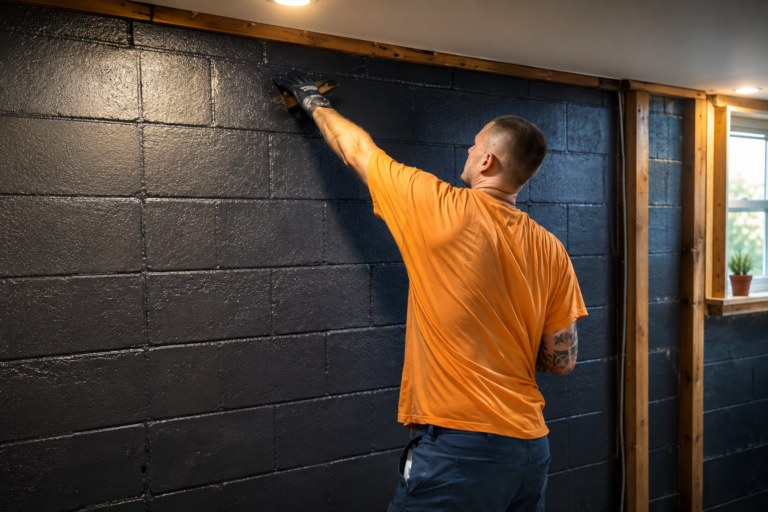
Meanwhile, somewhere in Scarborough, a waterproofing truck pulls up to a house at 8 AM. A licensed technician spends four hours injecting epoxy into a foundation crack. The homeowner pays $600. The technician drives to the next job.
This happens thousands of times a year across Canadian cities, mostly unnoticed, mostly undiscussed — and it generates remarkably dependable returns for the businesses doing it.
The Allure of “Exciting” vs. the Reality of Profitable
The businesses that attract the most attention are almost never the businesses that generate the most consistent profit. High-profile sectors attract competition, regulatory scrutiny, talent wars, and the pressure of investor expectations that push companies to prioritise growth over margin. The result is often a race to scale that burns cash at rates that would be impossible to sustain in a normal business environment.
Boring businesses operate under different physics entirely. They don’t attract venture capital, which means they don’t attract competitors who are willing to operate at a loss to capture market share. They don’t attract media coverage, which means the homeowner searching for a waterproofing contractor in Scarborough is making their decision based on reviews, reputation, and warranty terms — not on which company raised a Series B last quarter.
The absence of glamour is a competitive moat.
What Makes a Business “Boringly Profitable”
The most profitable boring businesses share a specific set of characteristics that investors in exciting sectors spend enormous energy trying to manufacture artificially.
Non-discretionary demand. When your basement floods, you don’t decide whether to fix it based on consumer sentiment or disposable income levels. The problem demands resolution regardless of economic conditions. Waterproofing, foundation repair, plumbing, electrical work — these are needs, not wants. Demand is structurally protected from the economic cycles that devastate consumer discretionary businesses.
Recurring need without recurring revenue pressure. Waterproofing a basement is not a subscription service, but it generates repeat business through referrals, warranty work, and the natural lifecycle of a home. A family that trusts a contractor for foundation crack repair calls the same contractor when they need a sump pump upgrade. The customer acquisition cost effectively drops to zero for a large share of revenue over time.
High barriers to trust, low barriers to entry. Anyone can theoretically start a waterproofing company. The equipment and materials are accessible. The techniques, while skilled, are learnable. What takes decades to build is the reputation infrastructure — the verified reviews, the award recognitions, the warranty track record, the word-of-mouth referral network — that actually converts a homeowner searching online into a paying customer. A company like Aquatech Basement Waterproofing in Scarborough, which has been operating since 1996 with over 50,000 completed projects and a 25-year transferable warranty on all work, holds a trust position that a new entrant cannot replicate regardless of their marketing budget.
Fragmented competition. The home services market is dominated by small, local operators. There is no Amazon for waterproofing. There is no venture-backed roll-up that has achieved dominant market share in a specific city. The result is a competitive landscape where quality, reliability, and reputation — not scale or pricing power — determine who wins. For well-run operators, this is an extremely favourable environment.
The Numbers Behind the Boring
Consider the unit economics of a residential waterproofing job. A standard interior drainage system installation for a mid-sized Toronto or Scarborough home runs between $6,000 and $15,000, completed in one to three days by a crew of two or three technicians. Material costs are significant but relatively predictable. Labour is skilled but not scarce in the way that, say, software engineers are scarce. The margin profile is not spectacular on any individual job, but the volume of demand — every city has thousands of homes with ageing foundations, deteriorating drainage systems, and recurring moisture problems — means that a well-run operation can generate substantial annual revenue with modest overhead.
There is no server infrastructure. No R&D budget. No equity compensation packages for engineers. The capital requirements are a truck, tools, and the reputation to get the phone to ring.
Compare that to the typical early-stage technology company, where revenue is often years away, customer acquisition costs are climbing, and the path to profitability involves assumptions about market size and adoption rates that may or may not materialise.
Why “Essential” Is Underrated as an Investment Thesis
The most durable businesses in any economy solve problems that cannot be deferred indefinitely. Home foundations deteriorate. Drainage systems fail. Basements flood. These are not problems that homeowners choose to experience — they are conditions created by physics, weather, and time, and they require resolution regardless of what is happening in financial markets or the broader economy.
During the 2008 financial crisis, discretionary spending collapsed. Restaurants closed. Retailers shuttered. Home renovation projects were cancelled. But homes still flooded. Foundations still cracked. Sump pumps still failed during spring thaw. The contractors who survived — and often thrived — during that period were the ones providing essential services that homeowners had no practical option to defer.
The same pattern repeated during COVID-19. With homeowners suddenly spending far more time in their homes, awareness of deferred maintenance problems spiked. The home services sector, including waterproofing, experienced demand increases at precisely the moment that other sectors were experiencing demand collapse.
The Unsexy Edge
There is a concept in investing sometimes called the “unsexy edge” — the advantage that accrues to businesses operating in spaces that sophisticated capital has ignored because they’re not interesting enough to write about. The lack of investor interest keeps valuations reasonable. The lack of media attention keeps competition rational. The lack of glamour keeps operators focused on fundamentals rather than narrative.
Waterproofing is a near-perfect example of this dynamic. It is unglamorous by any measure. The work is physical, occasionally unpleasant, and completely absent from the business school case studies that shape how most people think about entrepreneurship and investment. Nobody is writing about the waterproofing sector in TechCrunch.
And yet, in cities across Canada — in Scarborough, in Hamilton, in Ottawa, in Barrie — licensed contractors are solving a problem that approximately 60 percent of Canadian homes with basements will face at some point, generating non-discretionary revenue with defensible margins, repeat customer relationships, and a competitive position built on trust that took decades to establish.
The boring businesses are not boring at all. They’re just quiet about it. Which, if you think about it, is exactly what you want from a business worth owning.