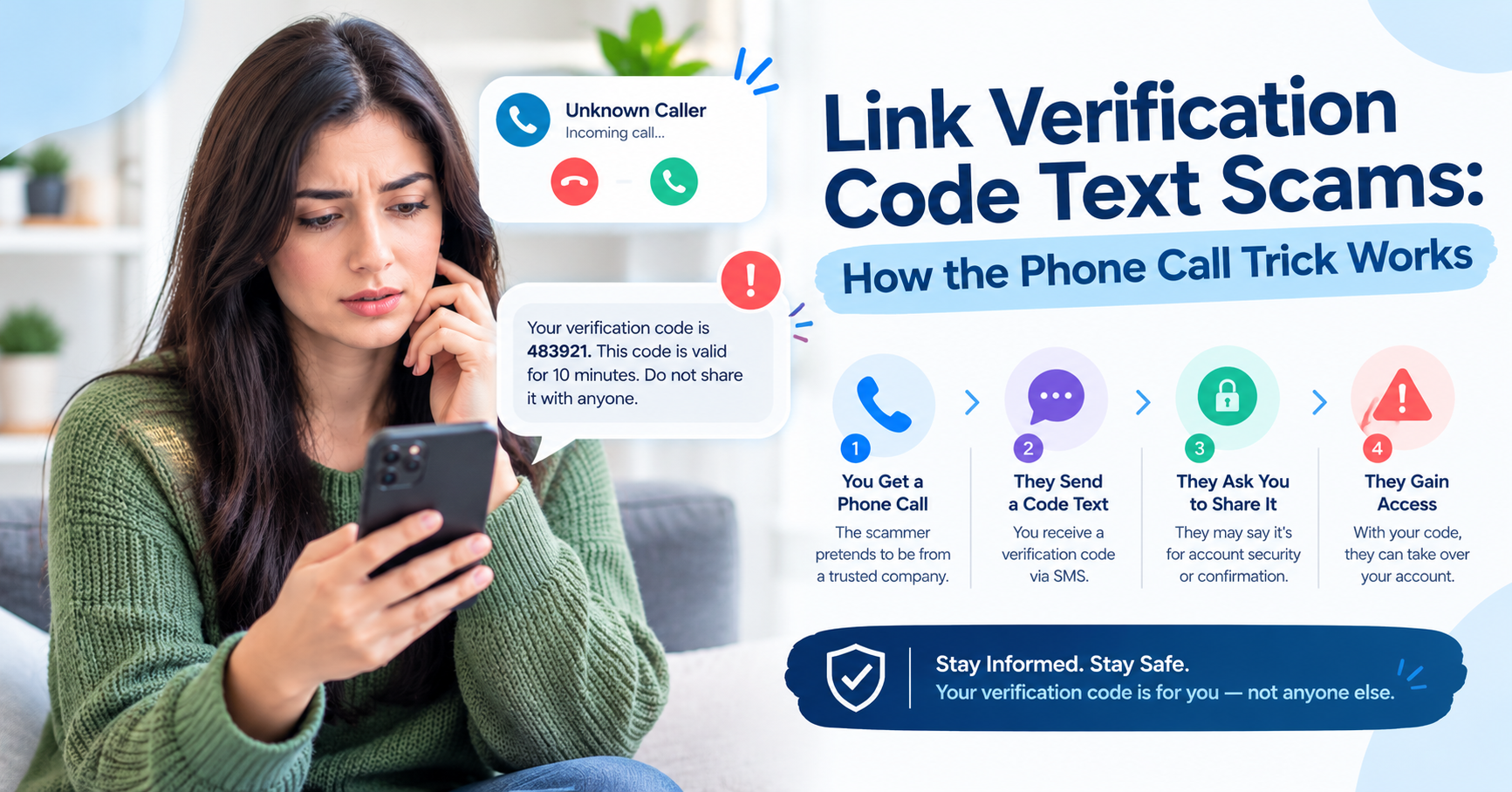
Some people get a link verification code text and then, a few minutes later, a phone call. The caller sounds calm and professional. They say there is a problem with an order, a payment, or an account, and they need you to confirm the code that was just sent to your phone. This scam is common because the code in your phone is real. The trick is built around that single fact. Understanding how it works is the best way to avoid it. This article explains the pattern, shows what it looks like in practice, and gives you a simple response you can use every time.
How the scam usually starts
The scam often begins with someone else entering your phone number on a website. It might be a typing mistake, or it might be a deliberate attempt to trigger a code. Either way, the service sends a real verification code to your phone. The scammer then waits, or contacts you directly, and uses that code as proof that they are the one in control of the process.
Some scammers go further. They try to sign in again and again, so you receive many prompts or codes in a short time. This is sometimes called prompt bombing or MFA fatigue. The idea is to wear you down until you approve a request or share a code just to make the messages stop.
The script scammers often use
Most calls follow a similar story. The caller might claim to be from Link or Stripe support, from your bank, or from an online store. They may say a payment is on hold, a card is about to be charged, or someone tried to access your account. Then they explain that a code was sent to you and ask you to read it out, so they can cancel or secure the activity. Some callers ask you to install an app or share your screen. Others ask for your password as well.
The goal is always the same. They want the code, because the code is what unlocks the account or completes the sign-in.
Why the code looks so convincing
Scammers are not making up the code. It is real, it arrives in the right place, and it often matches the name of a service you already use. That is why the call feels believable. Your first instinct may be to trust the message because it looks official. Remember that the code proves only that a sign-in or checkout was started. It does not prove that the caller is honest.
Warning signs you should never ignore
Pay attention to a few clear red flags. A caller who asks you to read out a code is the biggest one. Other warning signs include pressure to act immediately, claims about a payment you did not make, requests to install software, and a request to keep the call secret from family members or your bank. If you hear any of these, the call is almost certainly a scam, even if the number on your screen looks familiar. Caller ID can be faked.
A short example
Imagine a man named Bilal who receives a code late at night. A few minutes later, a caller says his account is under attack and asks for the code to stop the activity. Bilal feels the pressure, but he remembers one simple rule: never share a code. He says he will call the company back and hangs up. He then opens the official app, checks his account, and finds no problems. The scammer’s plan fails because Bilal did not hand over the code.
How scammers get your number in the first place
Scammers do not need to know you personally. Phone numbers can appear in old data leaks, public listings, marketing lists, or simply a mistyped checkout form. A scammer can try a number on a shopping site, see that a verification code was sent, and then use that moment to start a call. That is why the call may feel targeted even though the scammer is working through a list. Your number being used does not mean you did anything wrong. It only means the number is worth protecting.
Why hanging up is only the first step
Ending the call is important, but it is not the whole job. If a scam call came after a code arrived, check your accounts for activity you did not start. Look at recent logins, new devices, and any changes to your email or phone number. Think about whether you gave any information during the call, even a small detail such as a date of birth or the last four digits of a card. If you did, tell the company or bank involved. Many people stop at hanging up and forget to check what might have happened in the background.
What to do if you already shared a code
If you already gave a code to someone, act quickly. Change the password on the affected account right away. Check your account settings for changes, such as a new phone number, a new email address, or a device you do not recognize. Contact the company through its official support channel and describe what happened. If money was taken, contact your bank or card issuer immediately. They may be able to block the card, review the charges, or guide you through the next steps.
Protect yourself from now on
Treat every verification code as private. Never share it, even with someone who seems helpful. If a call feels wrong, hang up and call the company back using a number you find on its official website or in its app. Do not use a number the caller gives you. It is also worth talking with family members, especially older relatives, about this scam, because it often targets people who are busy or worried. A short conversation can save a lot of trouble later.
For more updates on scams and online safety, visit our General News section. You can also find more practical tips and helpful tools at Toolsimpli.