

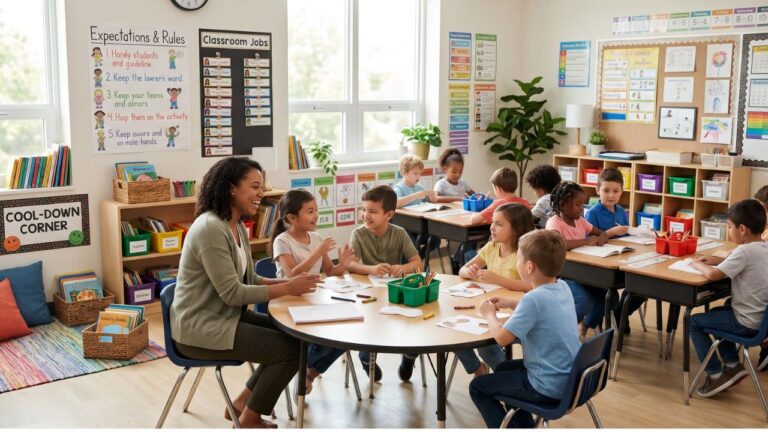
Creating a productive elementary classroom requires more than delivering engaging lessons. Young students are still developing the social, emotional, and organizational skills needed to participate successfully in a learning environment. They need clear expectations, consistent routines, supportive relationships, and opportunities to practice appropriate behavior. Understanding classroom management elementary strategies helps teachers establish structured classrooms where children feel safe, respected, and ready to learn.
Effective classroom management does not mean maintaining complete silence or requiring every child to behave identically. Elementary classrooms should encourage curiosity, communication, creativity, movement, and meaningful participation.
The challenge is creating enough structure to support learning while providing the flexibility children need as they develop.
For example, a first-grade teacher may use picture-based schedules and short transitions, while a fifth-grade teacher may introduce collaborative goal-setting and greater student responsibility.
Both approaches rely on the same foundation: predictable expectations, positive relationships, and consistent guidance.
This guide explains how elementary teachers can build effective classroom environments, establish routines, support positive behavior, manage challenging situations, and improve student engagement throughout the school year.
What Is Classroom Management in Elementary Education?
Classroom management refers to the strategies, procedures, and relationships teachers use to establish an organized and supportive learning environment.
It involves more than responding to inappropriate behavior.
A comprehensive approach includes lesson preparation, classroom organization, communication, expectations, transitions, student participation, and behavior support.
For example, a teacher who establishes a predictable morning routine can reduce confusion as students arrive.
Similarly, clearly teaching students how to request help can prevent unnecessary interruptions during independent work.
Good classroom management also involves understanding why students behave in particular ways.
A child who struggles to remain seated may need movement opportunities, clearer task instructions, or additional learning support.
The goal is to create conditions that help students succeed rather than relying exclusively on consequences after difficulties occur.
Classroom Management vs. Classroom Discipline
Classroom management is the broader process of organizing teaching and learning.
Discipline generally refers to how adults respond when behavior does not meet established expectations.
A proactive classroom management system reduces preventable problems by teaching routines and supporting appropriate behavior.
Why Elementary Classrooms Need Special Attention
Younger students are developing self-regulation, communication, attention, and cooperative skills.
Teachers should provide developmentally appropriate guidance and repeat important expectations as children learn.
Why Effective Classroom Management Matters
A well-managed classroom can benefit students and teachers in several ways.
Creates a Safe Learning Environment
Children learn more comfortably when they understand expectations and feel respected.
Supports Academic Engagement
Clear procedures help students spend more time participating in meaningful learning activities.
Encourages Positive Relationships
Predictable, respectful interactions can strengthen trust between teachers and students.
Reduces Unnecessary Disruptions
Well-taught routines can prevent confusion during transitions and everyday activities.
Develops Student Independence
Students gradually learn how to manage materials, follow procedures, and complete tasks.
Supports Different Learning Needs
Flexible strategies help teachers respond to students who require additional structure or assistance.
Improves Classroom Communication
Shared expectations make it easier for students to understand what responsible participation looks like.
7 Essential Classroom Management Strategies for Elementary Teachers
The following approaches provide a practical foundation for organized and supportive classrooms.
1. Establish Clear Classroom Expectations
Students need to understand what behavior is expected in different situations.
Keep expectations simple, positive, and developmentally appropriate.
For example, expectations might focus on being respectful, acting safely, caring for materials, and helping the classroom community.
Explain what each expectation looks like during lessons, group activities, recess preparation, and transitions.
Younger children often benefit from visual examples and demonstrations.
2. Create Consistent Daily Routines
Predictable routines reduce uncertainty.
Students should know what to do when entering the classroom, preparing materials, submitting assignments, requesting help, and leaving for dismissal.
Teach each routine explicitly.
Practice it as a class and provide reminders when necessary.
Consistency does not mean refusing to adjust a routine that no longer works.
3. Build Positive Teacher-Student Relationships
Strong relationships are central to effective behavior support.
Learn students’ names, interests, strengths, and communication preferences.
Welcome students warmly and respond respectfully when they experience difficulties.
Children are more likely to seek help when they trust the adults supporting them.
4. Reinforce Appropriate Behavior
Notice when students follow expectations, cooperate, or demonstrate persistence.
Provide specific feedback that describes what they did successfully.
For example, recognizing a group for sharing materials and listening to one another communicates the desired behavior more clearly than generic praise.
Avoid comparing children publicly or making recognition unnecessarily competitive.
5. Plan Engaging Learning Activities
Some disruptions occur when students do not understand a task, finish early, or struggle to participate.
Prepare clear instructions, appropriate materials, and meaningful activities.
Provide differentiated support where needed.
Engagement is not a substitute for classroom structure, but it can strengthen the learning environment.
6. Manage Transitions Effectively
Moving between activities can be challenging for young students.
Use consistent cues, explain the next step, and allow appropriate preparation time.
Visual schedules, brief reminders, and practiced procedures can help.
7. Respond to Challenges Calmly and Consistently
When behavior problems occur, respond according to the situation and the student’s needs.
Use clear language, maintain dignity, and focus on helping the child return to learning.
Avoid public humiliation or unnecessarily harsh consequences.
If difficulties are repeated or serious, work with relevant school support professionals and families.
How to Establish Classroom Rules
Classroom expectations should be understandable and realistic.
Keep the Number Manageable
Young students may struggle to remember a long list of rules.
A small set of broad expectations is usually easier to teach and reinforce.
Use Positive Language
State what students should do whenever possible.
For example, “Use respectful words” describes a desired action.
Involve Students Appropriately
Teachers can invite children to discuss what makes a classroom safe and welcoming.
Student participation can increase understanding and shared responsibility.
Demonstrate Expected Behavior
Show students what appropriate listening, teamwork, and material use look like.
Practice Regularly
Expectations should be revisited throughout the school year.
After holidays or schedule changes, students may benefit from reminders.
Apply Expectations Fairly
Consistency matters, but appropriate accommodations and individual needs should also be considered.
Fairness does not always mean providing identical support to every child.
Building Strong Classroom Routines
Routines help elementary students understand how to participate independently.
Morning Arrival
Create a predictable entry routine.
Students may unpack belongings, submit materials, and begin a suitable independent activity.
Attendance and Announcements
Keep daily administrative procedures organized.
Material Distribution
Teach students how to collect and return classroom supplies.
Independent Work
Explain how to begin tasks, request assistance, and manage completed work.
Group Activities
Establish procedures for moving into groups and sharing responsibilities.
Bathroom and Water Breaks
Develop clear, respectful procedures that support health and student dignity.
End-of-Day Dismissal
Teach students how to organize belongings and prepare for safe dismissal.
Routine success depends on explicit teaching and repeated practice.
Positive Behavior Management in Elementary Classrooms
Positive behavior management focuses on teaching and supporting behaviors that help students learn.
Recognize Effort
Students benefit when teachers acknowledge persistence and improvement.
Give Specific Feedback
Describe the positive behavior rather than relying exclusively on general approval.
Model Respect
Teachers demonstrate appropriate communication through their own actions.
Teach Replacement Behaviors
When a child interrupts frequently, teach appropriate ways to request attention or assistance.
Provide Meaningful Choices
Age-appropriate choices can support student autonomy.
For example, students may choose between two suitable methods of completing an assignment.
Use Private Corrections When Possible
Quiet reminders can protect student dignity.
Celebrate Collective Progress
Classroom celebrations can recognize shared effort without singling out children who need additional support.
Classroom Management for Kindergarten and First Grade
Younger elementary students typically need more explicit instruction and visual support.
Use Picture-Based Schedules
Visual routines help students understand the day’s sequence.
Give Short Instructions
Break complex directions into manageable steps.
Demonstrate Procedures
Show children how to line up, organize materials, or move between learning stations.
Include Movement
Plan opportunities for appropriate physical activity.
Use Repetition
Young learners often need repeated practice before routines become familiar.
Support Emotional Language
Teach children simple ways to describe feelings and ask for help.
Maintain Predictability
Prepare students for important schedule changes whenever possible.
Classroom Management for Grades Two and Three
Students in these grades often develop greater independence while still benefiting from clear structure.
Introduce Classroom Responsibilities
Students may help organize materials or complete suitable classroom tasks.
Encourage Cooperative Learning
Teach how to share ideas, take turns, and resolve minor disagreements.
Strengthen Organizational Skills
Use clear procedures for homework, folders, and supplies.
Practice Problem-Solving
Discuss age-appropriate strategies for handling common classroom difficulties.
Build Self-Monitoring
Students may learn to reflect on whether they followed a routine or completed a task.
Support Different Learning Paces
Provide meaningful options for students who finish early or need more assistance.
Classroom Management for Grades Four and Five
Older elementary students can often take greater responsibility for their learning environment.
Encourage Student Leadership
Offer meaningful classroom responsibilities.
Establish Collaborative Norms
Discuss expectations for group projects and respectful disagreement.
Teach Time Management
Help students break assignments into smaller steps.
Promote Self-Reflection
Students can evaluate their learning habits and identify areas for improvement.
Support Independence
Allow appropriate choices in how students organize and complete work.
Maintain Clear Boundaries
Greater independence should still be supported by consistent expectations.
How to Manage Classroom Transitions
Transitions can consume valuable learning time when procedures are unclear.
Explain the Next Activity
Tell students what will happen after the current task.
Use Familiar Signals
A consistent visual, verbal, or auditory cue can help students prepare.
Give Clear Directions
Explain what materials students need and where they should go.
Practice the Routine
Demonstrate transitions and allow students to rehearse them.
Account for Individual Needs
Some students benefit from advance notice, extra processing time, or visual cues.
Avoid Unnecessary Rushing
Rushed transitions can create stress and confusion.
Review Problems
If the same transition remains difficult, examine whether the procedure needs adjustment.
Creating an Organized Classroom Layout
Physical classroom organization can influence movement, attention, and accessibility.
Arrange Desks Thoughtfully
Choose seating arrangements appropriate for instructional activities and available space.
Maintain Clear Walkways
Students and teachers should be able to move safely.
Organize Materials
Store frequently used supplies where students can access them appropriately.
Create Learning Areas
Reading corners or small-group spaces can support different activities.
Reduce Excessive Visual Clutter
Displays should provide useful support without overwhelming students.
Consider Accessibility
Arrange furniture and materials according to relevant accessibility needs.
Adjust as Needed
A classroom layout may need changes as instructional activities evolve.
Improving Student Engagement
Engaged students are more likely to participate meaningfully in learning.
Explain Learning Goals
Use age-appropriate language to describe the purpose of a lesson.
Vary Instructional Methods
Combine explanations, demonstrations, discussion, practice, and suitable hands-on activities.
Encourage Questions
Create opportunities for students to ask for clarification.
Connect Lessons to Familiar Experiences
Relevant examples can make abstract concepts easier to understand.
Provide Appropriate Challenge
Tasks should offer meaningful learning without becoming unnecessarily frustrating.
Use Formative Assessment
Check student understanding during lessons.
Encourage Participation
Create opportunities for quieter students and those with different communication needs to contribute.
Managing Challenging Student Behavior
Challenging behavior may reflect several underlying factors.
A student may be confused, tired, overwhelmed, frustrated, or experiencing difficulty with a particular classroom demand.
Identify the Situation
Notice when and where the behavior occurs.
Look for Patterns
Review whether the same difficulty happens during certain activities or transitions.
Respond Calmly
Use brief, respectful instructions.
Teach an Alternative
Help the student learn a more appropriate way to communicate or participate.
Offer Appropriate Support
Some children may need adjusted instructions, movement opportunities, or additional assistance.
Collaborate With Support Staff
Persistent problems may require coordination with school counselors, specialists, or administrators.
Maintain Student Dignity
Avoid embarrassing children in front of classmates.
Serious safety concerns should be addressed according to school policies and appropriate professional guidance.
Social-Emotional Learning and Classroom Management
Social-emotional skills support classroom participation and positive relationships.
Emotional Awareness
Help students identify and describe feelings.
Self-Regulation
Teach age-appropriate strategies for managing frustration and returning to learning.
Empathy
Encourage students to consider other people’s perspectives.
Relationship Skills
Practice listening, sharing, and respectful communication.
Responsible Decision-Making
Discuss how actions affect other people.
Conflict Resolution
Teach students how to seek help and resolve disagreements safely.
Consistent Modeling
Teachers can demonstrate these skills through everyday interactions.
Classroom Management for Students With Different Learning Needs
An inclusive classroom recognizes that children may require different types of support.
Use Clear Visual Instructions
Visual aids can complement spoken directions.
Provide Predictable Routines
Consistent schedules can benefit students who find unexpected changes difficult.
Offer Flexible Participation
Students may demonstrate understanding in different appropriate ways.
Adjust Task Demands
Break complex work into smaller steps when necessary.
Consider Sensory Needs
Some students may benefit from reduced distractions or planned movement opportunities.
Follow Individual Support Plans
Implement applicable accommodations and educational plans.
Work With Specialists
Coordinate with qualified support professionals where appropriate.
Avoid One-Size-Fits-All Discipline
Individual circumstances and support needs should inform responses to behavior.
Building Positive Relationships With Families
Family communication can support consistent expectations and student well-being.
Introduce Classroom Procedures
Explain key routines and communication methods at the beginning of the year.
Share Positive Updates
Contact families about student progress and accomplishments, not only concerns.
Communicate Clearly
Use respectful, understandable language.
Address Problems Privately
Sensitive matters should be discussed through appropriate channels.
Listen to Family Perspectives
Families may offer important context about a child’s needs.
Maintain Confidentiality
Protect student information according to school policies and applicable requirements.
Collaborate on Support Strategies
Work together when students need consistent assistance.
Using Technology for Elementary Classroom Management
Digital tools may help teachers organize selected classroom activities.
Digital Schedules
Electronic schedules can display daily routines and upcoming activities.
Classroom Communication Platforms
Approved school systems can support appropriate family communication.
Assignment Management
Digital tools may help organize learning tasks and submissions.
Timers
Visual timers can help some students understand how much time remains for an activity.
Interactive Learning Tools
Suitable activities may encourage participation.
Student Data Protection
Teachers should follow school-approved technology policies and applicable privacy requirements.
Avoid Excessive Monitoring
Technology should support learning rather than create unnecessary surveillance or constant distractions.
Common Classroom Management Mistakes
Certain practices can unintentionally make classroom management more difficult.
Inconsistent Expectations
Students may become confused when rules change unpredictably.
Too Many Rules
An excessive number of expectations can be difficult for young children to remember.
Relying Only on Punishment
Consequences without teaching replacement skills may not address the underlying problem.
Publicly Embarrassing Students
Humiliation can damage relationships and classroom trust.
Ignoring Student Engagement
Unclear or unsuitable tasks may contribute to avoidable disruptions.
Expecting Immediate Independence
Young students need time and practice to develop routines.
Failing to Adapt
A strategy that works for one class may need modification for another.
A Step-by-Step Elementary Classroom Management Plan
Teachers can create a practical management system before the school year begins.
Step 1: Define Classroom Values
Identify the principles you want the learning environment to reflect.
Step 2: Establish Core Expectations
Create a small set of clear, positive rules.
Step 3: Plan Daily Routines
Identify procedures for arrival, transitions, materials, independent work, and dismissal.
Step 4: Organize the Physical Space
Arrange desks, learning materials, and movement areas appropriately.
Step 5: Prepare Visual Supports
Create age-appropriate schedules and reminders.
Step 6: Teach Expectations Explicitly
Demonstrate and practice routines with students.
Step 7: Establish Positive Feedback
Use specific recognition to reinforce appropriate behavior.
Step 8: Plan Responses to Difficulties
Prepare calm, respectful approaches consistent with school policies.
Step 9: Communicate With Families
Explain important procedures and communication channels.
Step 10: Reflect and Improve
Review what is working and adjust strategies when necessary.
Classroom Management During the First Week of School
The first week offers an opportunity to build routines and relationships.
Welcome Students
Create a friendly and predictable arrival experience.
Learn Names and Interests
Help students feel recognized as individuals.
Introduce Classroom Expectations
Explain rules using understandable examples.
Practice Important Routines
Spend time demonstrating classroom procedures.
Teach Material Organization
Show students where supplies belong.
Model Transitions
Practice moving safely between activities.
Encourage Positive Interaction
Use suitable activities to help students learn about one another.
Review Daily
Briefly revisit expectations and celebrate progress.
How to Measure Classroom Management Success
Effective classroom management should be evaluated through the learning environment it creates.
Student Engagement
Observe whether students participate meaningfully in lessons.
Time Available for Learning
Consider whether avoidable interruptions are decreasing.
Routine Independence
Notice whether students can complete everyday procedures with less assistance.
Classroom Relationships
Review the quality of student interactions and communication.
Student Well-Being
Consider whether children feel safe, included, and supported.
Teacher Reflection
Identify procedures that consistently require additional attention.
Family Feedback
Appropriate communication may reveal concerns or positive developments.
Individual Student Progress
Evaluate improvement relative to each student’s needs and circumstances.
The objective is not simply to produce fewer recorded incidents, but to support a healthy and effective learning environment.
Best Practices for Long-Term Classroom Success
Classroom management evolves throughout the school year.
Maintain Consistency
Continue modeling and reinforcing expectations.
Review Routines Periodically
Update procedures when classroom needs change.
Teach Skills Rather Than Assume Them
Students may need direct instruction in organization, cooperation, and self-regulation.
Use Encouraging Language
Provide constructive feedback that helps students improve.
Support Inclusion
Adapt teaching and participation opportunities to different learning needs.
Protect Relationships
Address difficulties without compromising student dignity.
Reflect on Instruction
Consider how lesson design affects classroom behavior.
Collaborate With Colleagues
Share effective practices and seek appropriate professional support.
The Future of Elementary Classroom Management
Elementary education continues evolving as teachers respond to changing student needs, classroom technology, and approaches to inclusive instruction.
Positive behavior support, social-emotional learning, and proactive classroom organization remain important considerations.
Digital tools may help teachers organize schedules, communicate with families, and manage classroom tasks.
However, technology cannot replace supportive relationships and effective teaching practices.
Students still need adults who understand their development, communicate clear expectations, and respond thoughtfully to individual needs.
Future-ready classroom management will continue combining structured routines with flexibility, student voice, and developmentally appropriate support.
The strongest classrooms are those where children understand expectations, feel valued, and have meaningful opportunities to learn.
Conclusion
Effective classroom management elementary strategies help teachers create safe, organized, and engaging learning environments for young students. Clear expectations, predictable routines, positive relationships, supportive behavior guidance, and purposeful instruction all contribute to successful classroom experiences. Teachers should also consider students’ developmental stages, individual learning needs, and opportunities for family collaboration. Rather than relying on strict discipline alone, a proactive approach teaches the skills children need to participate responsibly and independently. By remaining consistent, reflective, and responsive, elementary educators can build classrooms that support academic growth, emotional development, and positive learning experiences throughout the school year.


