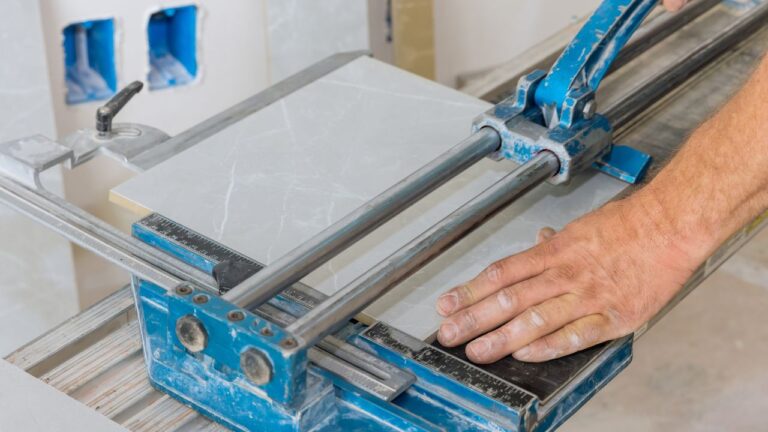
A wet saw is a power tool designed to cut hard materials such as tile, stone, porcelain, marble, and concrete using a diamond blade and a continuous water supply. The water cools the blade and reduces dust, making wet saws ideal for precise and clean cuts in construction and renovation projects.
This guide explains how wet saws work, their types, uses, and what to consider before buying or renting one.
What Is a Wet Saw?
A wet saw is similar to a table saw but uses a water-cooled diamond blade instead of a standard wood-cutting blade. The water system serves two main purposes:
- Keeps the blade cool
- Reduces dust and debris
Wet saws are commonly used in tile installation and masonry work.
How a Wet Saw Works
- Water flows continuously over the blade.
- The motor rotates a diamond-tipped blade at high speed.
- The material is guided across the blade.
- The blade cuts through the material while water suppresses heat and dust.
The result is a cleaner and smoother cut compared to dry cutting tools.
Common Uses of a Wet Saw
Wet saws are commonly used for:
- Ceramic tile cutting
- Porcelain tile installation
- Marble and granite cutting
- Paver trimming
- Concrete slab cutting
They are especially useful for bathroom and kitchen renovations.
Types of Wet Saws
1. Tabletop Wet Saw
Compact and portable, suitable for smaller tile jobs.
Best for:
- DIY projects
- Small renovations
2. Sliding Table Wet Saw
Features a sliding tray for improved precision.
Best for:
- Large tile pieces
- Professional tile installers
3. Bridge Wet Saw
Heavy-duty saw with overhead rail system.
Best for:
- Large format tiles
- Industrial use
4. Handheld Wet Saw
Portable option for quick cuts and adjustments.
Best for:
- On-site modifications
- Tight spaces
Advantages of Using a Wet Saw
- Smooth, precise cuts
- Reduced dust
- Less blade overheating
- Ability to cut hard materials
- Cleaner edges
Wet saws provide professional-quality results.
Safety Tips for Using a Wet Saw
When operating a wet saw:
- Wear safety goggles
- Use hearing protection
- Avoid loose clothing
- Keep hands clear of blade
- Ensure proper water flow
- Use a ground-fault circuit interrupter (GFCI) outlet
Electrical and water components require careful handling.
How to Choose the Right Wet Saw
Consider the following factors:
1. Blade Size
Common blade sizes include 7-inch and 10-inch.
2. Motor Power
Higher horsepower supports thicker materials.
3. Cutting Capacity
Check maximum tile length and thickness capacity.
4. Portability
Choose compact models for small projects.
5. Budget
Wet saw prices range from affordable DIY models to professional-grade equipment.
Wet Saw vs Tile Cutter
| Feature | Wet Saw | Manual Tile Cutter |
|---|---|---|
| Power | Electric | Manual |
| Precision | High | Moderate |
| Material Range | Wide | Limited |
| Dust Control | Low Dust | No dust |
| Cost | Higher | Lower |
Wet saws handle more demanding materials.
Renting vs Buying
For occasional use, renting a wet saw may be cost-effective. Hardware stores often offer daily rentals.
Buying is recommended if:
- You frequently work with tile or stone
- You run a contracting business
- You need consistent availability
Frequently Asked Questions
1. Can a wet saw cut porcelain tile?
Yes, wet saws are ideal for cutting porcelain.
2. Does a wet saw create dust?
Water significantly reduces dust compared to dry cutting tools.
3. Can you use a wet saw indoors?
Yes, but manage water spray and drainage properly.
4. What blade should I use?
Use a diamond blade designed for your specific material.
5. Is a wet saw difficult to use?
With proper setup and safety precautions, it is straightforward.
Conclusion
A wet saw is an essential tool for cutting tile, stone, and masonry materials with precision and minimal dust. Whether you are a DIY homeowner or a professional contractor, selecting the right wet saw ensures efficient and clean results. By understanding the different types, features, and safety practices, you can choose the best wet saw for your specific project needs.