

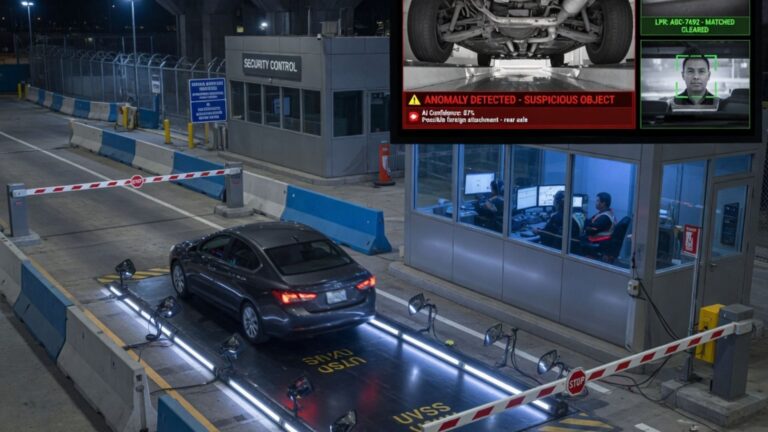
A modern security checkpoint needs more than guards, barriers, and manual inspection mirrors. Threats can be hidden beneath vehicles, and busy entry points often require faster, safer, and more consistent screening. An under vehicle scanning system helps security teams inspect the underside of cars, trucks, vans, and other vehicles using imaging technology, software analysis, and operator review. Instead of relying only on manual checks, organizations can use automated underside scanning to improve visibility, reduce inspection time, and support stronger access control decisions.
Under vehicle inspection is especially important at sensitive locations such as government facilities, military bases, airports, seaports, corporate campuses, industrial plants, embassies, logistics hubs, prisons, hotels, event venues, and critical infrastructure sites. These environments need reliable vehicle screening because a single missed threat can create serious safety, operational, and reputational risks.
This guide explains how under vehicle scanning works, where it is used, what features matter, and how organizations can evaluate a system responsibly before deployment.
What Is an Under Vehicle Scanning System?
An under vehicle scanning system is a security technology designed to capture detailed images of a vehicle’s undercarriage as it passes through a checkpoint. The system typically uses cameras, lighting, sensors, and software to create a clear visual record of the underside of the vehicle.
Security operators can then review the image on a monitor and compare it with previous scans, vehicle profiles, or expected underside patterns. Some systems may also include automated detection features that help identify suspicious objects, modifications, or anomalies.
A typical system may include:
- High-resolution underside imaging
- LED or infrared lighting
- Vehicle detection sensors
- Operator monitoring software
- Image storage and retrieval
- License plate recognition integration
- Access control compatibility
- AI-assisted anomaly detection
- Fixed or portable installation options
- Reporting and audit logs
The main purpose is to help security teams inspect hidden areas more safely and efficiently than manual mirror checks alone.
Why an Under Vehicle Scanning System Matters
An under vehicle scanning system matters because vehicle undersides are difficult to inspect manually. Traditional inspection mirrors can help, but they depend heavily on lighting, operator angle, inspection time, weather conditions, and human attention. In high-traffic locations, manual checks can become slow and inconsistent.
Automated scanning improves the process by creating a stable digital image that can be reviewed, enlarged, stored, and compared. This gives security staff better visual access to areas that are normally hard to see.
The system can support security by helping detect:
- Suspicious packages
- Unusual attachments
- Hidden compartments
- Unauthorized modifications
- Foreign objects
- Tampering signs
- Structural abnormalities
No security technology can guarantee complete protection, but under vehicle scanning adds an important layer to a broader physical security strategy.
How an Under Vehicle Scanning System Works
An under vehicle scanning system usually works in a simple sequence. As the vehicle approaches the checkpoint, sensors detect its movement. When the vehicle passes over or near the scanning unit, cameras capture images of the undercarriage. Lighting helps produce a clear image even in low-light conditions.
The software then processes the image and displays it for operator review. In more advanced setups, the system may connect the scan with license plate recognition, driver information, access permissions, or previous vehicle records.
A basic workflow may look like this:
- Vehicle enters the checkpoint lane
- Sensors activate the scan
- Cameras capture underside images
- Software processes and displays the scan
- Operator reviews the image
- System stores the record
- Access is approved, denied, or escalated
This process can be faster and safer than requiring staff to bend near vehicles or perform manual underside checks in traffic lanes.
Under Vehicle Scanning System Features to Look For
Choosing the right under vehicle scanning system requires more than comparing price. The best option depends on the site’s risk level, vehicle volume, weather conditions, lane design, integration needs, and security procedures.
Important features to evaluate include:
- Image clarity
- Scanning speed
- Low-light performance
- Weather resistance
- Vehicle type compatibility
- Software usability
- Image comparison tools
- AI-assisted detection
- Data storage capacity
- Integration with barriers or gates
- License plate recognition support
- Maintenance requirements
- Operator training needs
- Portable or fixed deployment options
A system should fit the operational reality of the checkpoint. For example, a high-security government site may need permanent installation and deep integration, while a temporary event venue may prefer a portable scanning solution.
Fixed vs. Portable Under Vehicle Scanning System Options
Organizations can usually choose between fixed and portable under vehicle scanning system designs. Each option has advantages depending on the security environment.
A fixed system is installed permanently in a checkpoint lane. It is commonly used at locations with regular vehicle traffic and long-term security requirements. Fixed systems may provide stable performance, stronger integration, and continuous use.
A portable system is designed for temporary or flexible deployment. It may be useful for events, temporary checkpoints, emergency operations, mobile patrols, construction sites, or locations where permanent installation is not practical.
When comparing fixed and portable options, consider:
- How often vehicles need screening
- Whether the checkpoint is permanent
- Available power and network access
- Traffic flow requirements
- Setup and removal time
- Weather exposure
- Operator mobility
- Storage and transport needs
The right choice depends on balancing security needs with operational flexibility.
Under Vehicle Scanning System for High-Security Locations
An under vehicle scanning system is especially valuable at high-security locations where access control must be strict and documented. These sites often require layered protection, meaning no single tool is relied on alone.
Common deployment locations include:
- Border crossings
- Military facilities
- Airports
- Seaports
- Prisons
- Government buildings
- Data centers
- Energy facilities
- Corporate headquarters
- Defense contractors
- Industrial plants
- Large public venues
At these sites, vehicle screening may be combined with guard inspection, ID verification, bollards, barriers, CCTV, license plate recognition, visitor management, and perimeter intrusion detection.
The goal is not just to scan vehicles. The goal is to create a controlled entry process where threats are harder to hide and suspicious activity can be escalated quickly.
Benefits of an Under Vehicle Scanning System
The benefits of under vehicle scanning are both practical and strategic. For security teams, the system can improve inspection quality while reducing physical strain and time pressure.
Key benefits include:
- Better visibility under vehicles
- Faster inspection compared with manual checks
- Digital image records for audits
- Reduced need for staff to inspect near moving vehicles
- Improved consistency across shifts
- Support for access control decisions
- Easier comparison with previous scans
- Potential integration with other security systems
- More professional checkpoint operations
For organizations managing large vehicle volumes, efficiency is especially important. A slow checkpoint can create congestion, frustrate visitors, and increase operational pressure. A well-planned scanning system can support both security and traffic flow.
Limitations of an Under Vehicle Scanning System
A responsible security plan should also understand limitations. An under vehicle scanning system is powerful, but it is not a complete security solution by itself.
Possible limitations include:
- Image quality may be affected by mud, snow, or debris
- Operators still need training to interpret scans
- Poor installation can reduce effectiveness
- Very high traffic may require multiple lanes
- AI detection may still require human review
- Systems need maintenance and calibration
- Data storage and privacy rules must be managed
- Unusual vehicle types may require special handling
Organizations should avoid treating any technology as foolproof. The system should be part of a layered security approach supported by trained personnel and clear procedures.
How to Choose an Under Vehicle Scanning System
Before purchasing an under vehicle scanning system, organizations should conduct a site assessment. This helps match technology to real security needs.
A useful evaluation checklist includes:
- What types of vehicles enter the site?
- How many vehicles pass through daily?
- Is the checkpoint permanent or temporary?
- What is the threat level?
- Is night operation required?
- Will the system face rain, dust, heat, or snow?
- Does it need to connect with barriers or gates?
- Is license plate recognition required?
- Who will review scans?
- How long should images be stored?
- What training will operators need?
- What maintenance support is available?
The best system is not necessarily the most complex one. It is the one that matches the site’s workflow, risk profile, and staffing capacity.
Under Vehicle Scanning System and AI Detection
AI-assisted detection is becoming more common in security screening. In an under vehicle scanning system, AI may help identify anomalies, compare scans, highlight suspicious objects, or reduce operator workload.
However, AI should support—not replace—human judgment. Security operators still need to review alerts, understand context, and decide whether a vehicle should be cleared, rescanned, or escalated.
AI can be helpful when:
- Traffic volume is high
- Operators need faster image comparison
- Repeat vehicles are common
- Historical scan records are available
- Consistent inspection standards are needed
But organizations should ask vendors clear questions about accuracy, false positives, false negatives, training data, system limitations, and how alerts are displayed.
Data Storage, Privacy, and Compliance
Under vehicle scanning systems may store images, license plate data, timestamps, operator actions, and access decisions. This makes data management important.
Organizations should define:
- What data is collected
- How long images are stored
- Who can access records
- How data is protected
- Whether records are encrypted
- How audit logs are managed
- What privacy laws apply
- How data is deleted when no longer needed
For sensitive sites, recordkeeping can be useful for investigations and compliance. But unnecessary data collection or weak access controls can create privacy and security problems.
Maintenance and Operator Training
Even the best under vehicle scanning system requires maintenance and trained users. Cameras, lighting, sensors, cables, software, and physical scanning units should be checked regularly.
Maintenance may include:
- Cleaning camera surfaces
- Checking lighting quality
- Testing sensors
- Updating software
- Reviewing image clarity
- Inspecting physical components
- Verifying storage systems
- Testing integrations
Training is equally important. Operators should know how to read scans, identify suspicious patterns, respond to alerts, document incidents, and escalate concerns according to policy.
Technology improves security only when people know how to use it correctly.
Conclusion: Under Vehicle Scanning System for Safer Checkpoints
An under vehicle scanning system can strengthen checkpoint security by giving operators clearer visibility beneath vehicles, improving inspection consistency, and supporting faster access control decisions. It is especially useful for high-security facilities, logistics centers, government sites, events, and critical infrastructure where vehicle threats must be taken seriously. However, the system should be selected carefully, maintained properly, and used as part of a layered security plan. The best results come from matching the technology to site needs, training operators well, protecting stored data, and combining automated scanning with professional security procedures.
FAQs
What is an under vehicle scanning system?
An under vehicle scanning system captures images of a vehicle’s underside to help security teams inspect for suspicious objects or modifications.
Where is an under vehicle scanning system used?
It is commonly used at airports, military sites, government buildings, prisons, ports, data centers, events, and critical infrastructure.
Is an under vehicle scanning system better than inspection mirrors?
It can provide clearer images, faster review, and digital records, but it should complement trained security staff and proper procedures.
Can an under vehicle scanning system detect threats automatically?
Some systems may include AI-assisted detection, but human review is still important for accurate security decisions.
What should I check before buying an under vehicle scanning system?
Check image quality, speed, weather resistance, integration options, storage, operator training, maintenance needs, and deployment type.
Does an under vehicle scanning system store vehicle data?
Many systems can store images, timestamps, and related records, so privacy, access control, and retention policies should be planned carefully.


