

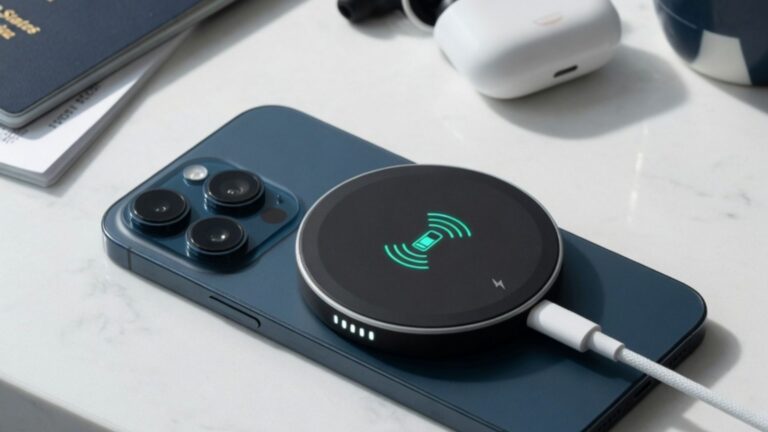
A smartphone is only useful when it has enough power to get through the day, and that is why a portable magnetic charger has become one of the most practical tech accessories for commuters, travelers, students, creators, and busy professionals. Instead of carrying a bulky power bank with loose cables, magnetic chargers attach directly to the back of compatible phones and provide wireless charging in a compact, pocket-friendly form. They are designed for convenience, but choosing the right one requires understanding compatibility, charging speed, battery capacity, heat management, safety features, and daily usability.
In 2026, portable charging is no longer just about having backup power. Users want slim designs, strong magnetic alignment, fast USB-C charging, MagSafe-style compatibility, Qi2 wireless charging support, safe battery protection, and enough capacity for real-world use. Some people need a lightweight charger for emergencies, while others want a larger wireless power bank that can support long travel days.
This guide explains how portable magnetic chargers work, what features matter most, and how to choose one that fits your phone and lifestyle.
What Is a Portable Magnetic Charger?
A portable magnetic charger is a compact wireless power bank that attaches magnetically to the back of a compatible smartphone. It uses magnetic alignment to keep the charging coil positioned correctly, helping the phone charge more reliably without needing to hold a cable in place.
Many portable magnetic chargers are designed for MagSafe-compatible iPhones, but some can also work with Android devices when the phone supports wireless charging and uses a compatible magnetic case or magnetic ring. Compatibility depends on the phone model, case design, wireless charging standard, and magnet strength.
A typical portable magnetic charger may include:
- Built-in rechargeable battery
- Magnetic attachment system
- Wireless charging pad
- USB-C charging port
- Battery level indicators
- Safety protection features
- Slim or compact body
- Optional kickstand
- Pass-through charging support
- Wired charging output on some models
The main advantage is convenience. You can attach the charger and keep using your phone without managing a dangling cable.
Why Portable Magnetic Charger Use Is Growing
Portable magnetic charger use is growing because people rely heavily on smartphones throughout the day. Navigation, messaging, video calls, social media, payments, photography, work apps, and entertainment all drain battery life. A magnetic wireless power bank gives users a cleaner way to recharge while moving.
Compared with traditional power banks, magnetic chargers are easier to carry and use. They are especially helpful when you need quick backup power but do not want to search for a cable.
Common reasons people buy them include:
- Daily commute backup power
- Travel and airport charging
- Long workdays
- Outdoor events
- Content creation
- Emergency phone charging
- Minimal cable clutter
- Compact everyday carry
- Wireless charging convenience
For people who use their phones heavily, a portable magnetic charger can reduce battery anxiety and make daily charging more flexible.
Portable Magnetic Charger Compatibility
Compatibility is one of the most important things to check before buying. Not every smartphone supports magnetic wireless charging, and not every case allows a secure magnetic connection.
For iPhone users, many recent models support MagSafe-style magnetic alignment. However, charging speed and performance may depend on the charger, phone model, case thickness, and power rating.
For Android users, compatibility can be more varied. Many Android phones support wireless charging, but they may not have built-in magnetic alignment. A magnetic case or adhesive magnetic ring may be needed, and charging performance can vary by device.
Before buying, check:
- Does your phone support wireless charging?
- Does your phone support magnetic alignment?
- Is your case MagSafe-compatible or magnetic-compatible?
- Is the case too thick for wireless charging?
- Does the charger support your phone’s charging standard?
- Will camera placement interfere with attachment?
- Does the charger fit comfortably on your phone size?
A charger may look stylish, but if it does not align correctly, charging may be slow, inconsistent, or interrupted.
Portable Magnetic Charger Battery Capacity
Battery capacity is usually measured in milliamp-hours, or mAh. A higher number generally means more stored energy, but real-world charging depends on efficiency, heat, phone battery size, and wireless power loss.
Common capacities include:
- 3,000mAh to 5,000mAh for lightweight emergency use
- 5,000mAh to 10,000mAh for daily backup power
- 10,000mAh or more for travel and heavier use
A slim 5,000mAh magnetic charger may not fully charge every phone from zero to 100 percent, especially larger smartphones. However, it may add enough power to get through the rest of the day. A 10,000mAh option may provide more backup power but will usually be thicker and heavier.
The best capacity depends on your priorities. If you want something pocket-friendly, choose a slimmer model. If you need longer battery support, choose a higher-capacity charger.
Portable Magnetic Charger Speed and Charging Standards
Charging speed matters, but wireless charging is often slower than wired charging. A portable magnetic charger may support different wireless charging speeds depending on the device and standard.
Important charging terms include:
- Wireless charging wattage
- USB-C input speed
- USB-C wired output
- Qi or Qi2 support
- MagSafe-style alignment
- Fast charging compatibility
- Pass-through charging
Qi2 is an important wireless charging standard because it improves magnetic alignment and charging efficiency for compatible devices. However, not every phone or charger supports the same maximum speed.
If speed is your top priority, look for a charger that supports both wireless charging and wired USB-C output. This gives you flexibility: wireless charging for convenience and wired charging when you need faster power.
Portable Magnetic Charger vs Wired Power Bank
A portable magnetic charger and a wired power bank both provide backup power, but they serve slightly different needs.
A magnetic charger is best for:
- Cable-free convenience
- Quick top-ups
- Commuting
- Travel light packing
- Casual daily use
- MagSafe-style phones
- Using the phone while charging
A wired power bank is best for:
- Faster charging
- Charging multiple devices
- Larger battery capacity
- Laptops or tablets, if supported
- Long trips
- Lower wireless energy loss
Many users benefit from having both. A portable magnetic charger is ideal for everyday use, while a larger wired power bank may be better for long travel days or multiple devices.
Safety Features in a Portable Magnetic Charger
Safety should be a priority with any battery-powered accessory. A high-quality portable magnetic charger should include protection features that reduce risk during charging.
Useful safety features include:
- Overcharge protection
- Overheating protection
- Short-circuit protection
- Foreign object detection
- Temperature control
- Battery management system
- Certified charging standards
- Durable casing
- Reliable USB-C port design
Wireless charging can generate heat, especially during long sessions or when the phone is being used heavily. Some warmth is normal, but excessive heat can slow charging and affect battery health over time.
Avoid using damaged chargers, swollen batteries, cheap unverified accessories, or chargers that become unusually hot during normal use.
Design Features That Improve Daily Use
A portable magnetic charger should feel practical in real life, not just look good in product photos. Design details can make a major difference.
Helpful design features include:
- Strong magnetic hold
- Slim profile
- Rounded edges
- Non-slip surface
- Clear battery indicator
- Built-in kickstand
- USB-C input and output
- Lightweight build
- Case-friendly design
- Good camera clearance
A built-in kickstand can be useful for video calls, watching content, or desk use. Battery indicator lights help you know when to recharge the charger itself. A slim body makes the phone easier to hold while charging.
If you use a large phone, check whether the charger blocks the camera, extends past the phone edge, or feels uncomfortable in your hand.
Portable Magnetic Charger for Travel
A portable magnetic charger is especially useful for travel because it reduces cable clutter and gives quick backup power during long days. It can help with maps, boarding passes, ride apps, translation tools, hotel bookings, and emergency communication.
Before traveling, consider:
- Battery capacity
- Airline power bank limits
- USB-C cable availability
- Destination plug adapters
- Charging speed
- Weight and size
- Whether it can charge earbuds or other devices
- Whether the charger supports wired output
Most airlines have rules for carrying lithium battery power banks, usually requiring them to be kept in carry-on luggage rather than checked baggage. Travelers should confirm current airline rules before flying.
How to Choose the Best Portable Magnetic Charger
Choosing the best portable magnetic charger starts with your phone and daily habits. A student, traveler, business professional, and content creator may all need different features.
Use this checklist before buying:
- Confirm phone compatibility
- Check case compatibility
- Choose the right battery capacity
- Review wireless charging speed
- Look for USB-C input and output
- Check magnet strength
- Consider weight and thickness
- Look for safety certifications
- Review heat management features
- Decide if you need a kickstand
- Check warranty or support options
- Read real user feedback about reliability
Do not choose only by appearance. A stylish charger with weak magnets or poor heat control may become frustrating quickly.
Common Mistakes to Avoid
Many buyers make simple mistakes when purchasing a portable magnetic charger. The most common mistake is assuming every wireless charger works with every phone. Wireless charging and magnetic alignment are separate features.
Other mistakes include:
- Using a non-compatible phone case
- Choosing too little capacity
- Expecting wired-level charging speed
- Ignoring heat management
- Buying unknown low-quality batteries
- Forgetting to recharge the power bank
- Blocking the phone camera
- Using damaged cables
- Overlooking travel battery rules
- Not checking return policies
A little research before buying can prevent most of these problems.
Conclusion: Portable Magnetic Charger Buying Advice
A portable magnetic charger is one of the most convenient accessories for keeping your smartphone powered throughout the day. It offers cable-free charging, compact portability, strong everyday usability, and helpful backup power for travel, work, school, and emergencies. The best portable magnetic charger should match your phone, case, battery needs, charging speed expectations, and safety standards. Before buying, check compatibility, capacity, magnet strength, USB-C support, heat protection, and real-world design comfort. With the right choice, a portable magnetic charger can make staying powered easier, cleaner, and more reliable wherever your day takes you.
FAQs
What is a portable magnetic charger?
A portable magnetic charger is a wireless power bank that attaches magnetically to a compatible phone and charges it without a cable.
Does a portable magnetic charger work with Android phones?
It can work with some Android phones if they support wireless charging and use a compatible magnetic case or magnetic ring.
Is a portable magnetic charger faster than a cable?
Usually no. Wired charging is often faster, but magnetic wireless charging is more convenient for daily top-ups.
What capacity should I choose for a portable magnetic charger?
Choose 5,000mAh for lightweight daily use or 10,000mAh if you need longer backup power during travel or heavy phone use.
Can I use a portable magnetic charger with a phone case?
Yes, but the case should be thin and magnetic-compatible. Thick or non-compatible cases may weaken attachment and slow charging.
Is a portable magnetic charger safe for my phone?
A quality charger with overheating, overcharge, and short-circuit protection is generally safe when used correctly and kept in good condition.


