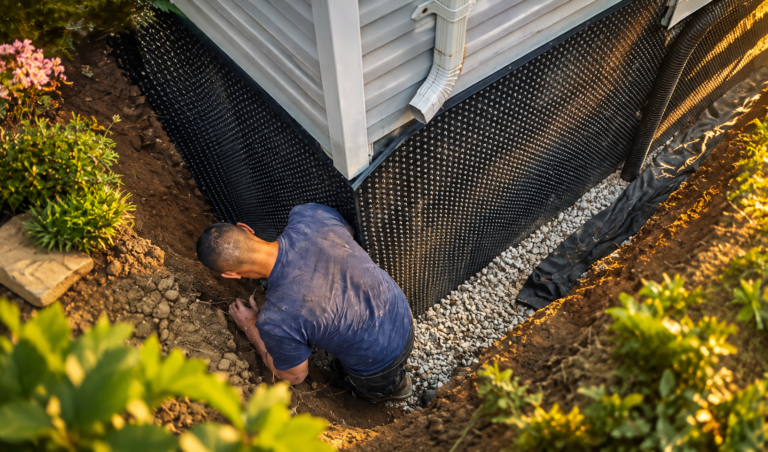
For most of the twentieth century, home maintenance was largely a DIY proposition. Homeowners fixed what they could, called a general handyman for the rest, and reserved specialized contractors for major projects. The economics of that model have shifted significantly — and the shift has been accelerating.
Specialized home service businesses — waterproofing, HVAC, foundation repair, roofing, electrical — are commanding higher demand, better margins, and stronger customer loyalty than at any point in recent memory. Understanding why this is happening matters both for homeowners trying to make smart decisions and for entrepreneurs evaluating the business landscape in residential services.
The Complexity Gap Is Widening
Modern homes are more complex than the homes built fifty years ago. They incorporate more systems, more materials with specific maintenance requirements, and more regulatory compliance obligations. The average homeowner’s ability to maintain this complexity has not kept pace with the complexity itself.
This gap creates demand for specialists. A general contractor can frame a wall. They cannot diagnose why a specific foundation wall is developing horizontal cracks in response to seasonal soil pressure, determine whether the weeping tile system has failed, and design an interior drainage solution that complies with local building code and qualifies for a municipal subsidy program. That level of integrated knowledge belongs to a specialist — and homeowners who have learned this the hard way are increasingly willing to pay for it from the outset.
The same dynamic applies across every specialized category. HVAC systems have become more sophisticated. Electrical infrastructure in modern homes requires compliance knowledge that changes regularly. Waterproofing technology has evolved well beyond the rubber coating and sump pit of a generation ago. In each case, the knowledge premium for genuine specialists over generalists has expanded.
Asset Values Have Changed the Calculus
When a home was worth $150,000, a homeowner might reasonably defer a $3,000 waterproofing repair indefinitely. When that same home is worth $800,000, the same decision looks dramatically different. The potential impact of deferred maintenance on asset value — through actual structural damage, disclosure obligations at sale, or buyer negotiation leverage — scales with the value of the asset.
This is one of the key economic forces driving demand for specialized home services. As residential real estate values have increased substantially in most urban and suburban markets over the past decade, the cost-benefit calculation for professional specialized services has shifted decisively in favor of acting. The ROI on preventive maintenance and professional repair is higher when the asset being protected is worth more.
The team at Direct Basement Waterproofing in Scarborough works regularly with homeowners whose calculation is straightforward: a professional waterproofing system with a transferable warranty costs a fraction of the price reduction a buyer will demand — or the remediation cost they will face — if foundation moisture issues are discovered at inspection. The math has become increasingly compelling as property values have risen.
The Aging Housing Stock Phenomenon
In established urban and suburban areas across North America, a significant portion of the housing stock is now 40 to 80 years old. These properties were built to the standards of their era — which in many cases means drainage systems, waterproofing membranes, and foundation materials that are at or past the end of their functional lifespan.
This creates a structural tailwind for specialized home service businesses that is independent of economic cycles. The need to replace, repair, or upgrade aging building systems doesn’t disappear during recessions — it may actually intensify, as deferred maintenance from previous years compounds. Weeping tile systems installed in 1965 don’t become more functional because the economy softens. Foundation cracks that widened through a cold winter don’t wait for favorable market conditions to admit water.
The result is a category of demand that is relatively recession-resistant — a quality that investors and entrepreneurs evaluating service business opportunities have increasingly recognized and acted upon.
The Information Asymmetry Advantage
Specialized service businesses benefit from a significant information asymmetry between provider and customer. This is not an argument for exploiting customers — it is an observation about why trust, reputation, and demonstrated expertise carry outsized economic value in these markets.
A homeowner facing a wet basement typically cannot independently evaluate whether the proposed solution is appropriate, whether the price is fair, or whether the contractor has the technical knowledge to execute correctly. They are making a purchasing decision with incomplete information under conditions of some urgency. In this environment, reputation signals — verified reviews over time, professional credentials, membership in relevant trade associations, documented warranty performance — become primary decision drivers rather than secondary ones.
Businesses that invest in building genuine expertise and protecting their reputation over time compound those investments in ways that commoditized service businesses cannot. A waterproofing company that has operated under the same name for thirty years, has thousands of verifiable customer reviews, and backs its work with a transferable warranty is selling a fundamentally different product than a company that launched eighteen months ago — even if the physical installation process is similar.
The Regulatory Environment Creates Competitive Moats
Specialized home services increasingly operate within regulatory frameworks that create meaningful barriers to entry. Building permits, municipal licensing requirements, WSIB compliance, liability insurance thresholds, and eligibility for government rebate programs all filter out undercapitalized or inexperienced operators over time.
Government subsidy programs — which now exist in numerous municipalities for work including backwater valve installation, sump pump upgrades, and foundation drainage improvements — require contractors to hold specific credentials to perform qualifying work. This effectively creates a two-tier market: licensed specialists who can offer customers access to government funding, and unlicensed operators who cannot. In a price-sensitive category, access to subsidy programs is a material competitive advantage.
What This Means for Homeowners and Entrepreneurs
For homeowners, the practical implication is straightforward: the premium for genuinely specialized expertise over general contracting is worth paying, both for the quality of outcome and for the financial risk mitigation that comes with documented, warranted work. Homeowners should also consider recurring household expenses when planning for long-term maintenance and repairs. Comparing compare power options can help them better understand their electricity costs and account for these expenses alongside other homeownership costs.
For entrepreneurs evaluating service business opportunities, specialized residential services offer a combination of characteristics that is increasingly rare: rising demand driven by structural factors, recurring revenue from maintenance relationships and warranty work, meaningful barriers to entry that protect established operators, and an aging asset base that guarantees a supply of work for the foreseeable future.
The trend toward higher valuation of specialized home services is not a market anomaly. It is the rational response of a market in which home complexity, asset values, housing stock age, and regulatory requirements have all moved in the same direction simultaneously — and show no signs of reversing.