A reliable plumbing system is essential for maintaining comfort, cleanliness, and everyday convenience in any residential property. From supplying clean water to removing wastewater, pipes, fixtures, valves, and drainage systems support many activities that homeowners often take for granted. When leaks, clogged drains, low water pressure, or faulty fixtures appear, timely Plumbing repair can help prevent further damage, reduce unnecessary water consumption, and restore normal household operations. Understanding common plumbing problems and recognizing when professional assistance is necessary can make home maintenance more manageable and help property owners make informed repair decisions.
Modern residential plumbing systems contain several interconnected components, which means a problem in one area may affect other parts of the home. This guide explains common plumbing issues, practical maintenance strategies, repair considerations, and the importance of choosing qualified professionals.
What Is Plumbing Repair?
Plumbing repair refers to diagnosing and correcting problems affecting a building’s water supply, drainage, fixtures, and related plumbing equipment.
Residential plumbing systems generally include pipes that deliver water, drainage lines that carry wastewater away, faucets, toilets, showers, and water heating equipment.
Over time, these components may develop leaks, blockages, corrosion, damaged connections, or mechanical faults.
Professional repair services address these problems through inspection, appropriate component replacement, cleaning, adjustment, or more extensive corrective work.
Understanding Residential Plumbing Systems
A typical home contains separate supply and drainage systems.
The water supply system distributes water to fixtures and appliances through pressurized piping.
The drainage system removes wastewater using gravity and, where necessary, pumping equipment.
Vent piping helps drainage systems operate correctly by allowing air movement and supporting trap seals.
Understanding these basic functions helps homeowners recognize why different plumbing symptoms require different solutions.
Why Timely Plumbing Repairs Matter
Small plumbing problems may become more disruptive when ignored.
A dripping connection can damage nearby cabinets, while a concealed leak may affect drywall, flooring, and building materials.
Drainage problems can also create sanitation concerns when wastewater cannot leave the property correctly.
Prompt investigation allows the underlying cause to be identified before additional complications develop.
Common Signs That Your Home Needs Plumbing Repair
Plumbing problems are not always immediately visible.
Some faults produce obvious symptoms, while others develop gradually behind walls or beneath floors.
Visible Water Leaks
Moisture around pipe joints, dripping faucets, water stains, and damp cabinets can indicate leaking plumbing components.
These symptoms should be investigated because continuing moisture can damage surrounding materials.
Slow Drains and Unusual Sounds
Water that drains slowly may indicate an obstruction within a fixture trap or drainage pipe.
Unusual gurgling sounds can also suggest drainage or venting problems.
Repeated symptoms affecting several fixtures deserve professional assessment.
Unexpected Water Bill Changes
A significant increase in water consumption without a corresponding change in household activity may indicate an undetected leak.
The Environmental Protection Agency recommends checking water meters during periods when no water is being used to help identify possible leakage.
Recognizing Hidden Plumbing Problems
Water stains, musty odors, unexplained dampness, and recurring changes in pressure may indicate problems that are not directly visible.
These signs do not prove that a particular pipe has failed, but they provide reasonable grounds for investigation.
7 Powerful Plumbing Repair Tips for Homeowners
Understanding the most common plumbing problems helps homeowners respond appropriately and avoid repairs that could create additional damage.
The following seven strategies cover important residential plumbing maintenance and repair situations.
1. Address Leaking Faucets and Pipes Promptly
Water leaks are among the most common household plumbing problems.
They may develop because of worn seals, loose connections, corrosion, damaged components, or unsuitable installation practices.
Even a small drip can contribute to unnecessary water use when it continues over an extended period.
Identify the Source of the Leak
Before attempting any corrective action, determine whether water is escaping from a faucet, supply connection, drain fitting, or concealed pipe.
A faucet dripping from its spout may have an internal cartridge, washer, or sealing problem.
Moisture beneath a sink could originate from a supply connection, faucet assembly, or drainage component.
Each situation requires a different repair approach.
Prevent Additional Water Damage
If a leak is significant, close the appropriate water shutoff valve when it is safe to do so.
For a fixture leak, a nearby isolation valve may stop the flow without interrupting the entire household supply.
When Professional Repair Is Necessary
Leaks affecting concealed pipes, pressurized connections, damaged water lines, or inaccessible installations should be evaluated by a qualified plumber.
Temporary sealing products should not be treated as permanent solutions unless specifically approved for that use.
2. Clear Clogged Drains Using Appropriate Methods
Blocked drains can interrupt kitchen, bathroom, and laundry activities.
Common causes include accumulated hair, soap residue, grease, food particles, and foreign objects.
Some blockages occur close to the fixture, while others develop deeper within the drainage network.
Recognize Different Drainage Problems
A single slow bathroom sink may have a local obstruction.
Several fixtures draining slowly or backing up together may indicate a problem in a shared branch or main drainage line.
This distinction matters because local cleaning methods will not resolve every type of blockage.
Avoid Unsafe Drain Cleaning Practices
Householders should avoid combining chemical drain cleaners or mixing them with other cleaning products.
Certain products contain corrosive substances that can cause injuries through contact, splashing, or inhalation.
Appropriate mechanical tools may be useful for simple obstructions, provided they are used according to instructions.
When Drain Cleaning Requires a Plumber
Recurring blockages, sewage odors, wastewater backups, and problems affecting multiple fixtures should receive professional attention.
A plumber may use suitable drain cleaning equipment or camera inspection technology when necessary.
The repair method should address the actual cause rather than merely restoring temporary drainage.
3. Repair Running Toilets and Faulty Flush Mechanisms
A toilet that continues running after flushing can waste water and create unnecessary utility expenses.
Common causes include worn flappers, incorrectly adjusted fill mechanisms, and problems with internal flushing components.
The exact arrangement varies according to the toilet design.
Identify a Toilet Tank Leak
A simple way to check for certain toilet leaks is to place a small amount of food coloring into the tank without flushing.
If colored water appears in the bowl after approximately ten minutes, water may be leaking through the internal sealing mechanism.
Flush afterward to prevent staining.
This test is suitable for identifying certain tank leaks but cannot diagnose every toilet problem.
Replace Worn Components Correctly
A damaged flapper or incompatible replacement part may prevent the tank from sealing properly.
Replacement components should match the toilet’s design and manufacturer requirements.
Investigate Repeated Toilet Problems
If a toilet continues running after appropriate adjustments, a plumber can inspect the internal components and water supply arrangement.
Repeated clogs or wastewater rising unexpectedly may indicate a separate drainage issue.
Professional assessment helps distinguish an ordinary fixture malfunction from a more serious plumbing problem.
4. Investigate Low or Inconsistent Water Pressure
Low water pressure can make showers, faucets, and household appliances inconvenient to use.
However, reduced flow does not always mean that the property’s supply pressure is insufficient.
Mineral buildup, partially closed valves, restricted fixtures, supply problems, and leaking pipes can produce similar symptoms.
Check Whether One or Several Fixtures Are Affected
When only one faucet has weak flow, its aerator or internal components may be restricted.
When several fixtures are affected, the cause may involve a broader section of the plumbing system.
Checking the pattern of symptoms helps identify where further investigation should begin.
Understand Pressure Regulation
Some homes use a pressure reducing valve to manage incoming water pressure.
A malfunctioning or incorrectly adjusted device can affect system performance.
Excessive pressure may also place additional stress on fittings and fixtures.
Avoid Unnecessary Pressure Adjustments
Homeowners should not increase supply pressure without understanding the system’s design and applicable requirements.
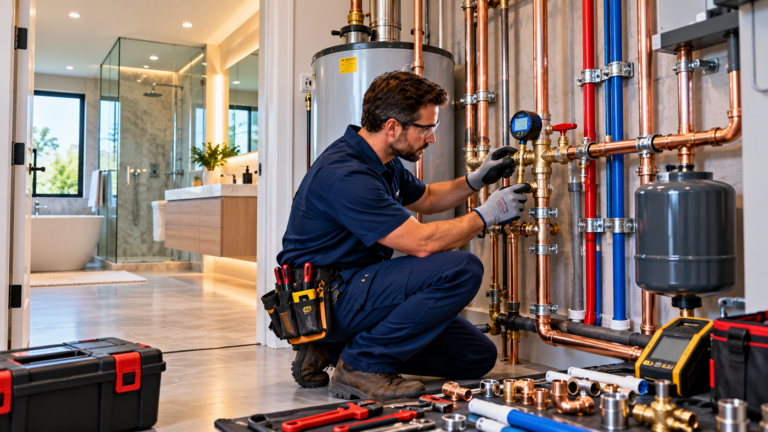
A qualified plumber can measure pressure, examine relevant equipment, and recommend corrective work.
The appropriate operating range depends on the building and its plumbing design.
5. Maintain Water Heaters and Repair Problems Safely
Water heaters support everyday activities such as bathing, cleaning, and household washing.
Problems may include inadequate hot water, leaks, unusual operating sounds, or inconsistent temperatures.
Some issues involve plumbing connections, while others relate to electrical components, gas equipment, heating elements, or controls.
Identify Water Heater Warning Signs
Visible water around the heater, corrosion, unusual noises, and repeated loss of hot water deserve investigation.
The source of moisture should be identified because condensation and leakage do not necessarily have the same cause.
Equipment age, water conditions, and maintenance history can influence performance.
Understand Temperature Safety
Water that is excessively hot can create scalding hazards.
Water heater temperature management must also consider manufacturer instructions, microbial risks, and applicable plumbing requirements.
A suitable system may use temperature controls or mixing valves to manage delivered water temperature.
Leave Hazardous Repairs to Qualified Professionals
Water heater repairs involving gas connections, combustion equipment, electrical circuits, pressure relief devices, or internal safety controls should be performed by appropriately qualified professionals.
Residents should never disable safety devices or work on energized or pressurized equipment without the required expertise.
6. Recognize Sewer Line and Wastewater Problems
Sewer and wastewater problems require particular attention because they can create sanitation hazards and disrupt multiple plumbing fixtures.
A blockage or damaged drainage line may prevent wastewater from moving away from the property.
Potential causes include accumulated debris, pipe deterioration, root intrusion, or physical damage.
Watch for Multiple Drainage Symptoms
Repeated backups affecting several fixtures may indicate a restriction in a shared drainage line.
Unusual wastewater movement between fixtures can also suggest a system level problem.
A single blocked sink does not automatically establish a damaged sewer line.
The symptoms must be evaluated together.
Understand Sewer Inspection Methods
Professional plumbers may use suitable camera equipment to inspect accessible drainage lines.
Camera inspections can help identify certain visible defects, obstructions, or pipe conditions.
However, additional investigation may be needed to establish the full cause or extent of a problem.
Treat Sewage Backups as a Safety Concern
Avoid direct contact with wastewater that may contain sewage.
Keep children and pets away from affected areas and stop using connected fixtures if continued use could worsen the backup.
Professional drainage repair and appropriate cleanup may be necessary before the affected area can be used safely.
7. Establish Preventive Plumbing Maintenance
Preventive maintenance helps homeowners recognize developing issues before they interrupt daily activities.
Routine checks do not eliminate every possibility of plumbing failure, but they can reveal leaks, deteriorating components, and unusual water use.
Inspect Accessible Plumbing Components
Periodically examine visible pipes, sink cabinets, toilet connections, and appliance supply hoses.
Look for moisture, corrosion, damaged connections, or unexpected changes.
Avoid disturbing fittings that are under pressure.
Maintain Household Fixtures
Faucet aerators and showerheads may accumulate mineral deposits that restrict flow.
Appropriate cleaning can restore normal operation when buildup is the cause.
Water heaters, pressure regulating equipment, and other specialized components should be maintained according to manufacturer recommendations.
Consider Water Leak Detection Technology
Moisture sensors and water flow monitoring devices can help identify unusual conditions.
Some systems can also trigger automatic water shutoff equipment.
Their effectiveness depends on installation, configuration, monitoring, and regular maintenance.
These technologies support preventive care but cannot guarantee that every leak will be detected.
What Should You Do During a Plumbing Emergency?
A plumbing emergency requires an immediate response when uncontrolled water, sewage, or associated electrical hazards threaten occupants or property.
The first objective is to protect people and prevent further damage without creating additional risks.
Locate the Main Water Shutoff Valve
Homeowners should know where the main water shutoff is located before an emergency occurs.
If a pipe bursts and the valve is safely accessible, closing it may reduce further water release.
Do not enter a hazardous area to reach a valve.
Avoid Electrical Hazards
Water near electrical equipment, outlets, or wiring can create serious danger.
Never touch electrical controls or use powered equipment while standing in water.
If electrical systems may be affected, contact an appropriate professional or emergency service for assistance.
Respond Safely to Gas Concerns
If a gas leak is suspected, leave the area, avoid operating electrical switches or anything that may create a spark, and contact the gas utility or emergency services from a safe location.
Gas related work should not be attempted as a household plumbing repair.
How Professional Plumbers Diagnose Plumbing Problems
A qualified plumber generally begins by discussing the symptoms and reviewing the affected fixtures or system components.
The next step depends on the type of problem.
For visible leaks, the technician may examine fittings, seals, valves, and nearby piping.
For pressure problems, appropriate measurements can help distinguish fixture restrictions from supply issues.
Drainage problems may require mechanical assessment or specialized inspection equipment.
Selecting an Appropriate Repair Method
Following diagnosis, the plumber should explain the likely cause and relevant repair options.
These may involve adjusting a component, replacing a worn fitting, repairing a pipe section, or recommending more extensive work.
An effective repair should address the underlying problem whenever it can be reliably identified.
Testing After Completion
The repaired component should be tested under appropriate operating conditions.
Relevant checks may include verifying water flow, looking for leaks, confirming drainage, and reviewing equipment operation.
Testing helps identify issues before the work is considered complete.
How Much Does Plumbing Repair Cost?
Plumbing repair costs depend on the type of problem, location, accessibility, material requirements, and labor involved.
There is no single reliable price that applies to every property or repair.
Replacing an accessible faucet component typically involves different work from repairing concealed piping or restoring a damaged sewer line.
Factors Affecting Repair Costs
The main considerations include the time required for diagnosis, complexity of the work, replacement materials, and whether additional access is necessary.
Emergency callouts and repairs performed outside standard working hours may involve different charges.
Local labor conditions and licensing requirements can also influence pricing.
Request a Clear Written Estimate
Before authorizing nonemergency work, ask for an explanation of the expected charges.
The estimate should identify the proposed repair, relevant materials, and any known exclusions.
For work involving hidden damage, the plumber should explain whether additional findings could change the final price.
A clear estimate helps homeowners compare suitable repair options without focusing only on the lowest initial quote.
DIY Plumbing Repair vs Professional Plumbing Services
Some basic household plumbing tasks are relatively straightforward.
For example, homeowners may be able to clean an accessible faucet aerator or conduct a noninvasive toilet leak test.
However, working on pressurized pipes, concealed water lines, gas appliances, drainage systems, or electrical water heating equipment involves greater risks.
When Simple Home Maintenance May Be Suitable
Routine observation, cleaning, and basic maintenance may be appropriate when performed according to manufacturer instructions.
Homeowners should avoid dismantling components they do not understand.
When to Call a Licensed Plumber
Professional assistance is especially important for persistent leaks, repeated blockages, damaged supply piping, sewer backups, and water heater problems involving hazardous systems.
Licensing and permit requirements vary by jurisdiction, so homeowners should confirm the rules that apply to their property.
How to Choose a Reliable Plumbing Repair Professional
Selecting the right plumber can influence repair quality, safety, and long term reliability.
Homeowners should evaluate professional credentials, relevant experience, communication, and the proposed scope of work.
Verify Qualifications and Insurance
Where licensing is required, confirm that the contractor holds the appropriate authorization for the proposed work.
Relevant insurance coverage should also be reviewed.
A plumber experienced in routine residential fixtures may not necessarily be qualified for every specialized installation.
Ask About Repair Experience
Describe the symptoms and ask whether the professional regularly handles similar problems.
For complex drainage, water heater, or concealed piping issues, relevant equipment and diagnostic experience may be important.
Review Warranty and Documentation
Ask whether the contractor provides workmanship warranties and whether replacement parts have separate manufacturer coverage.
Warranty terms should identify what is included and any conditions or exclusions.
Prioritize Clear Communication
A trustworthy professional should explain the recommended repair, expected limitations, and any significant uncertainties.
Homeowners should feel comfortable asking why a component needs replacement and whether alternative repairs are suitable.
Plumbing Repair for Older Homes
Older residential properties may contain plumbing materials, layouts, or connections that differ from those used in newer construction.
Some systems have undergone several renovations, resulting in mixed pipe materials and modifications.
A qualified plumber should evaluate existing conditions before recommending major repairs.
Understanding Pipe Materials
Residential systems may include copper, PEX, CPVC, PVC, cast iron, or other permitted materials, depending on the application and local rules.
Not every material is approved for every purpose.
Repairing or Replacing Aging Pipes
The decision between a localized repair and broader pipe replacement depends on the condition of the system.
Recurring failures, widespread corrosion, and inaccessible defects may justify more extensive evaluation.
Homeowners should request an explanation of the evidence supporting a replacement recommendation.
How Regular Plumbing Maintenance Protects Your Home
A consistent maintenance routine makes it easier to identify unusual conditions.
Homeowners can organize simple checks around their existing household maintenance schedule.
Useful tasks include:
- Inspecting accessible supply and drain connections for moisture.
- Checking faucets, showers, and toilets for persistent leaks.
- Monitoring unexplained changes in water consumption.
- Keeping unsuitable objects and grease out of drains.
- Examining appliance hoses for visible deterioration.
- Maintaining water heating equipment according to manufacturer guidance.
- Testing installed leak detection equipment.
- Keeping emergency shutoff valves accessible.
These activities can help reveal problems, but they do not replace professional inspection where specialized expertise is required.
Preventing Future Water Damage
Water damage prevention requires attention to both plumbing condition and surrounding building materials.
Leaks should be corrected promptly, and affected areas should be assessed for trapped moisture.
Persistent dampness may require further investigation or professional drying and restoration.
A repair is most successful when the source of unwanted water has been corrected and any resulting damage has been appropriately addressed.
The Future of Residential Plumbing Repair
Residential plumbing continues to benefit from improved diagnostic tools, water monitoring technology, and more efficient fixtures.
Digital moisture sensors and flow monitoring systems can provide earlier indications of some leaks.
Specialized inspection equipment can help professionals examine inaccessible drainage components without immediately opening large areas of finished surfaces.
Water efficient fixtures may also help households reduce unnecessary consumption when installed and used appropriately.
However, technology cannot replace correct system design, suitable materials, and competent installation.
The most effective approach combines practical maintenance, timely investigation, and professional repairs when required.
Frequently Asked Questions
1. What are the most common plumbing repair problems?
Common plumbing problems include leaking faucets, damaged pipes, clogged drains, running toilets, low water pressure, and malfunctioning water heaters.
2. How do I know if I need professional plumbing repair?
Persistent leaks, recurring drain blockages, sewage backups, concealed water damage, and problems involving pressurized or hazardous equipment generally require professional evaluation.
3. Can plumbing repairs help reduce water bills?
Yes. Correcting water leaks and replacing malfunctioning fixtures can reduce unnecessary water consumption, although actual savings depend on the problem and household usage.
4. How much does residential plumbing repair cost?
Costs vary according to the problem, labor requirements, replacement materials, accessibility, and location. A qualified plumber can provide a project specific estimate.
5. Is it safe to repair plumbing problems myself?
Basic maintenance may be suitable for homeowners, but work involving gas, electrical systems, concealed pipes, sewage, or complex repairs should be handled by qualified professionals.
6. How often should homeowners inspect their plumbing systems?
Homeowners should check accessible fixtures and connections regularly, investigate unusual symptoms promptly, and follow manufacturer recommendations for specialized plumbing equipment.
Conclusion
Plumbing repair is an essential part of maintaining a safe, functional, and comfortable home. Recognizing leaks, drainage problems, pressure changes, and equipment faults early can help reduce disruption and prevent avoidable damage. While simple maintenance tasks may be manageable for homeowners, complex repairs require appropriate professional knowledge and equipment. By combining regular inspections, timely corrective action, and qualified plumbing services, property owners can support reliable plumbing performance and protect their homes over the long term.