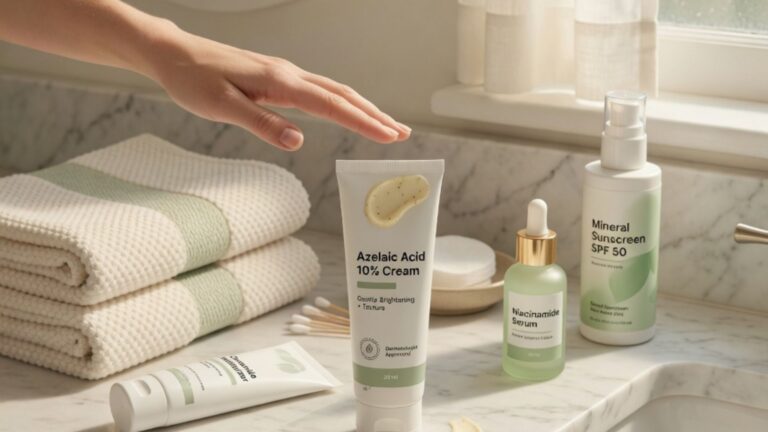
If you struggle with acne, redness, uneven tone, post-breakout marks, or sensitive-looking skin, azelaic acid cream may be a useful ingredient to consider in your skincare routine. Azelaic acid is a well-known topical ingredient used in skincare for concerns such as blemishes, visible redness, clogged pores, and hyperpigmentation. It is often valued because it can support clearer-looking skin while being suitable for many skin types, including people who find stronger exfoliating acids or retinoids difficult to tolerate.
Like any active skincare ingredient, azelaic acid works best when used consistently, carefully, and with realistic expectations. Results do not usually happen overnight. Most people need several weeks of regular use before noticing visible changes in texture, redness, or dark spots. It is also important to use sunscreen during the day, avoid overloading the skin with too many strong actives, and introduce the product gradually if your skin is sensitive.
This guide explains what azelaic acid cream is, how it works, who may benefit from it, how to use it, and what to check before choosing a formula.
What Is Azelaic Acid Cream?
Azelaic acid cream is a topical skincare product formulated with azelaic acid, a naturally occurring acid found in grains such as barley, wheat, and rye. In skincare, azelaic acid is usually lab-formulated for stability, consistency, and effectiveness.
It is commonly used to help improve the appearance of:
- Mild to moderate acne
- Redness-prone skin
- Rosacea-related visible redness
- Post-acne marks
- Melasma
- Uneven skin tone
- Rough texture
- Clogged pores
- Dull-looking skin
Azelaic acid is different from stronger exfoliating acids like glycolic acid or salicylic acid. It has gentle exfoliating, antibacterial, antioxidant, and tone-supporting properties. This makes it a versatile ingredient for people who want a multi-benefit product without using several separate treatments.
Azelaic Acid Cream Benefits for Acne, Redness, and Dark Spots
Azelaic acid cream is popular because it can address several common skin concerns at the same time. While results vary by skin type and condition, it may help support a more balanced-looking complexion when used consistently.
Potential benefits include:
- Helping reduce clogged pores
- Supporting calmer-looking redness
- Improving the look of post-acne marks
- Helping brighten uneven tone
- Supporting smoother skin texture
- Reducing the appearance of blemishes
- Helping minimise visible inflammation
- Supporting skin clarity over time
For acne-prone skin, azelaic acid may help by reducing bacteria on the skin and supporting normal skin cell turnover. For redness-prone skin, it may help calm the visible appearance of irritation. For hyperpigmentation, it can support a more even-looking skin tone by helping reduce the look of excess pigmentation over time.
How Azelaic Acid Cream Works on the Skin
Azelaic acid works through several mechanisms, which is why it is often recommended for multiple concerns.
First, it has keratolytic properties, meaning it helps encourage the shedding of dead skin cells. This can reduce the appearance of clogged pores and rough texture.
Second, azelaic acid has antibacterial activity, which may help reduce acne-related bacteria on the skin. This can be useful for people dealing with recurring breakouts.
Third, it has anti-inflammatory properties, which can help improve the look of redness and irritation. This is one reason it is often discussed in routines for rosacea-prone skin.
Finally, azelaic acid can help reduce the appearance of hyperpigmentation by influencing excess pigment activity. This makes it useful for post-acne marks, melasma, and uneven tone, though pigmentation concerns usually require patience and sunscreen.
Who Should Consider Azelaic Acid Cream?
Azelaic acid cream may be suitable for many people, especially those who want a gentle but effective active ingredient. It may be considered by people with acne-prone, redness-prone, oily, combination, or uneven skin tone concerns.
It may be especially helpful if you:
- Break out frequently but cannot tolerate harsh acne products
- Have redness or irritation-prone skin
- Want to fade post-acne marks gradually
- Struggle with dull or uneven skin texture
- Need an active ingredient that layers well with gentle routines
- Prefer a cream format over a serum or gel
However, anyone with persistent acne, rosacea, melasma, painful breakouts, or severe irritation should consider speaking with a dermatologist or qualified healthcare professional. Skincare can help, but some conditions need medical guidance.
How to Use Azelaic Acid Cream in Your Routine
Azelaic acid cream should be introduced gradually, especially if your skin is sensitive. Start with a small amount and monitor how your skin responds.
A simple routine may look like this:
Morning
- Gentle cleanser
- Hydrating serum or moisturiser
- Thin layer of azelaic acid cream
- Broad-spectrum sunscreen SPF 30 or higher
Evening
- Gentle cleanser
- Moisturiser
- Azelaic acid cream if tolerated, or use on alternate nights
Some people use azelaic acid once daily, while others can build up to twice daily. More is not always better. Applying too much or using it too often can increase dryness, stinging, or irritation.
Avoid applying it too close to the eyes, lips, or inside the mouth. A pea-sized amount is often enough for the face.
Azelaic Acid Cream and Sunscreen
Sunscreen is essential when using azelaic acid cream, especially if your goal is to improve dark spots, melasma, or post-acne marks. Sun exposure can worsen pigmentation and make results harder to maintain.
Use a broad-spectrum sunscreen every morning and reapply when needed, especially if outdoors. This is important even on cloudy days. If you use azelaic acid for uneven tone but skip sunscreen, progress may be slower or less noticeable.
For sensitive or redness-prone skin, mineral sunscreens may be more comfortable for some people, though the best sunscreen is the one you can use consistently.
Can Azelaic Acid Cream Be Used With Other Skincare Ingredients?
Azelaic acid cream can fit into many routines, but it should be layered thoughtfully. Combining too many active ingredients at once can irritate the skin.
It may pair well with:
- Niacinamide
- People who build their own layering routine sometimes start with a hyaluronic acid base for DIY peptide serum so hydration and active ingredients stay separate
- Ceramides
- Gentle moisturisers
- Sunscreen
- Mild cleansers
Be careful when combining azelaic acid with:
- Retinoids
- Benzoyl peroxide
- Glycolic acid
- Lactic acid
- Salicylic acid
- Strong exfoliating products
- Harsh scrubs
- Astringent toners
If you use retinoids or exfoliating acids, consider using them at a different time of day or on alternate nights. For example, azelaic acid in the morning and a retinoid at night may be more tolerable than layering both together.
Azelaic Acid Cream Side Effects and Sensitivity
Azelaic acid is often well tolerated, but side effects can happen. Mild tingling, dryness, itching, or temporary stinging may occur when first starting.
Possible side effects include:
- Mild burning or stinging
- Dryness
- Peeling
- Itching
- Temporary redness
- Irritation if overused
To reduce irritation:
- Start slowly
- Use a small amount
- Apply moisturiser
- Avoid harsh cleansers
- Do not combine too many actives
- Use sunscreen daily
- Patch test before full-face use
If you experience severe burning, swelling, rash, or worsening irritation, stop using the product and seek professional advice.
How Long Does Azelaic Acid Cream Take to Work?
Azelaic acid is not an instant treatment. Most people need consistent use for several weeks before visible results appear.
A general timeline may look like this:
- First few weeks: Skin adjusts; mild tingling or dryness may occur
- 6 to 8 weeks: Redness, texture, and breakouts may begin improving
- Around 3 months: More noticeable improvement in tone, dark spots, and overall clarity may appear
Results depend on the strength of the product, consistency, skin condition, sunscreen use, and whether other triggers are controlled. Acne, rosacea, and pigmentation can all have internal and external causes, so skincare may be only one part of the solution.
Choosing the Right Azelaic Acid Cream
Not all azelaic acid products are the same. Formula quality, concentration, texture, supporting ingredients, and irritation potential all matter.
Before buying, consider:
- Azelaic acid percentage
- Cream texture
- Skin type suitability
- Fragrance-free or low-irritant formula
- Whether it pills under sunscreen or makeup
- Supporting ingredients
- Packaging stability
- Brand transparency
- Customer reviews
- Dermatologist or clinical guidance
- Return policy
Lower strengths may be better for beginners or sensitive skin. Higher non-prescription strengths may be more effective for some concerns but should still be introduced carefully.
Common Mistakes to Avoid
Many people give up too early or use azelaic acid incorrectly. Avoid these common mistakes:
- Applying too much product
- Expecting overnight results
- Using it as a spot treatment only
- Skipping sunscreen
- Combining it with too many actives
- Using harsh cleansers
- Applying near the eyes or lips
- Stopping after one mild tingling sensation
- Ignoring persistent irritation
- Not moisturising enough
Azelaic acid works best as part of a steady routine, not as a quick fix.
Conclusion: Is Azelaic Acid Cream Worth Trying?
Azelaic acid cream can be a valuable addition to a skincare routine for people dealing with acne, redness, uneven tone, post-breakout marks, melasma, or rough texture. Its strength lies in its versatility: it can support clearer-looking skin, calmer redness, and gradual brightening without being as harsh as some stronger actives. The key is consistent use, proper layering, daily sunscreen, and patience. If your skin concern is severe, persistent, or medically diagnosed, speak with a dermatologist before relying on azelaic acid cream alone.
FAQs
What is azelaic acid cream used for?
Azelaic acid cream is commonly used to help improve acne, redness, uneven skin tone, post-acne marks, melasma, and rough texture.
Can azelaic acid cream help with acne?
Yes, it may help acne-prone skin by reducing clogged pores, calming visible inflammation, and supporting a clearer-looking complexion.
How often should I use azelaic acid cream?
Many people start once daily or every other day, then increase gradually if tolerated. Follow product directions and your skin’s response.
Can I use azelaic acid cream with retinol?
You can use both in some routines, but it is often better to separate them, such as azelaic acid in the morning and retinol at night.
Does azelaic acid cream cause purging?
Some people may notice temporary changes as skin adjusts, but persistent irritation, burning, or worsening breakouts should be reviewed.
Do I need sunscreen with azelaic acid cream?
Yes, sunscreen is important, especially if you are using azelaic acid for dark spots, melasma, redness, or uneven tone.