

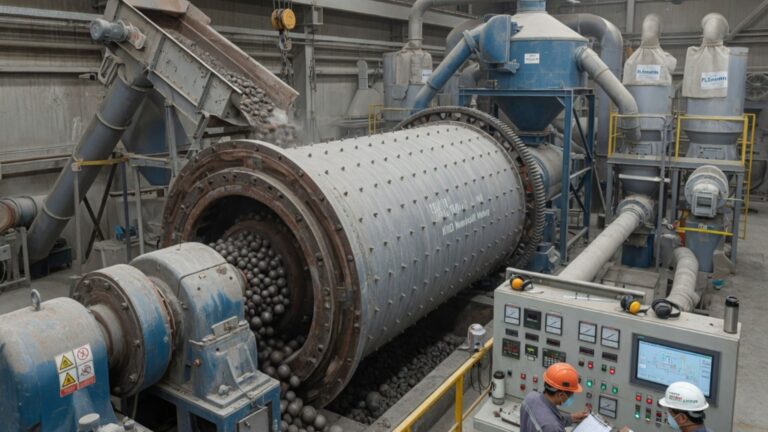
A Ball Mill is one of the most widely used grinding machines in cement production, mineral processing, ceramics, chemicals, and other industrial applications where materials must be reduced to a fine powder. In cement manufacturing, ball mills are commonly used for grinding raw materials, clinker, additives, and other feed materials into the required fineness for stable production and quality control. While the basic concept is simple—a rotating cylinder filled with grinding media—the actual performance of a ball mill depends on design, feed characteristics, liner condition, media loading, ventilation, separator efficiency, and maintenance practices.
For cement plants, the ball mill remains important because it can handle a wide range of materials and operating conditions. It is known for its robust structure, reliable grinding action, and ability to produce consistent particle size when properly operated. However, efficiency is not automatic. A poorly maintained or incorrectly operated mill can consume unnecessary power, produce inconsistent output, and increase wear on internal parts.
This guide explains how ball mills work, why they matter in cement raw material grinding, which components are most important, and how operators can improve performance through better selection, operation, and maintenance.
What Is a Ball Mill?
A ball mill is an industrial grinding machine that uses rotating motion and grinding media to reduce material size. The machine usually consists of a horizontal cylindrical shell that rotates around its axis. Inside the shell, steel balls or other grinding media lift and fall as the mill rotates, crushing and grinding the material through impact and friction.
In cement production, a ball mill may be used to grind limestone, clay, shale, iron ore, clinker, gypsum, slag, or other additives depending on the production stage. For raw material grinding, the goal is to prepare a fine and uniform raw meal that can be processed efficiently in the kiln system.
A typical ball mill system may include:
- Feeding equipment
- Rotating mill shell
- Grinding media
- Mill liners
- Diaphragm or partition plates
- Drive system
- Bearings and lubrication system
- Discharge system
- Separator or classifier
- Dust collection and ventilation equipment
- Control and monitoring system
Each part affects grinding performance, energy use, and product quality.
How a Ball Mill Works
A ball mill works by rotating the cylindrical chamber at a controlled speed. As the shell rotates, the grinding media inside rises along the mill wall and then falls back onto the material. This repeated lifting, cascading, and impact action breaks the material into smaller particles.
The grinding process includes two main forces:
- Impact, where grinding media strikes the material
- Attrition, where particles are reduced by rubbing and friction
If the mill rotates too slowly, the grinding media may not lift enough to create effective impact. If it rotates too quickly, the media may stick to the shell due to centrifugal force, reducing grinding efficiency. This is why mill speed must be carefully selected and controlled.
In many cement grinding systems, the ball mill works together with a separator. The separator classifies material by particle size. Fine material moves forward as finished product, while coarse particles return to the mill for additional grinding. This closed-circuit system helps improve product consistency and energy efficiency.
Ball Mill Use in Cement Raw Material Grinding
Ball mill systems are used in cement raw material grinding to prepare a stable raw meal for kiln operation. Raw materials such as limestone and clay must be ground to a suitable fineness and mixed properly before being heated in the kiln.
Consistent raw meal fineness matters because it affects:
- Kiln feed stability
- Chemical uniformity
- Heat transfer efficiency
- Clinker quality
- Fuel consumption
- Emission control
- Overall cement plant performance
A raw material ball mill is designed to process materials with different hardness, moisture levels, and grindability. Depending on the plant layout, it may operate in open circuit or closed circuit with a separator.
For cement plants, the objective is not just fine grinding. The objective is controlled grinding that supports efficient clinker production and stable cement quality.
Key Components of a Ball Mill
Understanding the main components helps operators identify performance problems and plan maintenance more effectively.
Mill Shell
The mill shell is the rotating cylindrical body that holds the grinding media and material. It must be strong enough to handle mechanical stress, grinding loads, and long-term operation.
Grinding Media
Grinding media are usually steel balls of different sizes. Larger balls help break coarse feed material, while smaller balls improve fine grinding. Media grading is important because incorrect ball size distribution can reduce grinding efficiency.
Mill Liners
Liners protect the inner shell from wear and help lift the grinding media during rotation. Liner design affects grinding action, power consumption, and mill capacity. Worn liners can reduce efficiency and increase energy use.
Diaphragm Plates
In multi-chamber mills, diaphragm plates separate grinding chambers and control material flow. They help ensure that material moves through the mill at the right rate.
Drive System
The drive system powers mill rotation. It may include a motor, gearbox, girth gear, pinion, and related control equipment. Reliable drive operation is essential for continuous production.
Separator
The separator classifies ground material and returns coarse particles for further grinding. Separator efficiency directly affects product fineness, circulation load, and energy consumption.
Ball Mill Efficiency Factors
Ball mill efficiency depends on several operating and design factors. Small changes can have a major impact on output and power consumption.
Important efficiency factors include:
- Feed size and feed uniformity
- Material moisture content
- Grindability of raw materials
- Mill speed
- Grinding media size and filling level
- Liner condition
- Ventilation and air flow
- Separator performance
- Circulating load
- Product fineness target
- Mill loading and residence time
For example, oversized feed material can reduce mill capacity because the first chamber must spend more energy on coarse crushing. Excess moisture may cause material coating, poor flow, or reduced grinding efficiency. Worn liners may fail to lift grinding media properly, weakening impact action.
Efficient grinding requires continuous monitoring and adjustment.
Ball Mill Maintenance Best Practices
Maintenance is essential for safe and reliable ball mill operation. Because ball mills operate under heavy loads, wear and mechanical stress are unavoidable. Preventive maintenance helps reduce unplanned shutdowns and extend equipment life.
Key maintenance tasks include:
- Inspecting liners for wear
- Checking grinding media condition
- Monitoring bearing temperature
- Maintaining lubrication systems
- Inspecting gears and drive components
- Checking vibration levels
- Reviewing motor load trends
- Cleaning or inspecting diaphragms
- Monitoring separator performance
- Checking bolts, seals, and structural parts
- Inspecting dust collection and ventilation systems
Maintenance should be based on both scheduled inspections and condition monitoring. Vibration analysis, temperature monitoring, oil analysis, and power consumption trends can help detect problems early.
A well-maintained ball mill is more likely to deliver stable capacity, consistent fineness, and lower operating risk.
Ball Mill Selection Factors
Choosing the right ball mill requires a careful review of production goals and material characteristics. The best mill is not simply the largest or most expensive option. It must match the process requirements.
Important selection factors include:
- Required grinding capacity
- Feed material type
- Feed size
- Material hardness and abrasiveness
- Moisture content
- Target product fineness
- Open or closed circuit design
- Separator requirements
- Available plant space
- Power consumption targets
- Maintenance accessibility
- Dust control requirements
- Automation and monitoring needs
For cement raw material grinding, the mill should be selected based on the required raw meal quality, kiln feed needs, and long-term operating conditions.
Ball Mill vs. Other Grinding Equipment
Ball mills are often compared with vertical roller mills, roller presses, and other grinding systems. Each technology has advantages depending on the application.
A ball mill is valued for:
- Strong mechanical reliability
- Wide material adaptability
- Proven industrial use
- Ability to produce fine powders
- Stable grinding performance
- Simpler operating principle
However, ball mills can have higher energy consumption compared with some modern grinding technologies in certain applications. This is why many plants focus on optimization, separator upgrades, media grading, and process control to improve performance.
The right grinding system depends on plant priorities, material behavior, energy goals, maintenance capacity, and capital investment.
Common Ball Mill Problems
Even a well-designed ball mill can face operational problems if conditions are not controlled.
Common issues include:
- Low grinding capacity
- High power consumption
- Coarse product fineness
- Excessive liner wear
- High vibration
- Overheating bearings
- Poor material flow
- Media breakage
- Separator inefficiency
- Excessive dust emissions
Troubleshooting should begin with data. Operators should review feed rate, mill power, product fineness, circulating load, temperatures, vibration, air flow, and inspection results. Guesswork can lead to unnecessary downtime or incorrect adjustments.
Improving Ball Mill Performance
Performance improvement often comes from a combination of mechanical, operational, and process changes.
Useful optimization steps include:
- Controlling feed size
- Maintaining proper media grading
- Replacing worn liners on time
- Optimizing separator settings
- Improving mill ventilation
- Monitoring material moisture
- Reducing false air in the system
- Checking diaphragm condition
- Using process control data
- Training operators on mill behavior
In cement plants, small efficiency improvements can matter because grinding is energy-intensive. Better control can reduce waste, improve product consistency, and support more stable production.
Conclusion: Why the Ball Mill Still Matters
A Ball Mill remains a reliable and widely used solution for cement raw material grinding and other industrial milling applications. Its value comes from a proven grinding principle, strong material adaptability, and the ability to produce consistent fine powder when properly operated. However, achieving good results depends on correct mill selection, suitable grinding media, liner maintenance, separator efficiency, feed control, ventilation, and regular monitoring. For cement plants and industrial operators, the ball mill is not just a machine—it is a key part of process stability, product quality, and long-term operational efficiency.
FAQs
What is a ball mill used for?
A ball mill is used to grind materials into fine powder in industries such as cement, mining, ceramics, chemicals, and metallurgy.
How does a ball mill work?
A ball mill rotates a cylindrical chamber filled with grinding media, which crushes and grinds material through impact and friction.
Why is a ball mill used in cement plants?
Cement plants use ball mills to grind raw materials, clinker, gypsum, and additives to the required fineness for production.
What affects ball mill efficiency?
Efficiency depends on feed size, moisture, media grading, liner condition, mill speed, ventilation, separator performance, and material grindability.
How often should ball mill liners be inspected?
Liners should be inspected regularly based on operating hours, wear rate, production load, and maintenance planning.
Is a ball mill suitable for raw material grinding?
Yes, a ball mill can be suitable for cement raw material grinding when designed and operated according to feed and fineness requirements.


