

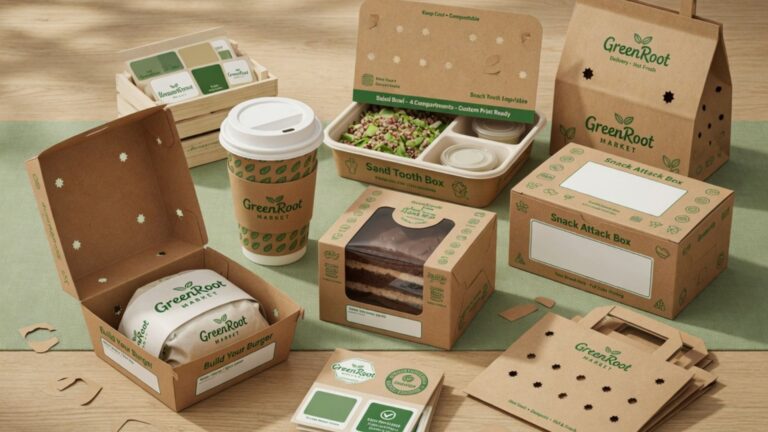
Food delivery is no longer only about speed. Customers expect meals to arrive warm, fresh, secure, visually appealing, and easy to handle. That is why customisable paper packaging has become an important solution for restaurants, cafés, bakeries, fast-food brands, catering businesses, and delivery-focused food operators. Different foods have different needs, and packaging must support those needs from kitchen to customer. A burger box may need steam ventilation, a dessert box may need rigidity and presentation value, and a salad bowl may need moisture resistance and a secure lid.
Paper-based packaging has evolved from basic takeaway containers into a flexible food service tool. Today, brands can adjust size, structure, compartments, ventilation, coatings, printing, and strength to match specific menu items. This helps protect food quality during transport while also supporting brand identity and customer experience.
This guide explains why product-specific paper packaging matters, what features to consider, and how food businesses can use customised packaging to improve delivery performance.
What Is Customisable Paper Packaging?
Customisable paper packaging refers to paper-based food containers, cups, boxes, trays, bowls, sleeves, lids, and wraps that can be adapted to suit a business’s products, branding, and operational needs. Instead of relying on one standard box for every menu item, restaurants can choose packaging that fits the food more precisely.
Customisation may include:
- Container dimensions
- Ventilation openings
- Compartment layouts
- Paper thickness
- Structural strength
- Grease-resistant barriers
- Moisture-resistant coatings
- Lid design
- Full-colour printing
- Brand logos and messaging
- Stackable shapes
- Portion-specific sizing
- Temperature-specific features
The goal is to create packaging that protects the food, supports efficient handling, and presents the brand professionally.
Why Customisable Paper Packaging Matters for Food Delivery
Customisable paper packaging matters because food changes during transport. Heat, steam, moisture, pressure, movement, and time can affect taste, texture, and presentation. Packaging that works well for one item may perform poorly for another.
For example, crispy foods can become soggy if steam is trapped inside the container. Saucy foods may leak if the structure or lid is not suitable. Cakes and pastries may lose visual appeal if the box is too weak. Hot drinks need secure cups and lids that are comfortable to carry.
Well-designed packaging helps food businesses:
- Preserve food texture
- Reduce leakage
- Improve presentation
- Support portion control
- Strengthen brand recognition
- Reduce customer complaints
- Improve delivery handling
- Separate ingredients effectively
- Support takeaway and catering operations
Good packaging does not replace good food preparation, but it helps ensure the food reaches the customer in better condition.
Customisable Paper Packaging for Different Food Types
Different menu categories require different packaging characteristics. A product-specific approach helps restaurants avoid using generic containers that compromise quality.
Customisable Paper Packaging for Burgers and Hot Food
Burgers, wraps, loaded fries, sandwiches, and hot snacks often release steam. If steam cannot escape, bread can soften and fried elements may lose crispness. Ventilation is often important for these foods.
Useful features may include:
- Small steam vents
- Grease-resistant paper
- Strong hinged lids
- Compact fit to reduce movement
- Heat-tolerant structure
- Stackable box design
The packaging should keep the food warm while allowing enough airflow to protect texture.
Customisable Paper Packaging for Desserts and Bakery Items
Desserts need protection and presentation. Cakes, cupcakes, pastries, cookies, and premium sweets are often judged visually before they are tasted. A weak or poorly sized box can damage the product during transport.
Important dessert packaging features include:
- Rigid structure
- Insert trays or holders
- Clear presentation where suitable
- Stable base
- Moisture control
- Attractive branding
- Easy opening without damage
For bakeries and cafés, packaging can become part of the product experience. A well-presented dessert box can help create a premium impression.
Customisable Paper Packaging for Salads and Bowls
Salads, grain bowls, pasta bowls, and cold meals need packaging that manages moisture without collapsing. Secure lids are important, especially for delivery.
Useful features may include:
- Moisture-resistant lining
- Strong sidewalls
- Secure lid compatibility
- Portion-based sizing
- Separate compartments for toppings or dressings
- Stackable design
Cold food packaging should preserve freshness and prevent ingredients from mixing too early.
Customisable Paper Packaging and Brand Identity
Packaging is often the first physical touchpoint a delivery customer has with a food brand. A customer may order through an app, but the packaging is what they hold, open, photograph, and remember.
Custom printing can help businesses communicate:
- Brand name
- Logo
- Colour palette
- Sustainability message
- Product category
- Social media details
- Care instructions
- Promotional messaging
- Seasonal campaigns
However, branding should not overwhelm function. A beautiful box that leaks or crushes easily will not create a good experience. The best packaging balances design and performance.
Customisable Paper Packaging for Sustainability Goals
Many food businesses are looking for alternatives to traditional plastic packaging. Paper-based packaging can support sustainability goals when responsibly sourced, properly designed, and suitable for available recycling or composting systems.
However, sustainability claims should be accurate. Not every paper package is automatically recyclable or compostable, especially if it includes coatings, food contamination, or mixed materials. Businesses should check material specifications and local waste handling rules.
Sustainability-focused packaging decisions may include:
- Reducing unnecessary material
- Choosing recyclable materials where suitable
- Avoiding over-packaging
- Selecting responsibly sourced paper
- Using fibre-based lids where appropriate
- Designing for easier sorting
- Printing clear disposal guidance
A responsible approach is better than vague eco-friendly claims. Customers increasingly expect transparency.
Structural Strength in Customisable Paper Packaging
Food packaging must survive real delivery conditions. Items may be stacked in bags, placed in vehicles, carried upstairs, handled by couriers, or exposed to movement during transit. Weak packaging can collapse, bend, leak, or damage food presentation.
Structural design should consider:
- Food weight
- Transport duration
- Moisture level
- Stacking pressure
- Temperature
- Lid security
- Courier handling
- Customer opening experience
For heavier meals, thicker paperboard or reinforced corners may be needed. For delicate items, inserts or compartments can reduce movement. For saucy food, sealing performance matters as much as box strength.
Ventilation and Moisture Control
Ventilation is one of the most important product-specific packaging features. It helps manage steam and condensation. Without it, hot food may become soggy or lose texture before arrival.
Ventilation should be carefully designed. Too little airflow traps moisture, while too much airflow may cool food too quickly. The right balance depends on the food type, transport time, and container design.
Foods that may benefit from ventilation include:
- Burgers
- Fried chicken
- Fries
- Hot sandwiches
- Pizza slices
- Pastries
- Toasted wraps
Moisture control is equally important for cold and wet foods. Salads, sauces, and desserts may need barriers or compartments instead of vents.
Operational Benefits for Restaurants
Customised packaging does not only improve the customer experience. It can also help kitchen and delivery operations run more smoothly.
Operational benefits may include:
- Faster packing
- Better portion control
- Fewer wrong-container mistakes
- Easier stacking
- Improved storage efficiency
- Better delivery bag organisation
- Reduced leakage incidents
- More consistent presentation
- Clearer product identification
When packaging is designed around the menu, staff can work more efficiently. This matters during busy service periods when speed and accuracy are critical.
How to Choose Customisable Paper Packaging
Choosing the right packaging starts with understanding the food, not the box. Businesses should test packaging with real menu items under real delivery conditions.
Before ordering, consider:
- What food will the packaging hold?
- Is the food hot, cold, dry, greasy, or moist?
- How long is the typical delivery journey?
- Does the item need ventilation?
- Does it need compartments?
- Will it be stacked?
- Does it need branding?
- Is the material suitable for the food?
- Are sustainability claims accurate?
- Does the packaging fit delivery bags?
Testing is essential. A container may look good in a catalogue but perform differently with hot food, sauce, or long transport times.
Common Mistakes to Avoid
Food businesses often make packaging mistakes when they choose based only on price or appearance.
Common mistakes include:
- Using one container for too many food types
- Ignoring steam and condensation
- Choosing weak boxes for heavy meals
- Overlooking leakage risks
- Using oversized packaging
- Forgetting delivery bag fit
- Making unsupported sustainability claims
- Prioritising branding over functionality
- Not testing with real food
- Ordering large quantities before trials
A small packaging failure can affect reviews, repeat orders, and customer trust. It is worth testing before committing to scale.
Conclusion: Customisable Paper Packaging for Better Food Delivery
Customisable paper packaging helps food businesses protect product quality, improve presentation, support delivery performance, and strengthen brand identity. Because different foods respond differently to heat, moisture, movement, and time, packaging should be designed around the menu rather than chosen as a generic afterthought. From burger boxes with ventilation to dessert boxes with rigid presentation structure, the right packaging can make the customer experience more reliable and memorable. For restaurants, cafés, bakeries, and delivery brands, customisable paper packaging is not just a container—it is part of the product.
FAQs
What is customisable paper packaging?
Customisable paper packaging is paper-based food packaging that can be adapted by size, shape, compartments, ventilation, coating, and branding.
Why is customisable paper packaging useful for restaurants?
It helps restaurants match packaging to specific foods, improving delivery quality, presentation, portion control, and customer experience.
Can customisable paper packaging help prevent soggy food?
Yes, packaging with suitable ventilation can help reduce trapped steam and protect the texture of hot or crispy foods.
Is customisable paper packaging sustainable?
It can support sustainability goals when responsibly sourced, correctly designed, and compatible with local recycling or composting systems.
What foods need special packaging features?
Burgers, fried foods, desserts, salads, sauces, hot drinks, and delicate bakery items often need product-specific packaging design.
How should food businesses choose paper packaging?
They should test packaging with real menu items, delivery times, stacking conditions, moisture levels, and customer handling needs.


