

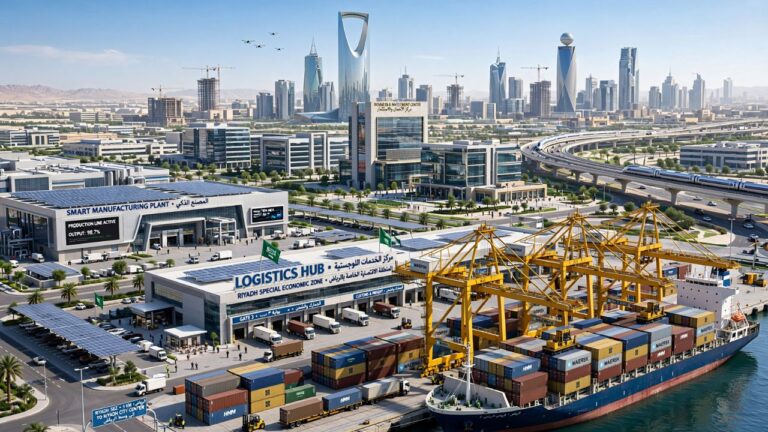
Saudi Arabia is transforming its economy through major reforms aimed at attracting international investment, encouraging innovation, and supporting long-term economic diversification. As part of Vision 2030, the Kingdom has introduced special economic zones in Saudi Arabia to create competitive business environments that offer attractive incentives for local and international companies. These zones are designed to encourage investment in strategic industries, strengthen global trade connections, and position Saudi Arabia as a regional business and logistics hub.
For businesses exploring expansion into the Middle East, understanding how special economic zones operate can help identify new opportunities for growth and investment.
What Are Special Economic Zones?
Special Economic Zones (SEZs) are designated geographic areas where businesses may benefit from regulatory, customs, tax, or operational incentives that differ from standard national regulations.
The objectives of SEZs typically include:
- Attracting foreign investment
- Encouraging exports
- Supporting industrial development
- Creating employment opportunities
- Promoting innovation
The incentives available vary according to each zone and the applicable legal framework.
Why Saudi Arabia Created Special Economic Zones
Special Economic Zones in Saudi Arabia Support Vision 2030
Saudi Arabia’s Vision 2030 seeks to diversify the economy beyond oil by encouraging private sector growth and international investment.
Special economic zones contribute to this strategy by:
- Encouraging business investment
- Supporting advanced industries
- Improving logistics infrastructure
- Expanding international trade
- Strengthening economic competitiveness
The broader economic impact depends on investment activity and ongoing policy implementation.
Objectives of Special Economic Zones in Saudi Arabia
The zones aim to:
- Increase foreign direct investment (FDI)
- Develop strategic industries
- Improve supply chain efficiency
- Create skilled employment
- Encourage technology transfer
- Support sustainable economic growth
These goals align with Saudi Arabia’s long-term economic development plans.
Key Industries Targeted
Different economic zones focus on different sectors.
Priority industries may include:
- Logistics
- Manufacturing
- Automotive
- Aerospace
- Pharmaceuticals
- Information technology
- Renewable energy
- Maritime industries
- Food processing
Industry priorities vary by zone.
Strategic Geographic Locations
Many special economic zones are located near:
- Major seaports
- International airports
- Industrial cities
- Transportation corridors
Strategic locations help improve access to regional and international markets.
Investment Incentives
Depending on the specific zone and applicable regulations, investors may benefit from incentives such as:
- Simplified business procedures
- Customs facilitation
- Regulatory support
- Infrastructure access
- Investment services
Businesses should consult official Saudi authorities for the most current information regarding available incentives and eligibility requirements.
Logistics Advantages
Saudi Arabia occupies a strategic position connecting:
- Asia
- Europe
- Africa
This location supports:
- International shipping
- Global trade
- Supply chain operations
- Distribution networks
Improved logistics infrastructure remains an important part of economic development.
Infrastructure Development
Special economic zones often include modern infrastructure such as:
- Industrial facilities
- Warehousing
- Transportation networks
- Utilities
- Telecommunications
- Digital infrastructure
Infrastructure development supports business operations across multiple industries.
Business-Friendly Environment
Saudi Arabia continues to implement reforms designed to improve the investment environment.
Areas of focus include:
- Digital government services
- Licensing improvements
- Investment facilitation
- Regulatory modernization
Businesses should review current regulations through official government sources.
Opportunities for International Companies
International businesses may consider Saudi Arabia for:
- Regional headquarters
- Manufacturing operations
- Distribution centers
- Research and development
- Technology partnerships
Expansion decisions should be based on comprehensive market research and professional advice.
Manufacturing Growth
Manufacturing remains one of the sectors supported through industrial development initiatives.
Businesses may find opportunities in:
- Industrial production
- Advanced manufacturing
- Automotive components
- Industrial equipment
- Consumer goods
Specific opportunities depend on market demand and regulatory conditions.
Technology and Innovation
Innovation plays an important role in Saudi Arabia’s economic strategy.
Investment priorities include:
- Artificial intelligence
- Smart manufacturing
- Digital transformation
- Robotics
- Clean technologies
- Industrial automation
Technology development continues to expand across multiple sectors.
Sustainability Initiatives
Economic development is increasingly linked with sustainability objectives.
Many projects focus on:
- Renewable energy
- Energy efficiency
- Environmental responsibility
- Sustainable industrial development
Implementation varies across projects and industries.
Considerations for Investors
Before investing, businesses should evaluate:
- Regulatory requirements
- Market demand
- Infrastructure
- Workforce availability
- Supply chain access
- Legal considerations
- Financial planning
Professional legal and financial advice is recommended for international investment decisions.
Future Outlook
Saudi Arabia continues investing in:
- Infrastructure
- Logistics
- Digital transformation
- Industrial diversification
- International partnerships
The development of special economic zones is expected to remain an important component of the Kingdom’s long-term economic strategy.
FAQs
What are special economic zones in Saudi Arabia?
Special economic zones in Saudi Arabia are designated business areas designed to attract investment through specialized regulatory environments and strategic infrastructure.
Why has Saudi Arabia created special economic zones?
The zones support Vision 2030 by encouraging economic diversification, attracting investment, strengthening trade, and promoting industrial development.
Which industries benefit from Saudi Arabia’s special economic zones?
Priority sectors may include logistics, manufacturing, automotive, technology, pharmaceuticals, renewable energy, aerospace, and maritime industries.
Are foreign investors allowed to invest in Saudi Arabia’s special economic zones?
Investment opportunities depend on applicable Saudi laws, regulations, and sector-specific requirements. Investors should consult official government sources and professional advisors before making investment decisions.
How do special economic zones support economic growth?
They encourage investment, create employment opportunities, improve logistics, support industrial expansion, and contribute to broader economic diversification initiatives.
Conclusion
Special economic zones in Saudi Arabia represent an important part of the Kingdom’s Vision 2030 strategy to build a more diversified and globally competitive economy. Through strategic locations, infrastructure development, investment incentives, and support for key industries, these zones are designed to attract businesses from around the world while strengthening Saudi Arabia’s role as a regional trade and investment hub. As economic reforms continue, organizations considering expansion into the Middle East should monitor official developments and evaluate how these specialized business environments align with their long-term growth objectives.


