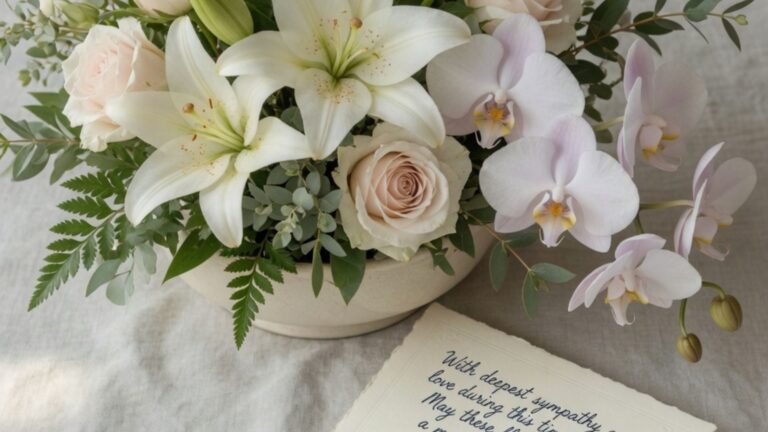
Sending sympathy flowers is one of the most traditional and heartfelt ways to express comfort when someone is grieving. Flowers cannot remove the pain of loss, but they can communicate care, remembrance, respect, and support when words feel difficult to find. Whether you are sending flowers to a family home, funeral service, memorial gathering, or workplace, choosing the right arrangement requires sensitivity, timing, and awareness of the recipient’s relationship, culture, and preferences.
Sympathy arrangements may include lilies, roses, orchids, carnations, chrysanthemums, hydrangeas, greenery, or soft seasonal blooms. Some people prefer classic white flowers, while others choose warm colours, peaceful pastels, or blooms connected to the personality of the person who has passed away. The most meaningful choice is not always the largest arrangement. It is the one that feels respectful, appropriate, and sincere.
This guide explains how to choose sympathy flowers, what different arrangements mean, when to send them, and how to write a thoughtful condolence message.
What Are Sympathy Flowers?
Sympathy flowers are floral arrangements sent to express condolences and emotional support after a death. They are usually sent to the grieving family, a close friend, a colleague, or someone affected by the loss. These flowers may be delivered to a private home, funeral venue, church, crematorium, memorial service, or workplace depending on the situation.
Sympathy arrangements can include:
- Hand-tied bouquets
- Vase arrangements
- Flower baskets
- Potted plants
- Wreaths
- Standing sprays
- Casket flowers
- Memorial table arrangements
- Simple condolence bouquets
In many cases, sympathy flowers are sent directly to the home after the funeral or when someone first hears about the loss. Funeral flowers, on the other hand, are often designed specifically for the service. The terms sometimes overlap, but the intention is slightly different.
Why Sympathy Flowers Matter During Grief
Grief can feel isolating. A thoughtful floral arrangement reminds the recipient that they are not alone and that others are thinking of them. Flowers also provide a quiet visual expression of support when conversation feels overwhelming.
Sympathy flowers may offer comfort by:
- Showing care without requiring immediate response
- Honouring the person who passed away
- Bringing warmth to a difficult space
- Supporting family members during mourning
- Creating a gentle memorial atmosphere
- Communicating emotions when words are hard
The gesture matters because grief is often accompanied by practical stress, emotional exhaustion, and silence from people who do not know what to say. A respectful flower delivery can be a simple but meaningful sign of presence.
Choosing Sympathy Flowers for Different Relationships
The type of arrangement you choose may depend on your relationship with the deceased or the grieving family. A close family member may receive a more personal arrangement, while a colleague or acquaintance may be better suited to something simple and understated.
Sympathy Flowers for Family Members
When sending flowers to close family, you may choose a more personal arrangement. This could include favourite colours, meaningful blooms, or a larger vase arrangement that can be displayed at home.
Appropriate options may include:
- Elegant white lilies and roses
- Soft pastel mixed flowers
- A peaceful orchid arrangement
- A basket with seasonal blooms
- A long-lasting potted plant
If you knew the person well, you may also include a message that reflects a specific memory or quality.
Sympathy Flowers for Friends and Colleagues
For friends, neighbours, or colleagues, a tasteful and simple arrangement is often best. The goal is to show support without overwhelming the recipient.
Good options include:
- Small vase arrangements
- White or pastel bouquets
- Mixed seasonal flowers
- Peace lilies or orchids
- Modest sympathy baskets
If the flowers are being sent from a workplace or team, a group card with a short message can be appropriate.
Types of Sympathy Flowers and Their Meanings
Different flowers are often associated with different emotions. While meanings can vary by culture and tradition, some flowers are commonly used in condolence arrangements.
Lilies are often associated with peace, remembrance, and dignity. White roses can represent respect, purity, and reverence. Orchids may symbolise lasting love and quiet strength. Carnations are frequently used because they are long-lasting and can express admiration or remembrance. Chrysanthemums are associated with mourning in some cultures, especially in parts of Europe and Asia, but their meaning can vary widely depending on location.
Popular sympathy flowers include:
- Lilies for peace and remembrance
- Roses for love and respect
- Orchids for enduring affection
- Carnations for admiration
- Hydrangeas for sincerity and heartfelt emotion
- Chrysanthemums for remembrance in certain traditions
- Peace lilies as long-lasting sympathy plants
When in doubt, choose soft, respectful colours and simple arrangements.
Sympathy Flowers vs Funeral Flowers
Sympathy flowers and funeral flowers are closely related, but they are not always the same. Sympathy flowers are usually sent to the grieving family to provide comfort. Funeral flowers are often sent to the funeral service and may be displayed near the casket, urn, altar, or memorial area.
Funeral flowers may include:
- Standing sprays
- Wreaths
- Casket sprays
- Crosses or hearts
- Large formal arrangements
Sympathy flowers may include:
- Bouquets
- Vase arrangements
- Baskets
- Potted plants
- Smaller memorial arrangements
If you are unsure where to send flowers, check the funeral notice or ask the family’s preferred contact. Some families request donations instead of flowers, and that wish should always be respected.
When to Send Sympathy Flowers
Sympathy flowers can be sent at several appropriate times. Many people send them shortly after learning of the death, before the funeral, or after the service when the family returns home.
Good times to send flowers include:
- As soon as you hear about the loss
- Before the funeral or memorial service
- On the day of the service
- After the funeral, when visitors have gone
- On a meaningful anniversary
- During holidays or difficult dates
Sending flowers after the funeral can be especially thoughtful because support often fades once the service is over. A later delivery can remind the grieving person that they are still remembered.
Sympathy Flowers Etiquette: What to Consider
Flower etiquette depends on the family, culture, religion, and setting. Some traditions welcome flowers, while others may prefer charitable donations, food, prayer, or private support.
Before sending sympathy flowers, consider:
- The family’s stated wishes
- Religious or cultural customs
- Whether flowers should go to the home or service
- The size of the arrangement
- Whether the recipient has allergies
- Whether pets are in the home
- Whether a plant may be easier to keep
- Whether a donation is requested instead
If the family has requested “no flowers,” respect that instruction. You can still send a card, make a donation, or offer practical support.
Writing a Card Message With Sympathy Flowers
A card message should be sincere, brief, and comforting. You do not need to write something elaborate. In grief, simple words often mean the most.
Examples include:
- “With heartfelt sympathy and warm thoughts during this difficult time.”
- “Thinking of you and your family with love and care.”
- “Wishing you peace, comfort, and strength in the days ahead.”
- “With deepest condolences for your loss.”
- “May loving memories bring you comfort.”
- “We are so sorry for your loss and are holding you in our thoughts.”
Avoid phrases that minimise grief, such as “everything happens for a reason” or “they are in a better place,” unless you know the recipient would find those words comforting.
Choosing Colours for Sympathy Flowers
White is the most traditional colour for sympathy flowers because it represents peace, dignity, and remembrance. However, other colours can also be appropriate.
Common colour choices include:
- White for peace and respect
- Soft pink for affection and gentleness
- Lavender for grace and remembrance
- Yellow for warmth and friendship
- Blue for calm and serenity
- Green for renewal and comfort
Bright colours may be suitable if they reflect the personality of the person who passed away or if the family prefers a celebration-of-life tone. For formal condolences, soft and neutral colours are usually safest.
Sympathy Flowers Delivery Tips
When arranging delivery, accuracy matters. Include the recipient’s full name, address, phone number where appropriate, and any special delivery instructions. If flowers are going to a funeral home or service location, include the name of the deceased and the service time.
Helpful delivery tips include:
- Confirm the correct delivery address
- Check funeral service timing
- Include the recipient’s full name
- Choose an appropriate arrangement size
- Add a clear card message
- Order early for time-sensitive services
- Consider a vase arrangement for home delivery
- Avoid overly fragrant flowers if allergies are a concern
A well-timed delivery helps ensure the flowers arrive when they are most useful and appropriate.
Common Mistakes to Avoid
Choosing sympathy flowers can feel emotional, and mistakes often happen when people rush.
Common mistakes include:
- Sending flowers when the family requested donations only
- Choosing an arrangement too large for a small home
- Forgetting to include a card
- Sending flowers to the wrong location
- Using overly casual wording
- Ignoring cultural or religious customs
- Choosing heavily scented flowers without considering allergies
- Waiting too long for funeral delivery
- Selecting bright colours when a formal tone is expected
The safest approach is to keep the gesture respectful, simple, and thoughtful.
Conclusion: Sympathy Flowers With Care and Respect
Sympathy flowers are a meaningful way to express condolences, honour a life, and offer comfort during grief. The best arrangement is one chosen with care, respect, and awareness of the family’s wishes. Whether you send lilies, roses, orchids, a peaceful plant, or a simple seasonal bouquet, the message behind the flowers matters most. Sympathy flowers should provide quiet support, not create extra burden. By considering timing, relationship, cultural customs, card wording, and delivery details, you can send a thoughtful gesture that brings comfort when it is needed most.
FAQs
What are sympathy flowers?
Sympathy flowers are floral arrangements sent to express condolences and support after someone has passed away.
When should I send sympathy flowers?
You can send them after hearing of the loss, before the funeral, after the service, or on a meaningful anniversary.
What flowers are best for sympathy arrangements?
Lilies, roses, orchids, carnations, hydrangeas, and peace lilies are common choices for respectful sympathy arrangements.
Should sympathy flowers go to the home or funeral service?
Sympathy flowers often go to the family home, while formal funeral flowers are usually sent to the service or funeral venue.
What should I write on a sympathy flower card?
Keep it simple and sincere, such as “With deepest sympathy” or “Thinking of you and your family during this difficult time.”
Are sympathy flowers always appropriate?
Usually yes, but always respect family wishes, cultural customs, religious traditions, and any request for donations instead of flowers.