

Hidden water leaks can be stressful because the damage is often visible before the source is clear. A damp patch, rising water bill, mould smell, damaged flooring, or unexplained pressure drop may point to a concealed leak behind walls, under floors, or below ground. Understanding trace and access costs helps homeowners prepare for leak detection, access work, insurance questions, and possible repair expenses before the situation becomes more expensive.
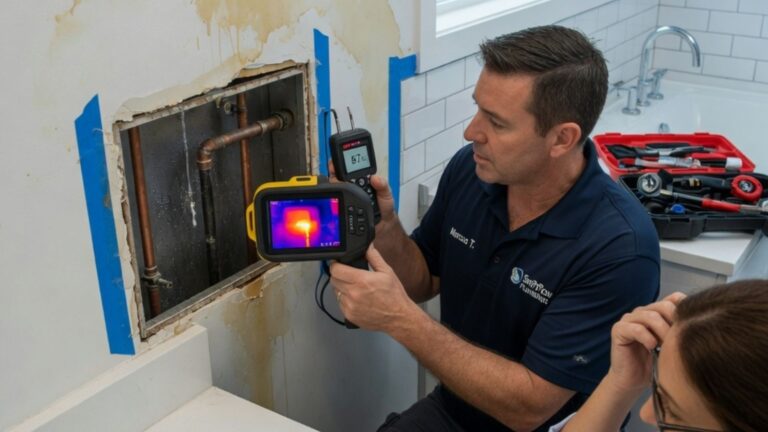
Trace and access is the process of finding the source of a leak and gaining access to it. “Trace” refers to locating the leak using specialist methods such as thermal imaging, acoustic detection, moisture meters, pressure testing, or tracer gas. “Access” refers to carefully opening the affected area so the leak can be inspected or repaired. This may involve lifting floorboards, removing tiles, cutting into plasterboard, opening cupboards, or excavating outside areas.
Costs vary widely depending on the leak location, property type, investigation method, access difficulty, and insurance cover. This guide explains what affects pricing, what may be covered by home insurance, and how to reduce unnecessary disruption.
What Are Trace and Access Costs?
Trace and access costs are the charges associated with locating a hidden leak and exposing the area needed to investigate or repair it. These costs are separate from the actual plumbing repair in many cases, although some contractors may combine basic leak detection and minor repair in one visit if the problem is straightforward.
For example, if water is leaking from a pipe behind a tiled bathroom wall, trace work may involve moisture readings, thermal imaging, and pressure testing. Access work may then involve removing tiles or cutting into the wall to reach the pipe.
Costs may include:
- Initial plumber or leak detection attendance
- Specialist diagnostic equipment
- Time spent tracing the leak source
- Access work to walls, floors, ceilings, or external areas
- Written reports for insurance claims
- Temporary making-safe work
- Follow-up investigation if the leak is complex
The final cost depends on whether the leak is easy to locate or hidden within a more complicated building structure.
Typical Trace and Access Costs in the UK
Trace and access costs can range from a basic hourly plumbing attendance for simple leaks to higher fixed-fee investigations for concealed or complex problems. Straightforward visible or near-visible leaks may be resolved within a standard visit, while hidden leaks requiring specialist diagnostics can cost much more.
As a general guide, homeowners may see pricing shaped by:
- Basic investigation or first-hour attendance
- Specialist leak detection survey
- Full trace and access investigation
- Opening-up work
- Underground leak tracing
- Insurance report preparation
- Emergency or out-of-hours attendance
In London and the South East, specialist trace and access work is often more expensive than in some other regions because labour rates, travel time, parking, property complexity, and operating costs can be higher.
Some concealed leak investigations may start from several hundred pounds and rise into four figures when specialist equipment and targeted access work are required. Extensive underground leaks, multiple leak sources, concrete floor excavation, or large reinstatement needs can cost significantly more.
Why Trace and Access Costs Vary
No two hidden leaks are exactly the same. A leak under a kitchen sink is very different from one beneath a concrete floor or behind a fully tiled bathroom wall.
Key cost factors include:
- Where the leak is located
- How easy it is to access
- Whether specialist equipment is needed
- How much time the investigation takes
- Whether floors, walls, or ceilings must be opened
- Whether the leak is internal or external
- Whether the property is occupied or vacant
- Whether an insurance report is required
- Whether emergency attendance is needed
The more uncertainty and disruption involved, the higher the likely cost. A professional should explain the expected approach before major access work begins.
Trace and Access Costs for Different Leak Types
Different leak locations affect price and complexity.
Internal Pipe Leaks
Internal pipe leaks may occur behind walls, under floors, in ceilings, near bathrooms, kitchens, heating systems, or utility areas. If the leak is close to a visible damp area, tracing may be quicker. If water has travelled along joists or under flooring, the source may be harder to identify.
Underground Water Leaks
Underground leaks can be more complicated because pipes may run beneath driveways, gardens, concrete floors, or external ground. Detection may involve acoustic equipment, tracer gas, pressure testing, or excavation.
Heating System Leaks
Central heating leaks may show as pressure loss in the boiler, damp flooring, or radiator problems. Detecting these leaks can require pressure testing and careful investigation because pipework may run under floors or through walls.
Bathroom and Shower Leaks
Bathroom leaks can be tricky because water may come from pipework, failed seals, shower trays, grout, waste pipes, or hidden plumbing. Not every damp patch is caused by a supply pipe leak, so diagnosis matters.
Insurance and Trace and Access Costs
Many buildings insurance policies include trace and access cover, but the wording and limits vary. This cover may help pay for the cost of locating the leak and gaining access to it. However, it may not automatically cover the repair of the leaking pipe or full reinstatement of damaged finishes.
Homeowners should check:
- Whether trace and access is included
- The policy limit
- The excess amount
- Whether accidental damage is required
- Whether gradual leaks are excluded
- Whether underground pipes are covered
- Whether reports or photos are required
- Whether insurer approval is needed before work starts
Some policies may cover the cost of finding and exposing the leak but treat the pipe repair separately. Damage caused by escaping water may fall under a different part of the policy. Always check the wording and speak with the insurer before assuming everything is covered.
Hidden Costs Beyond Trace and Access
Trace and access is only one part of the total leak-related cost. Once the leak is found, homeowners may also need repairs and reinstatement.
Possible additional costs include:
- Pipe repair or replacement
- Plastering
- Tiling
- Flooring replacement
- Drying equipment
- Mould treatment
- Decorating
- Ceiling repairs
- Joinery or kitchen unit repairs
- External ground reinstatement
The sooner a leak is investigated, the lower the risk of wider water damage. Delaying action can allow moisture to spread into floors, walls, insulation, timber, and electrical areas.
How Professionals Reduce Trace and Access Costs
A skilled leak detection specialist aims to find the source with minimal unnecessary damage. The goal is targeted access, not random opening-up.
Common tools and methods include:
- Thermal imaging cameras
- Acoustic listening devices
- Moisture meters
- Pressure testing
- Tracer gas testing
- Dye testing
- Borescope inspection
- Water meter checks
Using the right method can reduce disruption and avoid opening the wrong area. However, equipment alone does not solve the problem. Experience matters because water can travel away from the leak source before becoming visible.
DIY vs Professional Trace and Access Costs
Some homeowners try to find leaks themselves using moisture meters, visual inspection, or guesswork. This may help identify obvious signs, but hidden leaks can be misleading. Water may appear in one place while the pipe failure is somewhere else.
DIY investigation risks include:
- Removing flooring unnecessarily
- Cutting into the wrong wall
- Missing the actual leak source
- Causing more damage
- Delaying insurance reporting
- Making reinstatement more expensive
Professional detection may cost more upfront, but it can save money by reducing unnecessary access work and providing clearer evidence for insurers.
How to Manage Trace and Access Costs
Homeowners can take practical steps to control costs and avoid confusion.
Useful steps include:
- Turn off water if the leak is active
- Take photos of visible damage
- Check your insurance policy early
- Record dates and symptoms
- Avoid major access work before speaking to your insurer
- Ask for clear pricing before work begins
- Request a written report if claiming insurance
- Keep receipts and documentation
- Act quickly to prevent further damage
If the leak is severe, safety comes first. Water near electrics, ceiling collapse risk, or structural damage should be treated urgently.
Choosing a Trace and Access Specialist
The right contractor should be experienced, transparent, and equipped for hidden leak detection. Not every general plumber offers full trace and access services, and not every leak requires the same diagnostic method.
Before booking, ask:
- What is included in the initial cost?
- Is there a call-out fee?
- What equipment may be used?
- Will access work be quoted before it begins?
- Can a written report be provided?
- Do they work with insurance claims?
- Are repairs available after detection?
- What happens if the leak is not found immediately?
- Are prices fixed or hourly?
Clear communication helps avoid surprise charges and ensures you understand the process.
Conclusion: Understanding Trace and Access Costs
Trace and access costs depend on the leak location, detection method, access difficulty, property type, and insurance cover. A simple investigation may be relatively modest, while concealed or underground leaks can require specialist equipment and more extensive access work. Homeowners should check insurance policy wording, act quickly when signs of a leak appear, and choose experienced professionals who can locate the problem with minimal unnecessary damage. Understanding trace and access costs early helps you make better decisions, reduce water damage, and manage the repair process with more confidence.
FAQs
What are trace and access costs?
Trace and access costs are the charges for locating a hidden leak and opening the area needed to inspect or repair it.
Does home insurance cover trace and access costs?
Many buildings insurance policies include trace and access cover, but limits, excess, exclusions, and repair coverage vary by policy.
Is pipe repair included in trace and access?
Not always. Trace and access may cover finding and exposing the leak, while the actual pipe repair may be treated separately.
Why are trace and access costs so different between jobs?
Costs vary because leaks can be easy to locate or hidden under floors, behind walls, beneath concrete, or outside underground.
Can I find a hidden leak myself?
You may spot signs, but professional leak detection can reduce unnecessary damage and improve accuracy, especially for concealed leaks.
When should I arrange trace and access work?
Arrange it when you notice damp patches, unexplained water bills, pressure loss, mould smells, or signs of hidden water damage.


