

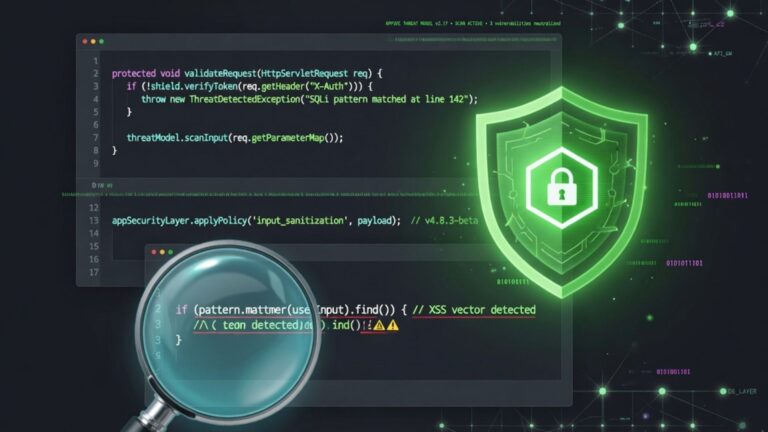
In the modern era of rapid software deployment, application security can no longer be an afterthought relegated to the final stages of development. With cyberattacks growing increasingly sophisticated, vulnerabilities embedded within source code represent a critical entry point for malicious actors. The cost of remediating a security flaw post-production is exponentially higher—both financially and reputationally—than addressing it during the development phase. Consequently, implementing a robust secure code review process is a fundamental necessity for any organization committed to software security. By systematically examining source code for vulnerabilities, logic flaws, and deviations from security standards, enterprises can fortify their digital assets, ensure compliance, and maintain the trust of their user base.
Shifting Left in the Secure SDLC
The traditional waterfall approach to software development treated security as a final gate, often leading to delayed releases and massive remediation efforts when critical vulnerabilities were discovered. The industry has since evolved toward the “Shift Left” paradigm within the secure Software Development Life Cycle (SDLC). This philosophy advocates for integrating security practices as early as possible in the development lifecycle. A secure code review is a cornerstone of this shift. By evaluating code for security weaknesses as it is written—rather than after it is compiled and deployed—organizations can identify and neutralize threats before they ever reach a production environment. This proactive approach drastically reduces risk and transforms security from a developmental bottleneck into an enabler of agile, secure deployment.
Manual vs. Automated Secure Code Review
Effective application security requires a balanced, hybrid approach that leverages the speed of automation and the nuanced understanding of human expertise. Relying solely on one method leaves significant blind spots in your security posture.
The Role of Static Application Security Testing (SAST)
To handle the sheer volume of code produced by modern development teams, automation is indispensable. Static Application Security Testing (SAST) scanners analyze source code, byte code, or binary code without executing the application. These tools are highly effective at identifying common, well-known vulnerabilities—such as SQL injection, cross-site scripting (XSS), and buffer overflows—by matching code patterns against extensive databases of known security flaws. Integrating SAST into CI/CD pipelines provides developers with immediate feedback during the coding process, catching low-hanging fruit before the code is even committed. However, SAST tools are notorious for generating false positives and lack the contextual awareness to identify complex business logic flaws.
The Value of Human Insight in Security Audits
While SAST excels at pattern matching, it cannot understand the intent of the code. This is where manual secure code review becomes critical. Human reviewers—typically application security engineers or senior developers—can identify complex business logic vulnerabilities, broken authentication mechanisms, and insecure cryptographic implementations that automated scanners completely miss. A human reviewer understands the context of the application, how data flows through the system, and how an attacker might chain seemingly minor misconfigurations together to achieve a significant breach. Therefore, the most effective methodology utilizes SAST to clear the noise of common vulnerabilities, allowing human experts to focus their time and cognitive effort on deep, architectural threat modeling and complex logic analysis.
5 Essential Strategies for Effective Secure Code Review
Establishing a review process is not enough; it must be optimized for efficiency, accuracy, and developer buy-in. The following strategies are crucial for maximizing the effectiveness of your application security initiatives.
1. Integrate Threat Modeling Early
Before a single line of code is reviewed, the development and security teams must understand the threat landscape specific to the application. Threat modeling involves identifying potential adversaries, their capabilities, and the attack surfaces of the application. By creating a threat model, reviewers know exactly where the high-value targets are within the codebase. This ensures that the secure code review is targeted and risk-based, rather than a generic, unfocused audit. If the application handles financial transactions, the review will prioritize authentication and transaction integrity; if it handles healthcare data, the focus shifts to encryption and access controls.
2. Establish Strict Secure Coding Standards
Reviewers cannot effectively evaluate code if there are no baseline standards to measure it against. Organizations must implement comprehensive secure coding standards based on industry-recognized frameworks, such as the OWASP Top 10 or the SEI CERT Coding Standards. These guidelines dictate how developers should handle user input, manage sessions, implement cryptography, and interact with databases. By having a documented set of standards, the review process becomes objective. Reviewers can point to specific violations, and developers have a clear roadmap for writing secure code from the outset, significantly reducing the number of findings during the review.
3. Leverage SAST in CI/CD Pipelines
To prevent security from slowing down development, secure code review must be integrated seamlessly into the existing developer workflow. By embedding SAST tools directly into the Continuous Integration/Continuous Deployment (CI/CD) pipeline, code is automatically scanned upon commit. If a critical vulnerability is detected, the build fails, preventing the insecure code from progressing. This automated gate ensures that human reviewers are not wasting time pointing out basic SQL injection flaws, allowing them to focus on the complex, systemic vulnerabilities that require human intuition.
4. Prioritize Vulnerability Assessment Findings
A common pitfall in application security is “alert fatigue.” When a SAST tool returns thousands of findings, developers often become overwhelmed and ignore the results entirely. A mature secure code review process includes a rigorous triage step. Findings must be prioritized based on exploitability, business impact, and the context of the application. A cross-site scripting vulnerability on an unauthenticated public-facing page is a critical priority; a similar vulnerability on an internal, heavily monitored admin panel may be a lower priority. Providing developers with a curated, prioritized list of actionable vulnerabilities ensures that the most critical risks are remediated first.
5. Foster a DevSecOps Culture of Collaboration
Security should never be perceived as the “office of no.” If the security team is viewed as an adversary that exists solely to block releases, the review process will face immense friction. Organizations must cultivate a DevSecOps culture where security is viewed as a shared responsibility. Security engineers should act as mentors and collaborators, not auditors. When a vulnerability is found, the reviewer should explain why it is a risk and how to fix it securely, turning the review into a learning opportunity. This collaborative approach builds trust, improves the security knowledge of the development team, and ultimately leads to inherently more secure code being written in the future.
Common Vulnerabilities Identified During Code Analysis
A thorough review process is designed to catch a wide spectrum of vulnerabilities, ranging from simple misconfigurations to complex architectural flaws.
Injection Flaws and Broken Authentication
According to the OWASP Top 10, injection flaws (such as SQL, OS, and LDAP injection) remain a prevalent and highly dangerous threat. These occur when untrusted data is sent to an interpreter as part of a command or query. A secure code review actively seeks out instances where user input is concatenated directly into database queries or system commands, ensuring that parameterized queries or proper sanitization are utilized. Similarly, broken authentication—such as weak session management, credential stuffing vulnerabilities, or improper password recovery mechanisms—is a primary target. Reviewers meticulously examine authentication logic to ensure that user identities are securely verified and maintained.
Insecure Data Storage and Cryptographic Failures
Sensitive data, such as personally identifiable information (PII) or financial records, must be protected both at rest and in transit. Code analysis frequently reveals cryptographic failures, where developers use outdated algorithms (like MD5 or SHA-1), hardcode encryption keys, or fail to enforce TLS/SSL for data in transit. Reviewers verify that sensitive data is encrypted using robust, modern algorithms (like AES-256) and that keys are securely managed via hardware security modules (HSMs) or key management services (KMS) rather than being hardcoded in the source repository.
Overcoming Challenges in Application Security
Implementing a robust review process is not without its hurdles. The most significant challenge is balancing the need for absolute security with the business demand for rapid feature deployment. Extensive manual reviews can create bottlenecks. To mitigate this, organizations must heavily invest in automation and ensure that the review scope is strictly defined and risk-based. Furthermore, false positives from SAST tools can erode developer trust. Security teams must continuously tune and customize their scanning tools to reduce noise, ensuring that only verified, actionable findings reach the development queue.
Conclusion: Fortifying Software Security
The digital threat landscape is unforgiving, and insecure code is a liability that no organization can afford. By embedding a rigorous secure code review into the secure SDLC, enterprises can shift from a reactive, patch-centric security model to a proactive, preventative one. Combining the scalable efficiency of SAST tools with the nuanced, contextual insight of manual security audits ensures that both common vulnerabilities and complex business logic flaws are eradicated before deployment. By prioritizing threat modeling, enforcing secure coding standards, and fostering a collaborative DevSecOps culture, organizations can transform their development processes. Ultimately, a commitment to secure code review is a commitment to software security, protecting both the enterprise and its users from the devastating consequences of a data breach.
Frequently Asked Questions (FAQs)
1. What is secure code review?
It is a systematic examination of an application’s source code designed to identify and remediate security vulnerabilities, logic flaws, and deviations from secure coding standards before the software is deployed.
2. What is the difference between SAST and manual code review?
SAST utilizes automated tools to scan source code for known patterns of vulnerabilities at high speed, while manual review relies on human experts to identify complex business logic flaws and contextual security risks that scanners miss.
3. When should a secure code review be performed?
It should be integrated early and continuously throughout the secure SDLC, ideally during the coding phase via automated SAST in CI/CD pipelines, supplemented by manual peer reviews before merging significant code changes.
4. Why is threat modeling important for code reviews?
Threat modeling helps reviewers understand the application’s attack surface and the most likely adversaries, allowing them to focus their manual analysis on the most critical and high-risk areas of the codebase.
5. How do you handle false positives in code analysis?
Security teams must continuously tune and customize SAST rules to reduce noise, and then triage the remaining findings to ensure developers only receive a prioritized, verified list of actionable vulnerabilities.
6. What are the most common vulnerabilities found during reviews?
Reviewers frequently uncover injection flaws (like SQL injection), cross-site scripting (XSS), broken authentication mechanisms, and cryptographic failures involving outdated algorithms or hardcoded keys.


