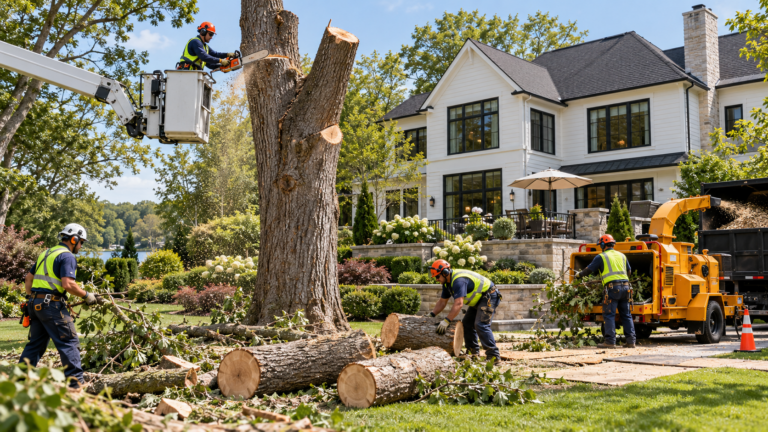
Trees are an important part of residential landscapes, providing shade, natural beauty, privacy, and environmental benefits. However, damaged, diseased, or structurally unstable trees can sometimes create significant risks for homes, vehicles, and people. Professional Tree Removal services help property owners address potentially hazardous trees through careful assessment, appropriate equipment, and controlled removal procedures. Understanding when a tree should be removed, how arborists evaluate its condition, and what happens during the removal process can help homeowners make responsible decisions about their outdoor spaces. The objective is not simply to eliminate unwanted vegetation but to balance property safety with the long term health and appearance of the surrounding landscape.
Whether a tree has suffered severe storm damage, developed extensive decay, or begun interfering with construction plans, professional guidance is valuable. This guide explains seven important considerations for planning safe and effective tree removal.
What Is Tree Removal?
Tree removal is the professional process of taking down a tree and managing the resulting branches, trunk sections, and other materials.
The work may involve removing an entire tree or dismantling it in sections when buildings, landscaping, utility lines, or other obstacles restrict access.
Tree care professionals assess the tree’s condition, surrounding environment, and potential hazards before selecting an appropriate method.
Depending on the project, additional services may include branch cleanup, wood chipping, log removal, and stump grinding.
Why Do Property Owners Remove Trees?
Homeowners consider removing trees for several reasons.
A tree may have died, developed structural defects, suffered severe storm damage, or become unsuitable for its location.
In other situations, construction or landscaping changes may conflict with an existing tree.
However, removal should not automatically be the first solution.
Healthy trees provide important environmental and property benefits, and some problems can be managed through professional pruning or other appropriate tree care.
Tree Removal vs Tree Trimming
Tree trimming and pruning involve selectively removing branches to address specific structural, health, or clearance requirements.
Complete removal involves taking down the tree.
An arborist can help determine whether targeted pruning is sufficient or whether removal is the more appropriate option.
When Is Tree Removal Necessary?
Not every damaged tree requires removal.
A professional assessment should consider structural condition, the likelihood of failure, the surrounding environment, and the possible consequences of falling branches or trunk sections.
Dead or Severely Deteriorated Trees
Dead trees can progressively lose structural integrity as wood and root systems deteriorate.
Some remain standing for extended periods, while others develop significant instability.
The level of risk depends on the tree’s condition and location.
Serious Structural Defects
Large cracks, unstable root systems, and major defects at branch unions may raise safety concerns.
However, visible defects do not always mean that immediate removal is required.
An experienced arborist can evaluate the condition and identify appropriate options.
Storm Damaged Trees
High winds, lightning, and heavy snow can damage branches, trunks, and roots.
A partially fallen tree or suspended branch may present an immediate danger.
These situations require professional evaluation because damaged wood can move unpredictably.
7 Powerful Tips for Safe and Professional Tree Removal
Planning a tree removal project involves understanding the actual risks, selecting qualified specialists, and preparing the property.
The following seven strategies can help homeowners make informed decisions.
1. Schedule a Professional Tree Risk Assessment
A professional inspection is an important first step when a tree appears damaged, unstable, or unhealthy.
Tree health and structural stability are related but different considerations.
A tree may have green leaves while containing serious structural defects.
Likewise, certain health problems can be treated without removing the tree.
Recognize Warning Signs
Potential concerns include:
- Large dead branches.
- Visible trunk cracks.
- Extensive decay or cavities.
- Recently exposed or displaced roots.
- Sudden changes in tree position.
- Severe storm damage.
- Large broken branches suspended above occupied areas.
These observations justify further investigation but do not establish the probability of failure on their own.
Understand Tree Risk Assessment
Professional tree risk assessment considers the tree’s condition, potential failure scenarios, and nearby targets.
Targets may include homes, vehicles, outdoor seating areas, and frequently used walkways.
Consider Alternatives Before Removal
An arborist may recommend selective pruning, relocating movable objects, or other management measures.
Support systems may also be appropriate for certain trees, although they do not eliminate every risk.
Complete removal becomes a reasonable consideration when the remaining risk is unacceptable or suitable alternatives are unavailable.
2. Hire a Qualified and Experienced Arborist
Tree removal can involve substantial physical hazards.
The work may require specialized climbing equipment, aerial platforms, rigging systems, and trained ground personnel.
A qualified tree care professional can evaluate the work environment and determine an appropriate approach.
Check Professional Credentials
Certification through the International Society of Arboriculture, commonly known as ISA, is one credential homeowners can consider.
ISA Certified Arborists demonstrate knowledge of recognized tree care principles through examination and continuing education requirements.
However, certification is voluntary and does not replace licenses required by local authorities.
Verify Insurance Coverage
Homeowners should ask for appropriate liability and workers compensation insurance documentation.
Insurance requirements vary by jurisdiction.
The contractor should explain who will carry out the work and whether subcontractors are involved.
Review Previous Experience
Ask whether the company has completed projects involving comparable trees and property conditions.
Removing a small tree in an open yard differs substantially from working around buildings, roads, and overhead utilities.
Relevant experience, clear communication, and documented safety procedures are important selection criteria.
3. Understand the Tree Removal Process
Professional tree removal requires a work plan that reflects the size, condition, and location of the tree.
The contractor should assess the available space and identify hazards before beginning.
Evaluate the Surrounding Property
Buildings, fences, utility equipment, landscaping, and neighboring structures can affect the removal method.
The work area should be inspected for obstacles and appropriate equipment access.
Select Suitable Equipment
Tree service companies may use aerial lifts, climbing systems, cranes, chainsaws, and equipment for handling timber.
The choice depends on the particular project.
Equipment must be operated by appropriately trained personnel.
Controlled Tree Dismantling
In restricted locations, professionals may need to remove branches and trunk sections in a controlled sequence rather than bringing down the tree as a single unit.
The contractor should explain the general removal approach and expected site restrictions.
Homeowners should not attempt to imitate professional methods using household equipment.
The actual cutting and rigging procedures require specialist training and assessment.
4. Prioritize Worker and Property Safety
Tree removal is a hazardous occupation.
The Occupational Safety and Health Administration identifies falls, falling objects, chainsaw injuries, and electrical contact among important tree care hazards.
Professional teams need suitable safety arrangements for the specific work being performed.
Establish a Controlled Work Area
Residents, visitors, children, and pets should remain away from active removal operations.
Contractors should manage access to areas where branches, equipment, or other materials may create hazards.
Use Appropriate Protective Equipment
Depending on the task, workers may need helmets, eye protection, hearing protection, appropriate leg protection, gloves, and fall protection equipment.
Protective measures should follow relevant occupational safety requirements.
Be Especially Careful Around Power Lines
Trees touching or approaching electrical conductors require special precautions.
Homeowners should never attempt to remove branches near energized lines.
If a tree contacts a power line, remain clear and contact the utility provider.
Only appropriately qualified personnel should perform work within applicable electrical approach limits.
5. Understand Tree Removal Costs and Estimates
Tree removal prices vary significantly according to tree size, location, condition, and work complexity.
There is no universal cost that accurately represents every project.
Factors Affecting Pricing
Important considerations include:
- Tree height and trunk size.
- Tree condition and structural stability.
- Proximity to buildings or utilities.
- Access for equipment.
- Complexity of the removal.
- Disposal requirements.
- Stump grinding.
- Required permits.
- Emergency response arrangements.
A deteriorated tree located near a house may require more extensive safety planning than a similar tree standing in an open area.
Request a Written Estimate
The quotation should explain the work included, expected cleanup, and any additional charges.
Homeowners should confirm whether stump removal, debris disposal, and site restoration are included.
Compare Value Instead of Price Alone
The lowest estimate may exclude important services or safety arrangements.
Professional qualifications, insurance, equipment, and project complexity should influence the decision.
A clearly defined written agreement helps avoid misunderstandings.
6. Check Local Permits and Tree Protection Rules
Tree removal can be subject to local ordinances, property restrictions, and environmental requirements.
The rules depend on the jurisdiction, tree location, and sometimes the species or size.
Understand Municipal Regulations
Some communities protect designated tree species, heritage trees, or trees above particular measurements.
Removal may require municipal permission even when the tree grows on private property.
Other locations have fewer restrictions for ordinary residential tree work.
Consider Property Boundaries
Trees near property lines can create disputes about ownership and responsibility.
A homeowner should not assume that a tree may be removed simply because branches extend over their property.
Property rights and responsibilities vary by location.
Check Wildlife and Environmental Considerations
Active bird nests and protected wildlife may be subject to legal restrictions.
Work should be planned according to applicable environmental requirements.
A qualified contractor can help identify when additional assessment or approval may be necessary.
7. Plan for Stump Grinding and Landscape Restoration
Removing the aboveground tree does not automatically eliminate the remaining stump.
Homeowners should decide how the stump and surrounding area will be managed before work begins.
Understand Stump Grinding
Stump grinding uses specialized machinery to reduce the visible stump and a specified portion below the surrounding ground level.
The process may leave some roots underground.
Those roots generally break down over time, but the process can take years depending on their size, species, and site conditions.
Evaluate the Future Use of the Area
The intended landscape design should influence the depth and scope of stump work.
An area being prepared for lawn restoration may require different treatment from one intended for new planting or construction.
Plan for Safe Site Restoration
Before grinding or excavating, contractors should consider underground utilities and other buried infrastructure.
Afterward, the area may require appropriate backfilling, soil preparation, or other restoration.
Stump grinding does not automatically make the location suitable for foundations or other structural work.
How Does Professional Tree Removal Work?
Understanding the overall process helps homeowners prepare for the project and communicate effectively with the contractor.
Initial Consultation
The homeowner describes the concerns and identifies the tree in question.
The contractor reviews the tree’s condition, access arrangements, and surrounding structures.
Tree Inspection and Work Planning
The arborist or qualified tree care professional assesses relevant hazards and determines the appropriate work requirements.
Any necessary approvals should be confirmed before removal begins.
Property Preparation
The contractor establishes access routes and identifies areas that must remain clear.
Homeowners may be asked to relocate vehicles, outdoor furniture, or movable garden features.
Professional Removal
The trained crew performs the approved work using suitable equipment and safety procedures.
The particular method depends on the tree’s condition and surroundings.
Debris Management
Branches and timber are managed according to the agreement.
Some material may be chipped, transported for disposal, or retained by the property owner where appropriate.
Final Inspection
The contractor reviews the work area and addresses any remaining obligations under the agreed scope.
Homeowners should verify whether stump treatment and ground restoration have been completed as expected.
Emergency Tree Removal After Storm Damage
Storm related tree damage can create urgent safety concerns.
Large broken limbs, partially uprooted trees, and fallen trunks may threaten buildings, access routes, or nearby utilities.
What Should Homeowners Do First?
Keep people away from the affected area.
Do not stand beneath hanging branches or approach unstable trees.
If electrical lines are involved, maintain a safe distance and contact the relevant utility provider or emergency services.
Avoid Unnecessary Risks
Storm damaged trees can contain stored mechanical forces that are difficult to recognize.
A tree resting against another object may shift unexpectedly.
Attempting to cut or move such material without appropriate expertise can cause severe injuries.
Document Property Damage
When safe, photographs can help record visible damage for maintenance records or insurance discussions.
Insurance coverage depends on the policy and circumstances.
Professional tree removal does not guarantee that a claim will be approved.
Tree Removal vs Tree Pruning: Which Is Better?
Pruning may be appropriate when the problem is limited to selected branches or certain structural conditions.
A healthy tree that obstructs a walkway might benefit from carefully planned pruning instead of complete removal.
However, excessive or inappropriate pruning can weaken trees and introduce new problems.
Removal may be necessary when severe deterioration or structural instability cannot be managed to an acceptable level.
The decision should reflect professional assessment and the value of retaining a healthy tree.
DIY Tree Removal vs Professional Tree Services
Homeowners may consider removing a tree themselves to reduce expenses.
However, cutting down standing trees creates risks that differ substantially from ordinary garden maintenance.
Why DIY Removal Can Be Dangerous
Uncontrolled movement, falling branches, chainsaw injuries, and contact with utilities can cause serious harm.
Even relatively small trees can behave unpredictably when their trunks are damaged or their weight distribution is unusual.
When Professional Help Is Essential
Professional services are particularly important for large trees, leaning trees, damaged trunks, restricted spaces, and any work near power lines.
Homeowners should not attempt elevated tree cutting or complex dismantling without specialist qualifications.
Safe Household Tree Care
Routine tasks such as watering, mulching, and observing visible tree conditions may be suitable for homeowners.
For work involving powered cutting equipment or significant structural risks, professional assistance is the safer choice.
How to Choose a Reliable Tree Removal Company
Selecting a tree care provider requires careful attention to qualifications and service terms.
A professional company should explain its assessment findings and provide a clear proposal.
Questions to Ask Before Hiring
Homeowners should ask about the contractor’s relevant experience, arborist qualifications, insurance, permit responsibilities, and cleanup arrangements.
It is also useful to confirm whether the company will use its own crew or approved subcontractors.
Understand Contract Details
A written agreement should identify the tree or trees involved, approved work, disposal responsibilities, payment arrangements, and any exclusions.
Unexpected conditions may require changes, so the process for approving additional work should be established.
Avoid Unsupported Guarantees
Tree removal contractors should not promise that every potential risk can be eliminated.
A reliable professional will explain relevant limitations and discuss how the proposed work addresses identified hazards.
Can Tree Removal Improve Property Safety?
Removing an unstable tree may reduce a specific hazard when the tree presents an unacceptable risk.
However, the safety benefit depends on the actual condition and location of the tree.
A healthy tree standing near a home is not automatically dangerous.
Risk should be assessed according to structural characteristics, exposure, and likely consequences.
Professional assessment helps distinguish genuine hazards from concerns that may be manageable through other tree care measures.
Environmental Considerations Before Removing Trees
Mature trees provide benefits that deserve attention during removal decisions.
Trees can create shade, support wildlife habitat, intercept rainfall, and contribute to neighborhood appearance.
The United States Forest Service recognizes these environmental functions as important elements of urban landscapes.
Preserve Healthy Trees Where Practical
Tree preservation may be preferable when risks can be managed and the tree remains suitable for its location.
Appropriate pruning, soil care, and protection from construction damage can support long term tree health.
Consider Replacement Planting
When removal is necessary, planting an appropriate replacement may help restore some landscape benefits over time.
The new species should suit the available space, climate, soil conditions, and mature growth requirements.
Planting the wrong species too close to buildings or utilities can create future conflicts.
Maintaining Your Landscape After Tree Removal
After removal, the surrounding landscape may need time to recover.
Heavy equipment can affect soil conditions, and the absence of a large tree changes sunlight exposure and water movement.
Restore Soil and Lawn Areas
Damaged lawn sections may need suitable soil preparation and reseeding.
Where compaction has occurred, professional assessment can help determine whether soil improvement is necessary.
Observe Nearby Plants
Plants that previously grew beneath a large canopy may experience increased sunlight after removal.
Their watering and exposure requirements may change.
Plan Future Landscaping Carefully
Consider mature plant dimensions, drainage, nearby structures, and maintenance requirements when selecting replacement vegetation.
A well planned landscape can remain attractive while avoiding preventable conflicts.
Common Tree Removal Mistakes to Avoid
One common mistake is assuming that every damaged tree must be removed immediately.
Some trees can be preserved through appropriate care.
Another mistake is hiring contractors without checking qualifications or insurance.
Homeowners may also overlook permit requirements or fail to include stump grinding in their project estimates.
Attempting dangerous cutting work without suitable training is particularly concerning.
Finally, removing mature trees without considering replacement planting may reduce valuable shade and landscape benefits.
Careful assessment helps property owners make more responsible decisions.
Frequently Asked Questions
1. When is tree removal necessary?
Tree removal may be appropriate when a tree is dead, severely damaged, structurally unstable, or presents an unacceptable risk that cannot be adequately managed through other measures.
2. How much does professional tree removal cost?
Costs depend on tree size, condition, accessibility, surrounding hazards, equipment requirements, debris disposal, and whether stump grinding is included.
3. Is a permit required for tree removal?
Permit requirements vary by municipality and may depend on tree species, size, location, or protected status. Property owners should check applicable local rules.
4. Can I remove a large tree myself?
Large tree removal should be performed by qualified professionals because falling branches, unstable trunks, equipment hazards, and nearby electrical lines can cause serious injuries.
5. Does tree removal include stump grinding?
Not always. Some contractors offer stump grinding as an additional service, so homeowners should confirm the scope in their written estimate.
6. How long does tree removal take?
The duration depends on tree size, condition, location, equipment access, and project complexity. A professional assessment provides the basis for a realistic schedule.
Conclusion
Tree removal is an important property management decision that should be based on professional assessment, genuine safety concerns, and responsible landscape planning. Working with qualified arborists helps homeowners understand available options, relevant permits, and the precautions necessary for complex removal projects. Clear estimates, appropriate equipment, and thoughtful stump and debris management contribute to a more organized process. By balancing property protection with tree preservation and suitable replacement planting, homeowners can maintain safer, healthier, and more attractive outdoor spaces.