

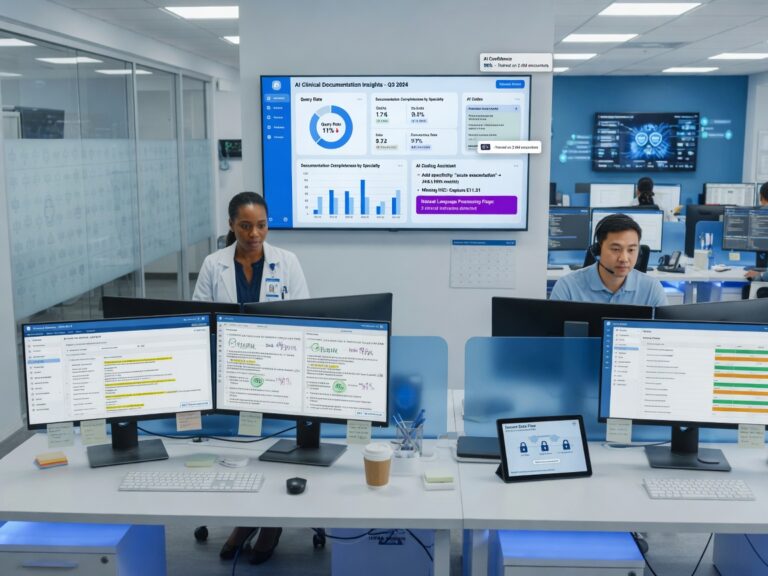
Healthcare organizations are under increasing pressure to improve documentation quality, streamline coding workflows, and support accurate reimbursement while maintaining compliance with evolving regulations. As patient data continues to grow in volume and complexity, manual coding processes can become time-consuming and resource-intensive. This has led many providers, health plans, and coding professionals to explore AI tools for Medicare risk adjustment coding accuracy as part of their broader healthcare technology strategy. These tools use artificial intelligence, natural language processing (NLP), and machine learning to assist with reviewing clinical documentation, identifying relevant diagnoses, and supporting coding workflows.
Risk adjustment plays a critical role in Medicare Advantage programs by helping reflect the health status and complexity of enrolled populations. Accurate coding supported by complete clinical documentation contributes to appropriate risk score calculations and reporting. While AI technologies can improve efficiency and assist coding professionals, they are designed to support—not replace—qualified coders and clinical documentation experts. Human oversight remains essential to ensure coding decisions align with applicable regulations, official coding guidelines, and organizational compliance requirements.
This comprehensive guide explains how AI tools support Medicare risk adjustment coding accuracy, their key features, benefits, implementation considerations, challenges, and emerging trends shaping the future of healthcare coding.
What Are AI Tools for Medicare Risk Adjustment Coding Accuracy?
AI tools for Medicare risk adjustment coding accuracy are software solutions that use artificial intelligence and related technologies to analyze clinical documentation and assist coding professionals during the risk adjustment process.
These tools can review electronic health records (EHRs), physician notes, laboratory reports, discharge summaries, and other clinical documentation to identify diagnoses that may require further review. They help organize information, highlight documentation opportunities, and support more efficient coding workflows while leaving final coding decisions to qualified professionals.
Many healthcare organizations integrate these solutions into existing coding and documentation systems to improve productivity and consistency.
Understanding Medicare Risk Adjustment
Medicare risk adjustment is a methodology used to estimate the expected healthcare costs of beneficiaries based on documented medical conditions and demographic factors.
Health plans participating in Medicare Advantage programs submit diagnosis information that contributes to risk adjustment models. Accurate and complete clinical documentation supports appropriate coding and reporting.
Effective risk adjustment depends on several important elements:
- Complete clinical documentation.
- Accurate diagnosis coding.
- Timely documentation review.
- Compliance with official coding guidelines.
- Regular auditing and quality assurance.
AI can assist these activities by helping identify documentation patterns and supporting coding workflows.
How AI Tools Work in Risk Adjustment Coding
AI-powered coding solutions analyze large volumes of clinical information using advanced algorithms.
The typical workflow includes:
- Importing patient records from electronic health record systems.
- Reviewing structured and unstructured clinical documentation.
- Identifying diagnoses that may require coder review.
- Highlighting potential documentation gaps.
- Suggesting relevant coding references for consideration.
- Generating reports for coding and quality review.
- Supporting auditing and compliance activities.
These systems are intended to assist coding professionals rather than automatically assign final diagnosis codes.
Key Technologies Behind AI Coding Solutions
Several advanced technologies enable modern AI-assisted coding platforms.
Artificial Intelligence
Artificial intelligence analyzes complex healthcare data to identify patterns that may assist coding workflows and documentation reviews.
Natural Language Processing
Natural language processing enables software to interpret physician notes and other unstructured clinical text that traditional rule-based systems may struggle to process efficiently.
Machine Learning
Machine learning models improve analytical performance by learning from historical coding data and documentation patterns while requiring ongoing validation and monitoring.
Clinical Data Analytics
Analytics platforms organize patient information into actionable insights that help coding teams prioritize reviews and monitor coding performance.
Benefits of AI Tools for Medicare Risk Adjustment Coding Accuracy
Healthcare organizations are adopting AI-assisted coding solutions because they offer several operational advantages.
Improved Workflow Efficiency
AI reduces the time required to review extensive clinical documentation by identifying areas that may warrant coder attention.
Enhanced Documentation Review
Automated document analysis can help coding teams identify diagnoses supported by clinical documentation while flagging records that may require further evaluation.
Greater Coding Consistency
Standardized review processes can help reduce variation across coding teams while supporting consistent documentation practices.
Support for Compliance Programs
Many AI platforms include reporting and auditing features that assist organizations in monitoring documentation quality and coding workflows.
Better Resource Allocation
Automation allows experienced coding professionals to focus more attention on complex records requiring detailed review.
Data-Driven Insights
Analytics dashboards provide information about coding trends, workflow performance, and documentation quality that can support operational improvements.
Key Features to Look for in AI Coding Tools
Healthcare organizations should evaluate software capabilities carefully before selecting an AI solution.
Electronic Health Record Integration
Integration with existing EHR systems helps streamline workflows and reduce duplicate data entry.
Clinical Documentation Analysis
Advanced NLP capabilities allow software to review physician documentation and identify information relevant to coding review.
Audit Support
Reporting tools assist internal auditing by highlighting records that may benefit from additional review.
Workflow Management
Task management features help assign, prioritize, and monitor coding activities across teams.
Reporting Dashboards
Interactive dashboards provide visibility into coding productivity, documentation quality, and operational metrics.
Security Controls
Healthcare software should include encryption, access controls, audit logs, and other safeguards designed to protect sensitive health information.
Applications Across Healthcare Organizations
AI-assisted risk adjustment tools support a wide range of healthcare organizations.
Medicare Advantage Health Plans
Health plans use AI to assist with documentation reviews, coding workflows, and quality monitoring.
Hospitals
Hospital coding departments can use AI to review inpatient and outpatient clinical documentation more efficiently.
Physician Practices
Medical practices may implement AI-assisted documentation review tools to support coding accuracy and workflow optimization.
Accountable Care Organizations
Organizations participating in value-based care programs often analyze documentation quality and coding performance to support reporting requirements.
Medical Coding Service Providers
Third-party coding companies use AI to improve productivity while maintaining quality assurance processes.
Best Practices for Implementing AI Coding Solutions
Successful implementation requires thoughtful planning and ongoing oversight.
Organizations should clearly define their objectives before selecting an AI platform. Goals may include improving workflow efficiency, strengthening documentation review, or supporting internal quality programs.
Training is equally important. Coding professionals should understand how AI recommendations are generated and recognize that automated suggestions require human evaluation.
Regular auditing helps verify that coding practices remain aligned with official coding guidelines and organizational policies.
Healthcare organizations should also establish governance processes for monitoring AI performance, updating software configurations, and reviewing system outputs over time.
Challenges and Considerations
Although AI offers significant benefits, organizations should recognize its limitations.
Human Oversight Remains Essential
AI-generated suggestions should always be reviewed by qualified coding professionals. Final coding decisions should be based on complete clinical documentation and applicable coding guidelines.
Data Quality
AI systems perform best when clinical documentation is accurate, complete, and consistently maintained.
Regulatory Compliance
Organizations must ensure coding practices comply with Medicare requirements, official coding guidance, privacy regulations, and organizational compliance policies.
System Integration
Integrating AI solutions with existing EHRs, coding software, and workflow systems may require technical planning and ongoing support.
Change Management
Successful adoption depends on user training, stakeholder engagement, and continuous process improvement.
Future Trends in AI-Assisted Risk Adjustment
Artificial intelligence continues to evolve within healthcare coding and clinical documentation improvement.
Future AI platforms are expected to deliver more advanced natural language understanding, allowing software to analyze increasingly complex clinical narratives with greater contextual awareness.
Predictive analytics may help organizations identify documentation trends, prioritize record reviews, and allocate coding resources more efficiently.
Generative AI is also beginning to support documentation summarization, coding education, and workflow assistance. These capabilities may improve productivity, but outputs should always be reviewed by qualified professionals before being used for coding or compliance purposes.
Healthcare organizations are also expected to place greater emphasis on transparent AI systems, responsible governance, and explainable recommendations that allow coding teams to understand how software reaches its conclusions.
As interoperability standards continue to improve, AI coding platforms are likely to integrate more seamlessly with electronic health records, quality reporting systems, and population health management solutions.
Choosing the Right AI Solution
Selecting an AI platform involves evaluating more than automation capabilities.
Organizations should assess integration options, reporting features, scalability, vendor support, security practices, and compliance capabilities. It is also valuable to review how the software explains recommendations, supports auditing, and fits within existing coding workflows.
Pilot testing with representative clinical documentation can help organizations determine whether a solution aligns with operational needs before broader implementation.
Conclusion
AI tools for Medicare risk adjustment coding accuracy are helping healthcare organizations modernize documentation review and coding workflows by combining artificial intelligence, natural language processing, and advanced analytics. These technologies can improve operational efficiency, support documentation quality, and provide valuable insights for coding teams. However, AI should be viewed as a decision-support tool rather than a replacement for experienced coding professionals. Accurate Medicare risk adjustment continues to depend on complete clinical documentation, qualified human review, compliance with official coding guidelines, and ongoing quality assurance. By implementing AI responsibly and maintaining strong governance, healthcare organizations can strengthen their risk adjustment programs while supporting accurate and compliant coding practices.
FAQs
What are AI tools for Medicare risk adjustment coding accuracy?
They are software solutions that use artificial intelligence to assist healthcare organizations with reviewing clinical documentation, supporting coding workflows, and identifying records that may require coder evaluation.
Can AI replace medical coders?
No. AI is designed to assist coding professionals by improving workflow efficiency and identifying potential documentation opportunities. Final coding decisions should be made by qualified professionals based on applicable guidelines and clinical documentation.
How does natural language processing help risk adjustment coding?
Natural language processing analyzes unstructured clinical notes and other medical documentation to identify information that may be relevant for coder review.
What are the benefits of AI-assisted risk adjustment?
Potential benefits include improved workflow efficiency, more consistent documentation review, enhanced reporting, audit support, and better allocation of coding resources.
Are AI coding tools compliant with Medicare requirements?
Compliance depends on how the software is implemented and used. Organizations remain responsible for ensuring coding practices follow Medicare requirements, official coding guidelines, and applicable regulations.
What should healthcare organizations consider before adopting AI coding software?
Organizations should evaluate integration capabilities, security features, reporting tools, vendor support, scalability, training requirements, and governance processes to ensure the solution aligns with operational and compliance needs.
Feature Image Prompt: A modern healthcare office with medical coders reviewing electronic health records on dual monitors, AI-powered analytics dashboard displaying clinical documentation insights, secure healthcare data visualization, artificial intelligence assisting coding workflow, professional hospital environment, blue and white medical technology theme, photorealistic, ultra-high resolution, landscape orientation, no patient-identifiable information, no brand logos.


