

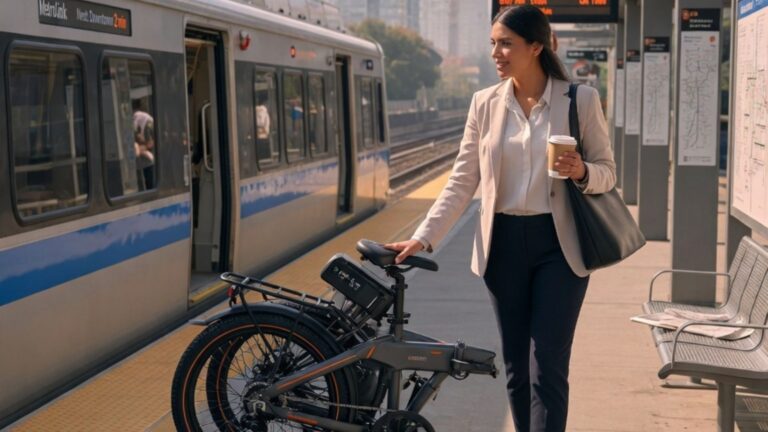
Modern urban landscapes are increasingly defined by congested roadways, limited parking, and a pressing need for sustainable transit alternatives. The traditional commute—reliant on gas-powered vehicles or rigid public transit schedules—is rapidly being replaced by innovative micro-mobility solutions. At the absolute forefront of this transportation evolution is the folding electric bike. By combining the health benefits and spatial efficiency of a traditional bicycle with the effortless power of an electric motor, these versatile machines have fundamentally altered how city dwellers navigate their environments. Whether you are bridging the gap between a train station and your office or simply avoiding gridlock, integrating a compact e-bike into your daily routine offers a strategic advantage in urban mobility.
The Rise of the Folding Electric Bike in Modern Commuting
The convergence of lithium-ion battery advancements and lightweight frame engineering has propelled the compact e-bike from a niche novelty into a mainstream transit staple. Understanding why this specific category of electric bicycle has gained such traction requires an examination of the unique pain points associated with urban commuting.
Solving the Last-Mile Commute Problem
The “last-mile” problem refers to the inconvenient distance between a major transit hub—such as a subway station or bus stop—and the final destination, typically a workplace or home. Walking this distance is often too time-consuming, while driving or hailing a ride is prohibitively expensive and slow due to traffic. A folding electric bike is the definitive solution to this dilemma. It allows commuters to cover several miles in minutes without breaking a sweat, thanks to intuitive pedal assist systems. Upon arriving at the transit hub, the bike folds down in seconds, becoming a compact piece of luggage that is permitted on buses and trains during peak hours, bypassing the restrictions often placed on full-sized bicycles.
The Intersection of Portability and Motor Power
Historically, cyclists had to choose between a lightweight, portable bike and a powerful, motorized one. Advancements in materials science and miniaturized motor technology have eliminated this compromise. Today’s models feature high-torque hub motors and robust battery packs seamlessly integrated into frames made from lightweight aluminum or carbon fiber. This intersection of portability and motor power means riders can effortlessly conquer steep urban inclines and accelerate from stoplights, all while riding a vehicle that can be easily carried up a flight of stairs or tucked under a desk.
Core Benefits of Owning a Folding Electric Bike
Investing in a compact e-bike extends far beyond simple convenience; it represents a strategic lifestyle upgrade that impacts daily efficiency, living space, and personal finances.
Seamless Multi-Modal Transportation
One of the most significant advantages of a folding model is its compatibility with multi-modal transportation. Full-sized e-bikes are often banned from public transit systems during rush hour or require expensive reservations on regional trains. A folded folding electric bike, however, is treated as a piece of personal luggage. This allows the modern commuter to seamlessly transition from riding on the street, to riding the subway, to walking into an office building, creating a fluid, uninterrupted journey that is immune to traffic jams and transit delays.
Space-Saving Compact Transportation
Urban living is notoriously space-constrained. Storing a full-sized bicycle in a small apartment or a crowded office is impractical and often creates tripping hazards. The primary design imperative of a folding mechanism is spatial efficiency. When folded, these bikes occupy a footprint of roughly two cubic feet. They can be stored in a closet, under a desk, or in the trunk of a car. This space-saving attribute makes compact transportation accessible to apartment dwellers and professionals who simply do not have the luxury of a dedicated bike room or garage.
Effortless Pedal Assist and Hill Climbing
Commuting by traditional bicycle is excellent exercise, but it often results in arriving at work sweaty and fatigued—hardly an ideal start to a professional day. The integration of pedal assist technology fundamentally changes the riding experience. The onboard sensors detect the rider’s effort and automatically augment it with power from the motor. This allows the cyclist to tackle steep hills, battle headwinds, and maintain high speeds with minimal physical exertion. Riders can customize the level of assistance, choosing a high-power mode for the commute to work and a low-power mode for a cardiovascular workout on the way home.
How to Choose the Right Folding Electric Bike
The market is flooded with options, ranging from ultra-compact budget models to high-performance commuting machines. Selecting the right folding electric bike requires a careful evaluation of several technical specifications relative to your specific commuting needs.
Evaluating Lithium-Ion Battery Capacity and Range
The battery is the heart of any e-bike, and its capacity dictates how far you can travel on a single charge. Battery capacity is measured in Watt-hours (Wh). A typical compact e-bike features a battery ranging from 250Wh to 500Wh. To estimate the range, divide the Watt-hours by an average efficiency metric of 10 to 15 Wh per mile. Therefore, a 375Wh battery will realistically yield a range of 25 to 37 miles, depending on the terrain, the rider’s weight, and the level of pedal assist utilized. If your commute is long or highly hilly, prioritizing a high-capacity battery is essential.
Understanding Motor Power and Drive Systems
E-bike motors are generally rated in Watts (W), with 250W and 500W being the most common classifications for folding models. A 250W motor is perfectly adequate for flat urban environments and riders of average weight. However, if your commute involves steep inclines or you require rapid acceleration in heavy traffic, a 500W motor provides the necessary torque. Furthermore, motors are positioned either in the rear hub or at the bottom bracket (mid-drive). While mid-drive motors offer superior balance and hill-climbing efficiency, rear hub motors are more common in folding bikes due to their cost-effectiveness and simplified frame design.
Frame Weight and Foldability Metrics
The weight of the bike is a critical factor, as you will inevitably have to carry it. Folding e-bikes typically weigh between 30 and 50 pounds. Frames constructed from aviation-grade aluminum offer the best balance of strength and weight. When assessing foldability, look beyond the collapsed dimensions. Evaluate the folding mechanism itself. A well-designed magnetic catch or secure latch system ensures the bike remains tightly folded while being carried. Additionally, consider whether the bike can be rolled on its wheels while folded, which saves you from having to lift the entire weight when navigating train platforms.
Maintaining Your Electric Bicycle for Longevity
A folding electric bike is a sophisticated piece of machinery that requires specific maintenance protocols to ensure safety, performance, and longevity. Proper care of the electrical components and the mechanical drivetrain is non-negotiable.
Battery Care and Charging Best Practices
The lithium-ion battery is the most expensive and sensitive component on the bike. To maximize its lifespan, avoid leaving the battery fully depleted for extended periods. If you are not riding the bike for a week or more, store the battery at approximately 50% to 80% charge. Furthermore, never charge the battery immediately after a ride while it is still hot; allow it to cool to room temperature before plugging it in. Extreme temperatures degrade lithium-ion cells rapidly, so always store the bike indoors during freezing winters and sweltering summers.
Tire and Drivetrain Upkeep
Because folding bikes utilize smaller wheels (typically 16 to 20 inches), they are more susceptible to pinch flats and wear than standard bicycles. Maintaining the correct tire pressure is paramount; under-inflated tires drastically reduce your battery range and increase the risk of punctures. Check the pressure weekly. Additionally, the combination of high torque from the motor and the smaller chainring sizes on folding bikes can accelerate chain wear. Clean and lubricate the chain regularly with a high-quality bicycle lubricant to prevent rust, reduce friction, and prolong the life of the drivetrain.
The Future of the Folding Electric Bike
The micro-mobility sector is experiencing rapid innovation, and the future of the folding electric bike is incredibly promising. We are witnessing the integration of smart technologies, including IoT connectivity that allows riders to track their bike via GPS, lock the motor remotely via a smartphone app, and receive over-the-air diagnostics. Furthermore, advancements in solid-state battery technology will soon yield lighter, more energy-dense power packs, drastically reducing the weight of the bike while extending the range. As urban centers continue to implement low-emission zones and prioritize non-vehicular infrastructure, the compact e-bike will transition from a convenient alternative to a primary mode of urban transportation.
Conclusion: The Strategic Value of a Folding Electric Bike
Navigating the modern city requires agility, efficiency, and a willingness to embrace disruptive technologies. The folding electric bike perfectly encapsulates these attributes, offering a seamless blend of compact portability, sustainable transit, and effortless motorized power. By solving the last-mile problem, eliminating the need for bulky storage, and providing a sweat-free commute via advanced pedal assist, these machines represent a fundamental upgrade to urban living. Whether you are a daily commuter or a weekend explorer, investing in a high-quality folding electric bike is a strategic decision that pays daily dividends in time saved, money preserved, and stress eliminated.
Frequently Asked Questions (FAQs)
1. How fast can a folding electric bike go?
Most compact e-bikes provide motor assistance up to 20 mph (Class 1 and 2) or 28 mph (Class 3), after which the motor disengages, though you can pedal faster manually.
2. Are folding electric bikes too heavy to carry?
While they are heavier than non-motorized folders due to the battery and motor, most models weigh between 30 and 50 pounds, making them manageable for short carries up stairs or onto transit.
3. Can I take a folding electric bike on a train or bus?
Yes, most public transit systems treat folded e-bikes as standard luggage, allowing them on board during peak hours when full-sized bicycles are prohibited.
4. How long does it take to charge the battery?
Charging time depends on the battery capacity and charger output, but a standard lithium-ion battery typically takes between 4 to 6 hours to reach a full charge from empty.
5. Is a folding electric bike good for steep hills?
Yes, utilizing the higher levels of pedal assist and a motor with adequate torque (500W or more), a folding e-bike can easily conquer steep urban inclines without exhausting the rider.
6. What is the expected lifespan of the battery?
With proper care and adherence to charging best practices, a high-quality lithium-ion e-bike battery typically lasts between 3 to 5 years, or roughly 500 to 1,000 full charge cycles.!


