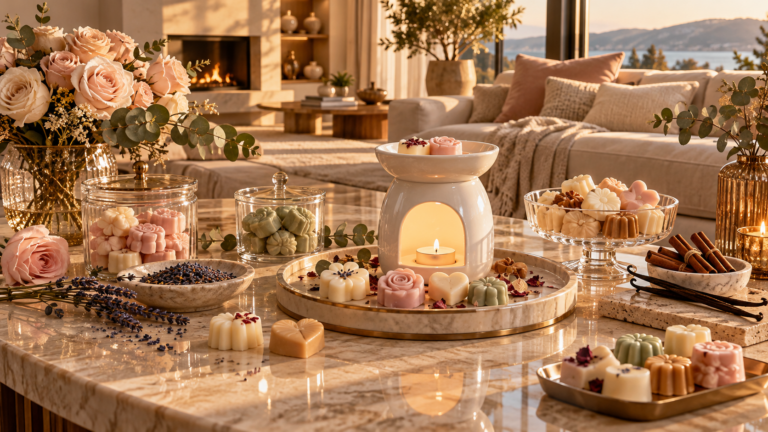
A beautifully decorated home becomes even more inviting when its atmosphere reflects comfort, warmth, and personal style. While furniture, lighting, and interior accessories shape the appearance of a room, fragrance can influence how that space feels to the people using it. Candle wax melts have become a popular home fragrance option because they offer a simple way to introduce pleasant aromas without relying on the wick of a traditional scented candle. Available in numerous fragrance combinations, decorative shapes, and wax formulations, these products allow homeowners to personalize their surroundings according to different moods, seasons, and preferences.
From comforting vanilla and delicate florals to refreshing citrus and sophisticated woody fragrances, scented wax melts provide plenty of opportunities to explore home fragrance. They can be used in living rooms, bedrooms, home offices, and other appropriate indoor spaces when paired with a compatible warmer and used responsibly.
However, selecting the right wax melts involves more than choosing an attractive fragrance. Wax composition, warmer compatibility, fragrance intensity, storage conditions, and safety precautions all influence the overall experience.
Understanding these factors helps consumers make practical purchasing decisions and enjoy home fragrance without unnecessary waste or avoidable risks.
What Are Candle Wax Melts and How Do They Work?
Candle wax melts are small portions of fragranced wax designed to release scent when warmed in a suitable heating device.
Unlike conventional scented candles, wax melts do not contain a wick. Instead, they rely on heat supplied by an electric warmer or another compatible heating system.
As the wax becomes warm and gradually melts, fragrance ingredients evaporate into the surrounding air. This creates the aroma associated with the product.
The wax itself generally remains in the warming dish rather than being consumed through combustion.
Over time, the fragrance becomes less noticeable as volatile scent ingredients disperse. Once the desired aroma has faded, the remaining wax can be replaced according to the warmer manufacturer’s instructions.
Why Are Wax Melts Popular for Home Fragrance?
One reason people enjoy wax melts is the flexibility they offer.
Instead of purchasing a complete scented candle every time they want a different aroma, consumers can select smaller quantities of fragranced wax.
These products are commonly sold in cubes, bars, discs, and decorative shapes, making them convenient to portion and store.
Some electric warmers also eliminate the need for an exposed flame. However, the heating surfaces and melted wax can still become hot enough to cause burns.
Another attraction is the wide variety of available scents.
Consumers can experiment with floral, fruity, herbal, gourmand, and woody fragrance families to complement different rooms.
Understanding Fragrance Release
Fragrance performance depends on the wax formulation, aromatic ingredients, warmer temperature, and surrounding environment.
A warmer that heats the product appropriately can release fragrance gradually, but a stronger smell is not automatically better.
The ideal fragrance intensity is one that feels pleasant without becoming overwhelming.
1. Choose Quality Candle Wax Melts for Better Fragrance Performance
The wax base is one of the most important components of a scented melt.
Different wax materials have different melting characteristics, textures, and formulation requirements.
Common options include soy wax, paraffin wax, coconut wax, beeswax, and blends containing more than one material.
No single wax type guarantees the strongest fragrance or the best overall performance.
The quality of the finished formulation matters more than the name of the wax alone.
Soy Wax Melts
Soy wax is derived from processed soybean oil and is widely used in home fragrance products.
It can be formulated into scented melts with different textures, melting characteristics, and fragrance profiles.
Many consumers prefer soy based products because they use a plant derived raw material.
However, products marketed as soy wax may contain additional waxes or other ingredients.
Anyone looking for a particular formulation should review the manufacturer’s ingredient information.
Paraffin Wax Melts
Paraffin wax is a petroleum derived material commonly used in candle and home fragrance manufacturing.
It offers flexibility in product formulation and can be combined with numerous fragrance ingredients.
Manufacturers sometimes blend paraffin with vegetable waxes to obtain specific melting and handling properties.
The suitability of a paraffin wax melt depends on its complete formulation and intended use.
Coconut Wax and Beeswax Blends
Coconut based waxes are frequently incorporated into blended fragrance products.
Beeswax can also be used in suitable formulations, although its natural properties require consideration during product development.
These materials may influence the texture, appearance, and melting behavior of the finished product.
Does Natural Wax Always Mean Better Quality?
Not necessarily.
The term natural does not establish that a wax melt is completely harmless, more effective, or environmentally superior.
Fragrance ingredients, manufacturing practices, packaging, and usage conditions must also be considered.
Consumers should prioritize clear product information and appropriate safety instructions rather than relying exclusively on marketing descriptions.
2. Select Fragrances That Match Your Home and Lifestyle
Choosing fragrance is a personal experience because people perceive and respond to aromas differently.
A scent that feels warm and welcoming to one person may seem too intense or sweet to another.
The best approach is to explore fragrance families and select combinations that complement individual preferences.
Floral Fragrances for Elegant Living Spaces
Floral wax melts are often associated with soft, fresh, and sophisticated interiors.
Popular scent profiles include rose, lavender, jasmine, peony, and gardenia.
Rose inspired fragrances can complement traditional living rooms, while lighter floral combinations may work well in contemporary spaces.
Lavender is commonly associated with relaxing surroundings, although scented products should not be treated as medical solutions for stress or sleep problems.
Jasmine and gardenia inspired scents often provide richer floral characteristics that may appeal to people who enjoy more noticeable aromas.
Citrus Fragrances for a Fresh Atmosphere
Citrus fragrance families include lemon, orange, grapefruit, lime, and bergamot inspired notes.
These scents are often selected for their bright and refreshing character.
They may suit entrance areas, kitchens, and everyday living spaces.
However, fragrance should never replace cleaning or adequate ventilation.
A pleasant aroma may cover an unwanted smell temporarily without eliminating the underlying source.
Warm Fragrances for Comfortable Interiors
Vanilla, amber, sandalwood, cinnamon, and caramel inspired fragrances are often associated with cozy environments.
They can complement warm lighting, natural wood furniture, soft fabrics, and autumn or winter decorating themes.
Some people enjoy sweet bakery inspired scents, while others prefer subtle combinations of wood and spice.
Matching Fragrance Intensity With Room Size
Room dimensions and ventilation influence how noticeable a scent becomes.
A fragrance may feel strong in a compact room but less prominent in an open living area.
Use the quantity recommended for your warmer and assess the result before making adjustments.
Adding excessive wax does not necessarily improve fragrance performance and may create a spill risk.
3. Use a Compatible Wax Melt Warmer
The warmer is responsible for supplying the heat required to release fragrance.
Choosing a suitable device helps maintain consistent operation and reduces avoidable safety concerns.
Wax warmers vary in size, construction, heating method, and operating temperature.
Consumers should always follow the instructions supplied with their warmer.
Electric Wax Melt Warmers
Electric warmers use electrical energy to heat a surface or dish containing scented wax.
Many feature ceramic, glass, or metal components and are available in designs intended to complement different interior styles.
Some models include adjustable operating settings or automatic shutoff features.
However, these functions are not universal and should be verified before purchase.
Electric warmers avoid the exposed flame associated with tealight candles, but they still generate heat.
The dish, surrounding surfaces, and melted wax may become hot during use.
Tealight Wax Warmers
Tealight warmers use a small candle positioned below a wax dish.
Heat from the burning candle melts the fragranced wax above it.
These devices combine the appearance of candlelight with the aroma of wax melts.
However, their open flame introduces fire risks that require additional precautions.
Never use a larger candle than the warmer manufacturer recommends.
Keep the flame away from curtains, decorations, paper, and other combustible materials.
Choosing a Suitable Warmer
Look for a stable design, suitable dish capacity, clear operating instructions, and appropriate electrical safety information when applicable.
The warmer should be positioned on a level, heat resistant surface away from areas where it could be knocked over.
Why Warmer Temperature Matters
Different wax formulations respond differently to heat.
A warmer operating outside the intended conditions may affect fragrance release or create unnecessary hazards.
Never attempt to melt wax by placing it directly on a stove, radiator, or other unapproved heating surface.
4. Follow Safe Practices When Using Candle Wax Melts
Responsible usage is essential for enjoying home fragrance.
Although wax melts do not contain their own wicks, they are not completely risk free.
The primary concerns include hot surfaces, melted wax, electrical equipment, open flames in certain warmer types, and exposure to fragrance ingredients.
Prepare a Safe Warming Area
Before operating a warmer, check that it is clean, stable, and suitable for the intended product.
Place it on a level, heat resistant surface.
Avoid positioning the device near hanging fabrics, loose paper, bedding, or other materials that could create hazards.
Keep electrical cords away from areas where they might be pulled accidentally.
Do not use an electrical warmer with a damaged cord or plug.
Add the Correct Amount of Wax
Place only the recommended quantity of scented wax into the warming dish.
An excessive amount may overflow as the wax becomes liquid.
Follow the warmer manufacturer’s capacity instructions rather than estimating how much the dish can hold.
Do not add water, perfume, essential oils, or other substances unless the manufacturer explicitly permits them.
Protect Children and Pets
Decorative wax melts may resemble sweets or other attractive objects.
This makes secure storage important in households with children.
Unused products should be kept out of reach, and operating warmers should never be positioned where children can touch them.
Pets may also investigate unfamiliar scents or accidentally overturn a warming device.
Certain fragrance ingredients can be harmful to animals, particularly if ingested.
A product described as natural or plant based should not automatically be considered safe for pets.
If a child or animal accidentally swallows a fragrance product, seek appropriate professional advice promptly.
Maintain Comfortable Indoor Air
Some individuals may experience headaches, respiratory irritation, or other discomfort when exposed to strong fragrances.
Anyone who notices symptoms should stop using the product and increase ventilation where appropriate.
People with known sensitivities should consider avoiding fragranced products that trigger symptoms.
Never Leave Heated Wax Unattended
Always follow the warmer manufacturer’s supervision instructions.
Extinguish tealight flames before leaving a room or going to sleep.
For electric warmers, switch off the device when it is no longer needed and follow its operating limits.
Allow the equipment and wax to cool before moving or cleaning them.
5. Make Wax Melt Fragrances Last Through Proper Storage
Fragrance longevity is an important consideration when purchasing scented wax products.
However, there is no universal duration for every melt.
The length of time fragrance remains noticeable depends on formulation, wax quantity, warmer temperature, room conditions, and individual scent perception.
Some products may remain fragrant across several warming sessions, while others lose their noticeable aroma sooner.
Store Wax Melts Away From Heat
Excessive warmth can soften stored wax and affect its appearance.
Direct sunlight may also influence color and fragrance quality over time.
Choose a cool, dry storage location away from windows, radiators, and other heat sources.
Keep unused pieces inside their original packaging or suitable closed containers.
Proper storage also helps protect products from dust and unwanted contact with other materials.
Keep Different Fragrances Separate
Storing strongly fragranced melts together without appropriate packaging can allow their aromas to influence one another.
For example, a heavily spiced fragrance may affect the perceived scent of nearby floral products.
Separate containers help maintain the intended character of individual fragrances.
This is particularly useful for consumers who maintain collections for different seasons.
Recognize When Wax Should Be Replaced
Wax can remain inside a warmer even after most of its fragrance has dispersed.
This does not necessarily indicate that the product is defective.
The wax base and aromatic ingredients behave differently during heating.
Replace the wax when its scent is no longer satisfactory or when recommended by the manufacturer.
How to Remove Used Wax Safely
Switch off the warmer and follow its instructions for wax removal.
Allow hot wax to cool before handling the dish.
Some products can be removed as a solid piece once cooled.
Never pour liquid wax into household drains because it can harden and contribute to blockages.
Avoid scraping delicate dishes with sharp tools that could damage their surfaces.
6. Create a Personalized Fragrance Experience
One attractive feature of candle wax melts is the opportunity to experiment with different fragrance styles.
Consumers can create a consistent scent theme for their homes or change aromas according to seasonal preferences.
The goal should be to find combinations that feel comfortable rather than using as much fragrance as possible.
Choose Complementary Scent Families
Fragrance combinations can be selected according to their main aromatic characteristics.
Floral and citrus scents may produce a lighter impression.
Vanilla and woody fragrances can offer a warmer profile.
Fruit and spice inspired combinations are often popular during colder seasons.
However, successful combinations depend on the specific ingredients and individual preference.
A balanced fragrance should remain pleasant during normal use without becoming overpowering.
Understand Fragrance Layering
Fragrance layering involves combining complementary aromas to create a particular overall impression.
Some wax melt manufacturers offer products specifically intended for mixing.
When experimenting, follow the instructions for both the wax melts and warmer.
Do not exceed the recommended wax quantity.
Start with a small compatible combination rather than mixing multiple strong fragrances immediately.
Avoid Fragrance Fatigue
People sometimes become less aware of a familiar scent after being exposed to it for a period.
This change in perception does not necessarily mean that the wax has stopped releasing fragrance.
Adding more scented wax in response can make the room uncomfortable for other occupants.
Keep Your Fragrance Routine Balanced
Use one fragrance at a time when evaluating a new product.
Consider taking breaks between fragrance sessions, particularly in smaller rooms.
This allows you to assess which scents you genuinely enjoy and whether their intensity is appropriate.
7. Buy Quality Wax Melts Without Overspending
Price is not always a reliable indicator of fragrance quality.
A premium looking package may be attractive, but consumers should consider the product’s formulation, instructions, quantity, and overall suitability.
Review Product Descriptions Carefully
Look for clear information about the wax base, scent profile, package quantity, intended use, and safety precautions.
Manufacturers that provide understandable instructions make it easier for customers to choose compatible products.
Be cautious about unsupported claims suggesting that particular wax melts are completely harmless, chemical free, or guaranteed to improve health.
All physical fragrance products contain chemical substances, whether their ingredients originate from plants or other sources.
Compare Quantity and Performance
Wax melts are available in different weights and packaging formats.
Comparing the cost per unit of wax can help identify apparent price differences.
However, a lower price per gram does not automatically establish better value.
Consider fragrance quality, packaging condition, user instructions, and how often the product is likely to be used.
Buying smaller quantities when trying unfamiliar scents can reduce unnecessary spending.
Choose Wax Melts for Gifts
Scented wax melts can be thoughtful gifts for people who enjoy home fragrance.
Gift selections often include multiple fragrances, decorative packaging, and coordinating warmers.
Choose fragrances according to the recipient’s preferences rather than assuming everyone enjoys intense scents.
A suitable gift should also include the information needed for safe use.
Avoid Purchasing Excessive Quantities
Large collections may seem appealing, but fragrance products can change during prolonged storage.
Purchasing a manageable selection helps maintain variety without accumulating products that may never be used.
Choose favorite scents first and expand your collection only when needed.
Candle Wax Melts Versus Traditional Scented Candles
Wax melts and traditional candles serve similar fragrance purposes, but their operating methods differ.
A scented candle uses a burning wick to melt surrounding wax and release aromatic ingredients.
Wax melts rely on a separate warmer.
An electric warmer can offer fragrance without an exposed flame, although its heating components still require attention.
Traditional candles provide visible candlelight, which some people consider an important part of their decorative appeal.
Wax melts offer the flexibility of changing smaller portions of fragrance without purchasing a new jar candle.
Both options can suit different personal preferences.
The best choice depends on the desired atmosphere, available equipment, household circumstances, and willingness to follow relevant safety precautions.
How to Use Wax Melts in Different Rooms
Every room serves a different purpose, so fragrance choices can be adjusted accordingly.
Living Rooms
Living rooms are often shared by family members and visitors.
Balanced fragrances such as light florals, vanilla, subtle wood, or fresh cotton inspired aromas may create a welcoming impression.
Choose a secure warmer location away from frequently used seating areas and walking routes.
Bedrooms
Bedrooms may suit softer fragrances that do not dominate the environment.
Light lavender, delicate floral, or understated woody scents may complement calm interior designs.
Always turn off warming equipment before sleeping, following the device’s operating instructions.
Home Offices
Home offices can benefit from comfortable surroundings, but scent preferences differ.
Some people enjoy citrus or herbal inspired fragrances, while others find fragrance distracting.
Avoid placing warmers near computers, paperwork, or crowded electrical connections.
Entrance Areas
Entrance spaces are frequently used to welcome guests.
A mild, fresh smelling fragrance may complement an organized and well ventilated entryway.
Position the warmer where people carrying bags or moving through narrow spaces cannot accidentally knock it over.
Common Problems With Scented Wax Melts and Their Solutions
Even well formulated products can produce disappointing results when used incorrectly.
Understanding typical problems helps consumers improve their fragrance routines.
Weak Fragrance
A weak scent may result from fragrance formulation, warmer conditions, ventilation, or personal scent adaptation.
Check whether the warmer is compatible with the product and operating as intended.
Avoid adding excessive wax or increasing heat beyond recommended settings.
If a fragrance consistently performs poorly, consider trying a different product from a reputable manufacturer.
Wax That Does Not Melt Properly
If the wax remains mostly solid, the warmer may not provide suitable heating conditions.
Check the equipment’s instructions and compatibility requirements.
Do not use unapproved heating methods to force the wax to melt.
Fragrance That Feels Overwhelming
Strong scents can become uncomfortable in enclosed spaces.
Switch off the warmer, allow the wax to cool, and ventilate the room appropriately.
Future sessions may be more comfortable with a milder product.
Difficulty Cleaning the Warmer
Hardened wax can be inconvenient to remove.
The safest cleaning procedure depends on the dish material and warmer design.
Follow the manufacturer’s directions rather than introducing water or sharp tools into equipment that may be unsuitable for them.
Are Wax Melts an Environmentally Responsible Choice?
Environmental considerations are increasingly relevant when selecting household products.
Wax melts can be manufactured from different raw materials, each associated with particular sourcing and production processes.
Vegetable based waxes originate from agricultural crops, while paraffin wax comes from petroleum processing.
However, environmental performance depends on more than the original material.
Manufacturing methods, land use, transportation, fragrance ingredients, packaging, and disposal all influence a product’s overall impact.
Consumers should avoid assuming that every plant based wax melt is automatically sustainable.
Look for specific, credible information about sourcing and manufacturing practices.
Reducing unnecessary purchases and using products according to their instructions can also help limit avoidable waste.
Where available, choose packaging that can be appropriately reused or recycled through local waste systems.
Frequently Asked Questions
1. What are candle wax melts used for?
Candle wax melts are fragranced wax pieces heated in compatible warmers to release pleasant aromas into indoor spaces. They offer an alternative to traditional scented candles.
2. How long do candle wax melts last?
Fragrance duration depends on wax formulation, warmer temperature, fragrance ingredients, and frequency of use. Some products remain fragrant across multiple sessions.
3. Are candle wax melts safe for everyday use?
They can be used responsibly by following manufacturer instructions, keeping heated wax away from children and pets, maintaining ventilation, and supervising warming equipment.
4. Can you reuse candle wax melts?
Yes. Wax can be warmed again while it retains a satisfactory fragrance, provided the product and warmer remain suitable for continued use.
5. Are soy wax melts better than paraffin wax melts?
Neither material is universally superior. Performance depends on the complete product formulation, fragrance ingredients, warmer compatibility, and intended use.
6. Can you mix different candle wax melt fragrances?
Compatible fragrances may be combined when manufacturer instructions allow it. Avoid exceeding warmer capacity or introducing ingredients not intended for the product.
Conclusion
Candle wax melts offer a versatile and enjoyable way to introduce personal fragrance preferences into everyday living spaces. By selecting suitable wax formulations, exploring complementary scents, choosing compatible warmers, and following appropriate safety practices, consumers can create a more welcoming home environment. Careful storage, thoughtful purchasing, and responsible fragrance use also help maintain product quality while avoiding unnecessary waste. Whether you prefer delicate florals, refreshing citrus, or comforting seasonal aromas, the right wax melts can become a practical part of your home fragrance routine.