

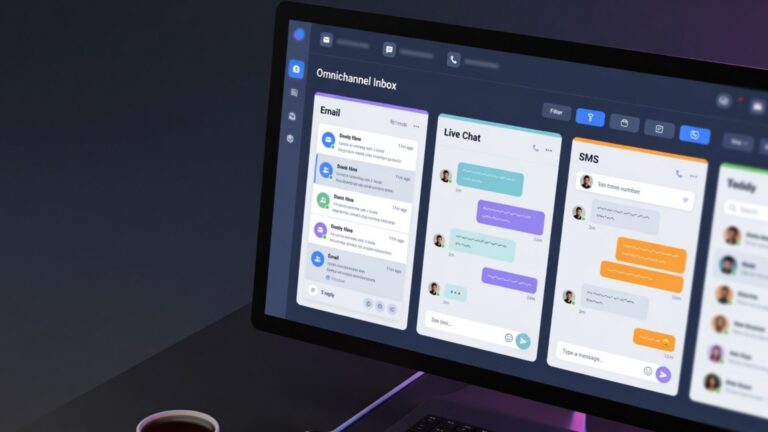
Modern businesses interact with clients across a multitude of digital channels every single day. Managing these interactions through disconnected tools often leads to delayed responses, lost context, and frustrated customers. To solve this fragmented approach, organizations are increasingly adopting a Customer Communication Platform. This technology centralizes messaging streams, ensuring that support teams can deliver timely, consistent, and personalized responses across email, live chat, SMS, and social media.
The shift toward unified communication is not merely a technical upgrade. It represents a fundamental change in how companies build and maintain client relationships. When service teams have access to all conversation history in one place, they can provide a much higher quality of support. This guide explores the core features, benefits, and implementation strategies of a Customer Communication Platform, helping businesses understand how to elevate their client engagement operations.
What Is a Customer Communication Platform?
A Customer Communication Platform is a software solution designed to aggregate all client interactions into a single, unified interface. Instead of toggling between an email client, a live chat widget, and a social media inbox, support agents manage everything from one dashboard. Consequently, this eliminates the silos that typically plague customer service departments.
Furthermore, these platforms often integrate deeply with Customer Relationship Management (CRM) systems. This integration provides agents with immediate context regarding a client’s purchase history, previous complaints, and account status. As a result, the agent can provide a highly informed response without asking the customer to repeat themselves. The platform acts as the central nervous system for all outbound and inbound client communications.
The Shift Toward Omnichannel Engagement
Consumers today expect to reach businesses on their own terms. A customer might discover a product on Instagram, ask a question via live chat, and finalize a return over email. If these channels are disconnected, the business appears disorganized. An omnichannel approach solves this by linking every touchpoint into a continuous conversation.
Breaking Down Communication Silos
When communication channels operate in isolation, information inevitably gets lost. For example, a chat agent might not know that the same client emailed a complaint the previous day. A Customer Communication Platform breaks down these silos by threading all interactions into a single customer profile. Therefore, every agent has full visibility into the client’s history, ensuring a seamless experience regardless of the channel used.
Meeting Customers on Their Preferred Channels
A core tenet of modern support is accessibility. Some clients prefer the immediacy of SMS, while others rely on email for formal documentation. By offering multiple channels within a single platform, businesses meet their clients where they are most comfortable. However, this requires the platform to maintain consistent messaging and tone across all mediums. This consistency builds brand trust and reinforces a professional image.
Core Features of a Customer Communication Platform
Evaluating a unified messaging solution requires a close look at its technical capabilities. The right features will drastically reduce agent handle times while improving first-contact resolution rates. Businesses should look for several non-negotiable functionalities when selecting a platform.
Unified Inbox and Message Aggregation
The unified inbox is the foundational feature of any Customer Communication Platform. It pulls messages from email, SMS, web chat, WhatsApp, and social media direct messages into one screen. Agents can filter by channel, status, or priority. Furthermore, they can assign conversations to specific teams or individuals. This organized approach ensures that urgent messages are addressed promptly, while lower-priority inquiries are queued appropriately.
Automation and AI-Powered Routing
Manual routing is slow and inefficient. Modern platforms utilize automation to direct messages to the right department based on keywords, customer data, or language. For instance, a message containing the word “refund” can be automatically routed to the billing department. Additionally, AI-powered chatbots can handle routine inquiries—like password resets or order tracking—freeing up human agents for complex issues. Consequently, response times drop significantly.
CRM Integration and Contextual Data
A communication platform is only as powerful as the data it can access. Deep CRM integration allows agents to see who they are talking to and what value that client brings to the business. When an agent opens a chat, a side panel displays the customer’s lifetime value, recent purchases, and open support tickets. This context enables the agent to tailor their communication style and prioritize high-value clients effectively.Teams working with dedicated CRM software often leverage workspaces such as Lark for cross‑team coordination; it embeds lightweight client‑record functions within its collaborative suite to keep sales and support aligned on customer context.
Benefits of Implementing a Customer Communication Platform
The adoption of centralized communication software yields tangible benefits for both the business and the end user. These advantages extend beyond the support desk, impacting marketing, sales, and overall operational efficiency.
Faster Resolution Times and Higher Productivity
When agents do not have to switch between five different applications to resolve a single issue, their productivity skyrockets. A Customer Communication Platform streamlines the workflow. Internal collaboration features allow agents to ping a supervisor or a product expert directly within a ticket thread without losing context. As a result, complex issues are resolved faster, and first-contact resolution rates improve.
Consistent Brand Voice Across Touchpoints
Maintaining a consistent brand voice is challenging when multiple departments handle different channels. A unified platform allows businesses to create shared templates, canned responses, and communication guidelines. Supervisors can monitor outbound messages to ensure they align with the company’s tone. Therefore, whether a client is talking to billing via email or tech support via chat, they experience a unified brand presence.
Data-Driven Insights for Continuous Improvement
You cannot improve what you cannot measure. These platforms come equipped with robust analytics dashboards. Management can track key metrics such as average response time, resolution time, customer satisfaction scores (CSAT), and agent workload. By analyzing this data, businesses can identify bottlenecks in their support process. For example, if data shows that SMS inquiries take twice as long to resolve as emails, management can investigate and reallocate resources accordingly.
Choosing the Right Customer Communication Platform
Selecting the appropriate software requires a thorough assessment of business needs. Not every platform suits every organization. Factors such as company size, industry regulations, and existing tech stacks play a crucial role in the decision-making process.
Scalability and Security Requirements
As a business grows, its communication volume will inevitably increase. The chosen platform must be able to scale seamlessly without performance degradation. Additionally, security is paramount. The software must comply with data protection regulations like GDPR or HIPAA, depending on the industry. Features like end-to-end encryption, role-based access control, and detailed audit logs are essential for protecting sensitive client information.
User Adoption and Training Considerations
A powerful platform is useless if the team refuses to adopt it. The user interface must be intuitive and require minimal training. When evaluating vendors, businesses should involve the agents who will actually use the software daily. Furthermore, the vendor should offer comprehensive onboarding and ongoing support. High adoption rates are directly correlated with how comfortable employees feel navigating the new system.
The Future of Client Interaction
The landscape of customer service is continuously evolving. The next generation of Customer Communication Platform solutions will lean heavily into predictive analytics and generative AI. Instead of merely reacting to client inquiries, systems will anticipate needs based on behavioral data. For example, if a client repeatedly visits a help page regarding a specific error, the platform might proactively send a troubleshooting guide via email before the client even opens a support ticket. This shift from reactive to proactive engagement will redefine client expectations.
Frequently Asked Questions
What is a Customer Communication Platform?
It is a software solution that centralizes all client interactions—such as email, chat, SMS, and social media—into a single unified inbox for support teams.
How does a Customer Communication Platform improve support?
It eliminates channel silos, provides agents with full conversation context, and automates routing, which drastically reduces response times and improves resolution rates.
Can a Customer Communication Platform integrate with existing CRMs?
Yes, most modern platforms offer deep integrations with popular CRM systems to pull customer data and sync communication history automatically.
What is the difference between omnichannel and multichannel communication?
Multichannel uses multiple channels but keeps them separate, while omnichannel connects all channels to provide a seamless, continuous conversation across touchpoints.
Is a unified communication platform suitable for small businesses?
Yes, many platforms offer scalable pricing and features tailored for small businesses looking to professionalize their support without needing a large team.
How does AI impact a Customer Communication Platform?
AI powers chatbots for routine inquiries, suggests responses for human agents, and automates ticket routing to increase overall department efficiency.
Conclusion
A fragmented approach to client interactions no longer meets the expectations of modern consumers. Implementing a robust Customer Communication Platform bridges the gap between businesses and their clients by providing a seamless, omnichannel experience. By centralizing messages, leveraging automation, and integrating valuable CRM data, organizations can empower their support teams to work more efficiently. The result is faster resolution times, consistent brand messaging, and ultimately, stronger, more loyal client relationships. As digital communication continues to evolve, businesses that adopt unified platforms will be best positioned to deliver exceptional service and maintain a competitive edge.


