

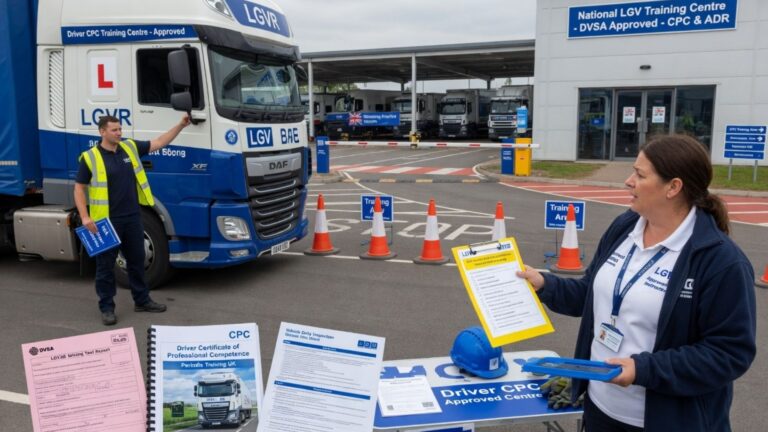
Starting a career in professional driving can be a practical route into the logistics, transport, construction, retail, and distribution sectors. LGV Course Training helps drivers gain the skills, licence entitlement, road confidence, and Driver CPC knowledge needed to operate large goods vehicles safely and legally in the UK. Whether you want to drive a rigid lorry, an articulated vehicle, or upgrade from a car licence to a commercial driving qualification, choosing the right training course is one of the most important steps.
LGV stands for Large Goods Vehicle, although many people still use the older term HGV, or Heavy Goods Vehicle. In everyday UK training language, LGV and HGV are often used to describe the same professional lorry-driving route. The training process can include a medical assessment, provisional licence application, theory tests, hazard perception, practical driving lessons, reversing practice, road training, and Driver CPC modules for commercial drivers.
This guide explains how LGV training works, what licence categories mean, how long training can take, what costs to expect, and how to choose a reliable provider.
What Is LGV Course Training?
LGV Course Training is professional driver training designed to prepare learners to drive large goods vehicles. It focuses on both legal qualification and real-world driving ability. The course may include classroom or online theory support, practical vehicle control, safety checks, road awareness, reversing exercises, and preparation for DVSA assessments.
A complete LGV training journey may include:
- Driver medical assessment
- Provisional licence entitlement
- Multiple-choice theory test
- Hazard perception test
- Driver CPC theory where required
- Practical driving lessons
- Vehicle safety checks
- Reversing and manoeuvring practice
- On-road driver training
- Practical driving test
- Driver CPC Module 4 where required
The exact route depends on the licence category, whether the driver wants to drive commercially, and whether they already hold any lorry entitlement.
Why LGV Course Training Matters
LGV driving is a skilled profession. Large vehicles are heavier, longer, wider, and slower to stop than cars. Drivers need to understand road positioning, mirror use, hazard planning, reversing space, load awareness, blind spots, speed limits, and vehicle safety responsibilities.
Good training matters because it helps drivers:
- Build confidence behind the wheel
- Understand large vehicle handling
- Prepare for DVSA tests
- Improve road safety awareness
- Learn professional driving standards
- Understand Driver CPC requirements
- Reduce bad habits before test day
- Prepare for work in logistics or transport
A quality course should not only help learners pass the test. It should also prepare them for real driving conditions after qualification.
LGV Course Training Licence Categories
Before booking a course, it is important to understand the main licence categories. The right category depends on the type of vehicle you want to drive.
Category C Licence
Category C, often called Class 2, allows drivers to operate rigid large goods vehicles. These are vehicles where the cab and cargo area are fixed together. Examples may include delivery lorries, refuse vehicles, tippers, and many commercial rigid trucks.
Category C is a common starting point for new LGV drivers because many entry-level commercial driving roles use rigid vehicles.
Category C+E Licence
Category C+E, often called Class 1, allows drivers to operate articulated lorries or large vehicles with trailers. This category is often used for long-distance haulage, logistics, supermarket distribution, and larger transport operations.
Some learners may be eligible to train directly from a car licence to Category C+E, depending on current rules and provider suitability checks. However, direct access may not be right for every beginner. Drivers with trailer experience or strong vehicle confidence may adapt faster, while others may benefit from starting with Category C first.
Driver CPC and LGV Course Training
Driver CPC stands for Driver Certificate of Professional Competence. It is required for most drivers who want to drive large goods vehicles commercially in the UK. If you are driving only for private, non-commercial purposes, the requirements may differ, but most people training for an LGV career need Driver CPC.
Initial Driver CPC usually includes theory and practical elements. Drivers may need to complete case study testing and a practical demonstration test. Once qualified, professional drivers must also complete periodic CPC training to keep their qualification valid.
Driver CPC helps ensure drivers understand:
- Vehicle safety
- Load security
- Driver responsibilities
- Road risk awareness
- Legal duties
- Working time awareness
- Professional conduct
- Safety checks and emergency procedures
When comparing LGV training providers, always check whether CPC is included in the quoted price or charged separately.
How Long Does LGV Course Training Take?
The full LGV qualification process can take several weeks because it involves more than just practical driving lessons. Learners may need time for the medical, provisional licence processing, theory test preparation, test bookings, practical training, and Driver CPC.
A practical in-vehicle course may last several days, but the full process from starting paperwork to passing tests may take longer. Many learners should expect the overall journey to take around 8 to 10 weeks, depending on DVLA processing, test availability, provider scheduling, and personal readiness.
Be careful with “fast-track” claims. Some providers use fast-track language to describe only the driving lesson portion, not the full legal qualification process. There is no shortcut around mandatory medical, licence, theory, practical, and CPC requirements.
LGV Course Training Costs in the UK
LGV training costs vary depending on licence category, location, course length, test fees, medical costs, CPC inclusion, and whether the provider offers an all-inclusive package.
Common cost factors include:
- Medical assessment
- Provisional licence support
- Theory tuition
- Theory test fees
- Hazard perception test
- Driver CPC tests
- Practical training days
- Vehicle hire for test
- DVSA test fees
- VAT
- Retest protection or extra tuition
Some providers advertise a low headline price but charge separately for medicals, theory tests, CPC, test fees, or administration. When comparing prices, ask what is included and what may be added later.
A transparent quote should clearly explain the total expected cost before you commit.
What to Expect During Practical LGV Course Training
Practical LGV training is where learners build real driving skills. Lessons usually focus on vehicle control, observation, safety, road positioning, junctions, roundabouts, reversing, and test preparation.
Training may include:
- Daily vehicle safety checks
- Cab controls and mirrors
- Moving off safely
- Gear control or automatic transmission handling
- Lane discipline
- Turning and cornering
- Speed management
- Hazard anticipation
- Reversing exercises
- Coupling and uncoupling for C+E where applicable
- Test route preparation
- Independent driving practice
Instructors should explain mistakes clearly and help learners improve without pressure. A supportive instructor can make a major difference, especially for nervous drivers.
Choosing the Right LGV Course Training Provider
Choosing a reliable provider is one of the most important decisions in the process. A good training company should be transparent, experienced, well-equipped, and clear about what happens at each stage.
Before booking, check:
- Is the provider a real training centre or a broker?
- Are vehicles modern and well maintained?
- Are instructors experienced?
- Is the pricing fully transparent?
- Are medical, theory, CPC, VAT, and test fees included?
- Where does practical training take place?
- How many days of training are included?
- Is support provided for paperwork?
- What happens if you fail the test?
- Are reviews and testimonials credible?
Avoid providers that make unrealistic promises, pressure you to book quickly, or hide important costs.
LGV Course Training for Career Change
Many people consider LGV driving as a career change because the transport sector offers practical work, clear qualifications, and opportunities across many industries. Qualified drivers may work in retail distribution, construction supply, waste management, general haulage, food logistics, events, courier networks, or specialist transport.
LGV driving may suit people who:
- Enjoy practical work
- Prefer being on the road
- Want a recognised professional skill
- Are comfortable with responsibility
- Can follow safety rules carefully
- Want access to logistics career paths
- Are willing to keep CPC training updated
However, professional driving also requires discipline. Drivers must manage time, fatigue, road safety, vehicle checks, customer expectations, and legal responsibilities.
Common Mistakes to Avoid With LGV Course Training
Many learners make avoidable mistakes when choosing or starting training.
Common mistakes include:
- Booking based only on the cheapest price
- Not checking what the course includes
- Confusing Class 1 and Class 2 routes
- Ignoring Driver CPC requirements
- Underestimating theory test preparation
- Choosing a broker without real vehicles
- Expecting a guaranteed pass
- Not practising hazard perception
- Leaving paperwork too late
- Not asking about retest options
Preparation matters. Learners who take theory study seriously and listen carefully during practical training are usually better positioned for success.
Conclusion: LGV Course Training for a Professional Driving Future
LGV Course Training is an important step for anyone who wants to become a qualified large goods vehicle driver in the UK. A good course should guide learners through medical checks, provisional entitlement, theory tests, Driver CPC, practical driving skills, and DVSA test preparation. Whether you choose Category C for rigid vehicles or Category C+E for articulated lorries, the right provider can make the process clearer and less stressful. Before booking, compare total costs, course content, training quality, instructor experience, vehicle standards, and support with paperwork. With proper preparation and realistic expectations, LGV Course Training can open the door to a practical and rewarding career in transport and logistics.
FAQs
What is LGV Course Training?
LGV Course Training prepares drivers to operate large goods vehicles through theory, practical lessons, medical checks, tests, and CPC where required.
Is LGV the same as HGV?
In the UK, LGV and HGV are commonly used to describe large goods vehicle training, though LGV is the modern licensing term.
What is the difference between Class 1 and Class 2?
Class 2 usually means Category C rigid vehicles, while Class 1 means Category C+E articulated vehicles or large vehicles with trailers.
Do I need Driver CPC for LGV driving?
You usually need Driver CPC if you want to drive large goods vehicles commercially in the UK.
How long does LGV training take?
The full process often takes several weeks, commonly around 8 to 10 weeks, depending on medicals, licence processing, tests, and availability.
How do I choose an LGV training provider?
Choose a provider with transparent pricing, real vehicles, experienced instructors, clear course inclusions, CPC support, and reliable reviews.


