Preserving the historical charm of your property requires meticulous attention to detail. Many homeowners mistakenly rip out original features, replacing them with inferior modern substitutes. However, authentic architectural elements define the true character of your building. Therefore, maintaining timber sash windows is absolutely crucial for heritage aesthetics. These elegant sliding mechanisms have graced British homes for centuries. Furthermore, they offer an authenticity that plastic alternatives simply cannot replicate. Consequently, protecting and upgrading them boosts both your living comfort and property value significantly. In this comprehensive guide, we will explore the five efficiency secrets to transform your period windows. Ultimately, understanding these strategies helps you retain historical beauty while embracing modern performance.
The Enduring Appeal of Timber Sash Windows
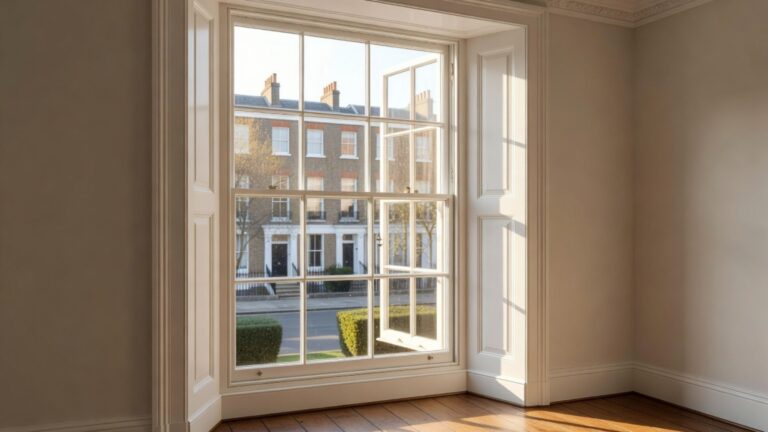
First, you must appreciate the sophisticated engineering behind traditional box sash designs. They operate using a brilliant counterbalance system of weights and pulleys. This mechanism allows heavy frames to glide effortlessly up and down. Therefore, discarding this proven technology in favor of spring-loaded modern replacements often proves incredibly short-sighted. Original windows were built using exceptionally durable, slow-grown heartwood. Consequently, they possess a natural longevity that modern fast-grown timber lacks entirely.
Escaping the Trap of Unsightly UPVC
UPVC replacements aggressively market themselves as maintenance-free solutions. However, they completely destroy the architectural integrity of period properties. Their chunky profiles and fake glazing bars look crude and artificial against elegant stone or brick facades. Furthermore, UPVC degrades irreparably over time, yellowing and becoming brittle. You cannot repair a broken plastic frame; you must replace the entire unit. Conversely, timber sash windows offer infinite repairability. A skilled joiner can splice out rot and restore the original timber perfectly. Consequently, you save money and preserve authenticity simultaneously. As a result, your home retains its priceless historical character. Ultimately, plastic windows belong in modern estates, not heritage homes.
Preserving Architectural Heritage Authentically
Conservation officers fiercely protect the visual integrity of historic neighborhoods. Therefore, altering original fenestration often violates strict listed building regulations. Even unlisted properties in conservation areas face severe restrictions on window replacements. Installing inappropriate modern units drastically diminishes the street’s cohesive historical narrative. However, restoring original timber frames satisfies all heritage requirements completely. Furthermore, authentic windows feature delicate proportions that complement the building’s original scale. Consequently, your property remains a faithful representation of its architectural era. As a result, you honor the craftsmanship of past generations while enjoying a comfortable home. Ultimately, preservation always proves far superior to insensitive replacement.
5 Efficiency Secrets for Timber Sash Windows
Many homeowners assume old windows inherently leak heat and cause draughts. However, this assumption completely ignores modern upgrade technologies. You can drastically improve thermal performance without altering the external appearance. Specifically, these five efficiency secrets unlock outstanding modern comfort.
Secret 1: Upgrading to Slim Double Glazing
The most significant heat loss occurs through single glazing. Traditional glass allows cold to radiate directly into your room. Therefore, upgrading to slim double glazing makes the most dramatic improvement. Modern manufacturing techniques now produce incredibly narrow sealed units. They fit perfectly within original glazing bars, often as thin as eleven millimeters overall. Consequently, you retain the delicate, historic aesthetic while gaining a modern thermal barrier. Furthermore, these units contain argon gas and low-emissivity coatings. This technology reflects interior heat back into the room while blocking external cold. As a result, your heating bills plummet immediately without compromising visual authenticity. Ultimately, slimline double glazing is the ultimate heritage upgrade.
Secret 2: Installing Comprehensive Draught Proofing
Even with excellent glazing, gaps around the sashes allow bitter winds to whistle inside. Original windows rarely featured seals, relying purely on tight joinery. Over decades, wood shrinks and warps, creating invisible air leaks. Therefore, installing comprehensive draught proofing completely transforms your comfort. Specialists insert discreet brush piles into the parting beads, staff beads, and meeting rails. These flexible seals compress tightly as the window closes, blocking all airflow. Furthermore, they significantly reduce exterior noise pollution entering your home. Consequently, your rooms stay remarkably warmer and wonderfully quieter. As a result, you eliminate icy draughts without altering the window’s operation. Ultimately, professional draught sealing pays for itself rapidly through energy savings.
Secret 3: Utilizing Advanced Weatherstripping Systems
Beyond brush piles, advanced weatherstripping adds another layer of defense against the elements. Traditional timber frames often suffer from rain penetration at the sill junction. Therefore, modern weatherstripping utilizes durable silicone or compression seals. These materials expand to fill gaps completely when the window is shut firmly. Furthermore, they remain flexible through extreme temperature fluctuations without degrading. This ensures a consistent, airtight seal year after year. Consequently, you prevent moisture ingress that causes destructive wet rot internally. As a result, your structural timber remains dry and protected against harsh weather. Ultimately, combining brush piles with compression strips creates an impenetrable barrier.
Secret 4: Applying High-Performance Microporous Paint
The external paint finish dictates your window’s lifespan and weather resistance. Traditional oil-based paints form a rigid film that eventually cracks and peels. These cracks allow moisture to penetrate the wood grain, initiating fatal rot. Therefore, you must apply high-performance microporous paint instead. These advanced coatings allow the timber to breathe naturally, releasing trapped moisture without blistering. Furthermore, they flex slightly with the wood’s natural expansion and contraction. Consequently, the protective envelope remains intact for nearly a decade before requiring maintenance. As a result, your frames stay pristine and waterproof through brutal winters and scorching summers. Ultimately, correct decoration is your primary weapon against structural decay.
Secret 5: Repairing Rotten Sills with Epoxy Resin
Window sills bear the brunt of harsh weather exposure. Therefore, they frequently suffer from localized wet rot. However, replacing an entire sill is incredibly expensive and disruptive. You must often dismantle the surrounding frame and internal plasterwork. Fortunately, modern epoxy resin technology provides a brilliant alternative. Specialists excavate the decayed timber completely, leaving only sound wood behind. Then, they inject specialized two-part fillers that bond chemically to the original substrate. Once cured, this resin is actually harder and more durable than the timber itself. Furthermore, it contours perfectly to match the original historic mouldings. Consequently, you save thousands of pounds while preserving original fabric. As a result, your window regains full structural integrity without invasive surgery. Ultimately, resin repair represents the smartest conservation methodology available.
The Core Benefits of Modern Timber Sash Windows
Sometimes, original frames suffer beyond economical repair. Therefore, commissioning exact replicas becomes necessary. Modern newly manufactured timber sash windows offer incredible advantages over their historic counterparts. They combine traditional aesthetics with cutting-edge factory precision.
Superior Thermal Performance and Sustainability
New timber windows arrive factory-glazed with energy-rated double units. Furthermore, they incorporate integral draught seals during the manufacturing process. Consequently, they achieve outstanding U-values that easily comply with modern building regulations. They outperform even the newest plastic alternatives regarding thermal efficiency. Additionally, timber stands as the ultimate sustainable building material. Trees absorb carbon dioxide throughout their lifetime, storing it within the wood permanently. Therefore, choosing timber drastically reduces your carbon footprint compared to petroleum-based UPVC. As a result, you invest in high-performance comfort while protecting the global environment. Ultimately, timber remains the only truly renewable fenestration choice.
Enhancing Property Value Immensely
Estate agents consistently emphasize the importance of original features to prospective buyers. Period homes stripped of their character notoriously struggle to sell quickly. Conversely, properties featuring beautifully restored or newly crafted timber windows command premium prices. Buyers recognize the quality, craftsmanship, and expense involved in proper heritage fenestration. Furthermore, sleek sliding sashes flood interiors with beautiful natural light, making rooms appear larger and more inviting. Consequently, your modest investment in timber returns massive dividends at the sale. As a result, your property distinguishes itself positively in a crowded real estate market. Ultimately, authentic windows signal a well-maintained, cherished home.
Choosing the Right Timber for Your Windows
The longevity of your windows depends entirely on the wood species selected. Therefore, understanding timber grades prevents premature failure and expensive replacements. You must specify durable, decay-resistant hardwoods or modified softwoods.
Accoya: The Ultimate Modified Timber
Accoya represents the absolute pinnacle of modern wood technology. Manufacturers acetylate radiata pine using a proprietary process. This alters the cell structure at a molecular level, making it incredibly dimensionally stable. Consequently, Accoya swells and shrinks less than any other timber available. This stability prevents paint failure and maintains tight draught seals permanently. Furthermore, it boasts a staggering fifty-year guarantee against fungal decay. Therefore, Accoya provides the perfect substrate for exposed external joinery. As a result, your windows survive extreme exposures without warping or rotting. Ultimately, specifying Accoya guarantees lifetime performance.
Engineered Redwood for Stability and Value
Engineered redwood offers an excellent balance of quality and affordability. Manufacturers laminate multiple smaller timber sections together under intense pressure. This process locks out natural tendencies to warp or twist. Furthermore, they exclusively use slow-grown Scandinavian pine with tight, dense grain. Consequently, engineered redwood provides remarkable stability compared to solid sawn timber. It accepts paint beautifully and resists moisture absorption effectively. Therefore, it serves as the industry standard for high-quality heritage replicas. As a result, you receive a durable, reliable product at a reasonable price point. Ultimately, engineered timber eliminates the unpredictable defects found in natural wood.
Sapele Hardwood for Traditional Elegance
Sapele is a robust African hardwood frequently specified for premium joinery. It features a rich, reddish-brown interlocking grain that exudes traditional elegance. Therefore, homeowners often choose Sapele when planning a rich mahogany-stained finish. Furthermore, its natural density provides exceptional resistance to impact and decay. However, interlocking grain can occasionally cause surface rippling when painted in bright sunlight. Therefore, Sapele performs best when treated with deep penetrating microporous stains rather than thick paints. Consequently, you achieve a stunning, luxurious aesthetic that withstands harsh conditions. As a result, your windows become a striking architectural focal point. Ultimately, Sapele complements grand, statement properties perfectly.
Common Mistakes to Avoid with Sash Windows
Even well-intentioned homeowners frequently make errors that compromise their windows. These mistakes accelerate decay and degrade performance. Therefore, recognizing these pitfalls preserves your investment.
Replacing Instead of Restoring
The most tragic mistake involves unnecessarily replacing original windows. Aggressive salesmen often condemn sound timber that merely requires minor maintenance. However, historic timber possesses incredible density and durability. Even windows suffering from severe rot often feature extensive salvageable fabric. Therefore, always consult an independent conservation specialist before ordering replacements. A skilled carpenter can restore original windows for a fraction of the replacement cost. Consequently, you preserve historical integrity and keep valuable materials out of landfills. As a result, you make the environmentally and financially responsible choice. Ultimately, repair should always precede replacement.
Ignoring Counterweight Balance Issues
Sash windows rely on a delicate balance between the heavy frame and hidden cast iron weights. Therefore, if a window constantly slams shut or refuses to stay open, the balance is incorrect. Overenthusiastic painters often seize the pulleys with thick paint, preventing the cords from running smoothly. Furthermore, previous owners might have removed weights to install intrusive air conditioning units. Therefore, you must ensure the weights perfectly counterbalance the sash load. Specialists can adjust the pocket sizes and add modern lead weights to achieve flawless operation. Consequently, your windows glide effortlessly with just a fingertip’s pressure. As a result, you restore the brilliant mechanical simplicity of the original design. Ultimately, proper balance is the essence of functional sash windows.
Conclusion
Protecting your heritage property requires thoughtful, informed decisions. Therefore, maintaining timber sash windows is absolutely essential for architectural preservation. By implementing the five efficiency secrets outlined in this guide, you achieve remarkable modern comfort without sacrificing historical beauty. You must upgrade to slim double glazing, install comprehensive draught proofing, and apply microporous paints diligently. Furthermore, choosing durable timbers like Accoya or engineered redwood guarantees decades of flawless performance. Ultimately, authentic sliding sashes elevate your property value, reduce your energy bills, and honor traditional craftsmanship. Avoid common replacement mistakes, embrace modern restoration techniques, and enjoy your stunning period windows forever.
Frequently Asked Questions (FAQs)
1. Can timber sash windows be double glazed?
Yes, specialists can retrofit incredibly slim double glazed units into original frames, preserving the historic aesthetic while drastically improving thermal efficiency.
2. How long do timber sash windows last?
With proper maintenance and microporous decoration, high-quality timber windows easily last over sixty years, often outliving the building’s owners.
3. Are timber windows more expensive than UPVC?
Initially yes, but timber windows offer superior longevity, infinite repairability, and significantly higher property value, making them cheaper over the long term.
4. How often should timber windows be painted?
High-performance microporous coatings typically require redecoration every eight to ten years, depending on the property’s exposure to harsh weather.
5. What is a sash window draught proofing system?
It involves inserting discreet, compressed brush piles into the beads and rails, sealing invisible gaps to stop icy draughts and reduce noise.
6. Do I need planning permission to restore sash windows?
Restoring original windows usually requires no permission. However, listed buildings must consult conservation officers before altering any historic fabric.