

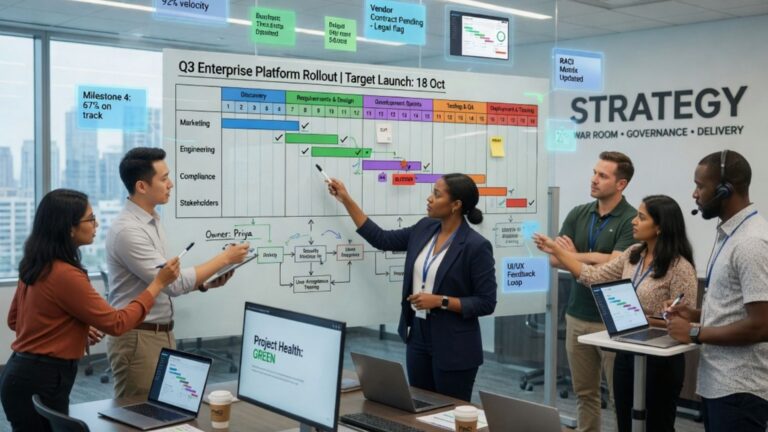
In the complex and high-stakes landscape of modern project execution, organizations require a structured, scalable, and highly governed approach to deliver outcomes on time and within budget. For professionals asking what is PRINCE2, the answer lies in a globally recognized project management methodology that provides a definitive framework for managing projects of varying sizes and complexities. Originally developed by the UK government, this methodology has evolved into an international standard for project governance. By focusing on business justification, clear role delineation, and stage-gated progression, it empowers organizations to mitigate risks and maintain strict project controls from initiation to closure.
Understanding the PRINCE2 Project Management Framework
The acronym stands for PRojects IN Controlled Environments. It is a process-based, highly structured project management framework that emphasizes the logical organization of a project into manageable, controllable stages. Unlike adaptive frameworks that rely on iterative software development cycles, this methodology is fundamentally product-based, focusing on the precise delivery of agreed-upon outputs.
When exploring what is PRINCE2, it is crucial to understand that it is not a rigid, monolithic rulebook. Instead, it is a flexible set of best practices designed to be tailored to the specific needs, scale, and risk profile of any given project. Whether an organization is constructing a new facility, implementing an enterprise IT system, or reorganizing a corporate structure, the framework provides the necessary scaffolding to ensure that every stakeholder remains aligned on the project’s objectives, timeline, and resource allocation.
The Core Philosophy of PRINCE2
The core philosophy of this project management methodology revolves around delivering products that realize tangible business benefits. It insists that a project must have a continued business justification; if the project no longer makes financial or strategic sense, it should be stopped. This focus on value creation and proactive risk management prevents the notorious “sunk cost fallacy” that plagues many failed initiatives. Furthermore, it separates the direction of the project from the day-to-day management, ensuring that senior management provides strategic oversight without micromanaging the delivery teams.
PRINCE2 vs Traditional Project Management
While traditional project management often focuses merely on the mechanics of scheduling and task execution, this framework elevates the discipline to a strategic level. It introduces the concept of “management by exception,” which establishes predefined tolerances for time, cost, quality, scope, benefits, and risk. If a project is progressing within these tolerances, the delivery team manages it autonomously. Only when a tolerance is forecasted to be breached does the issue escalate to the Project Board. This drastically reduces the time senior stakeholders spend in unnecessary meetings, allowing them to focus on strategic decision-making while maintaining robust project governance.
The Seven PRINCE2 Principles
The foundation of the methodology rests upon seven immutable principles. A project is not considered compliant with the framework unless it adheres to all seven. These principles provide the ethical and logical compass for project execution.
- Continued Business Justification: A project must have a valid business case that justifies the investment of resources. This justification must remain viable throughout the project’s lifecycle, and if it ceases to be viable, the project must be halted.
- Learn from Experience: Teams must document lessons learned at every stage and apply them to future work. This prevents the repetition of past mistakes and fosters a culture of continuous improvement.
- Defined Roles and Responsibilities: The framework mandates clear organizational structures. Every stakeholder must understand their specific authority, responsibilities, and who they report to, eliminating ambiguity and organizational conflict.
- Manage by Stages: Complex projects are broken down into distinct, manageable stages. Planning is executed one stage at a time, allowing for detailed planning in the immediate phase while keeping long-term planning at a higher, more flexible level.
- Manage by Exception: As detailed earlier, this principle empowers teams to manage within defined tolerances, only escalating issues to the Project Board when limits are forecasted to be breached, ensuring efficient use of executive time.
- Focus on Products: Unlike methodologies that focus on activities, this framework emphasizes the delivery of products. By defining the required outputs upfront, teams can ensure that all activities directly contribute to the creation of a tangible, quality-assured deliverable.
- Tailor to Suit the Project Environment: The methodology is designed to be scalable and adaptable. It must be tailored to the project’s size, complexity, importance, and the organizational context, ensuring that the bureaucratic overhead is proportionate to the project’s risk profile.
The Seven PRINCE2 Themes
While the principles dictate why a project is run in a certain way, the themes describe the specific aspects of project management that must be continually addressed. They provide the knowledge areas required to execute the project effectively.
The Business Case Theme
The Business Case is the most critical document in the framework. It establishes the justification for the project, detailing the expected benefits, costs, risks, and timeline. This theme ensures that the project remains a viable investment throughout its lifecycle, serving as the baseline against which all project controls are measured.
The Organization Theme
Effective project governance requires a clear structure. The Organization theme defines the roles and responsibilities of the project management team. It separates the project into three primary interests: the business (ensuring value for money), the user (representing those who will use the products), and the supplier (providing the resources and skills to create the products). The Project Board represents all three interests, while the Project Manager handles day-to-day coordination.
The Quality Theme
This theme ensures that the project’s products meet the expectations of the stakeholders. It outlines the quality criteria, the methods for testing and inspection, and the quality tolerances. By establishing a rigorous quality management approach early in the project lifecycle, teams prevent the costly rework associated with delivering non-conforming products.
The Plans Theme
The Plans theme provides the roadmap for the project. It defines the products to be produced, the activities required to create them, the estimated resources and timescales, and the dependencies. The framework utilizes a product-based planning technique, which starts by identifying the required outputs before scheduling the activities, ensuring that every task has a direct purpose.
The Risk Theme
Risk management is integrated into every facet of the methodology. This theme provides a systematic approach to identifying, assessing, and controlling both threats and opportunities. By quantifying risks and establishing risk budgets, the Project Board can make informed decisions about risk mitigation and contingency planning.
The Change Theme
Projects rarely proceed exactly as planned. The Change theme addresses how the project handles issues and requests for change. It establishes an issue and change control procedure that evaluates the impact of proposed changes on the project’s baselines (time, cost, quality) before they are approved, preventing scope creep and ensuring that the business case remains intact.
The Progress Theme
The Progress theme provides the mechanisms for monitoring and controlling the project’s advancement. It defines how performance is measured against the plan, how decisions are made regarding the continuation of the project, and how project controls are applied. This theme ensures that the Project Board receives accurate, timely information to make informed stage-gate decisions.
The Seven PRINCE2 Processes
The processes describe the chronological activities that must be executed throughout the project’s lifecycle. They define who is responsible for what and when.
- Starting Up a Project: This pre-project process ensures that the prerequisites for initiating the project are in place. It appoints the Project Board and Project Manager, creates the Project Brief, and plans the initiation stage.
- Initiating a Project: This process establishes the project’s foundations. It creates the Project Initiation Documentation (PID), which includes the Business Case, Project Plan, risk register, and quality management approach. The PID must be approved by the Project Board before the project can proceed.
- Directing a Project: This process runs concurrently with the other processes and describes the Project Board’s activities. The Board provides overall direction, authorizes initiation and stage boundaries, and makes the decision to close the project.
- Controlling a Stage: This process describes the day-to-day management of a delivery stage. The Project Manager assigns work, monitors progress, manages issues and risks, and reports progress to the Project Board.
- Managing Product Delivery: This process manages the interface between the Project Manager and the delivery teams. It ensures that the teams produce the required products to the specified quality standards, within the agreed time and cost tolerances.
- Managing a Stage Boundary: This process occurs at the end of each stage. The Project Manager updates the Business Case, reviews the Project Plan, and creates a detailed plan for the next stage. The Project Board uses this information to decide whether to continue the project.
- Closing a Project: This process ensures that the project is closed in a controlled manner. It verifies that the products have been accepted, updates the project records, and hands the products over to the operational environment. It also includes a post-project review plan to assess whether the benefits are realized.
The Advantages of Implementing PRINCE2
Organizations that adopt this methodology realize significant operational and strategic advantages, particularly in industries where project governance and regulatory compliance are paramount.
Enhanced Project Governance and Control
The framework’s emphasis on management by exception and clear role delineation provides unparalleled project controls. Senior stakeholders are not burdened with micromanagement, yet they are assured that they will be alerted immediately if a project deviates from its baseline. This robust governance model is particularly attractive to public sector organizations and heavily regulated industries.
Improved Resource Allocation and Communication
By utilizing a product-based planning approach, teams can accurately identify the exact resources required to deliver specific outputs. Furthermore, the standardized terminology and documentation ensure that communication across departments and teams is precise, eliminating the misunderstandings that often derail large-scale initiatives.
PRINCE2 Certification Pathways
For professionals seeking to validate their expertise, the certification framework offers a structured progression. The PRINCE2 certification is globally recognized and highly sought after by employers across all sectors.
PRINCE2 Foundation
The Foundation level is the entry point. It provides an introduction to the methodology, ensuring that candidates understand the principles, themes, and processes. It is designed for individuals who will be working on a project team or who require a basic understanding of the framework’s terminology and structure.
PRINCE2 Practitioner
The Practitioner level is the advanced certification. It tests a candidate’s ability to apply the methodology to a real-world project scenario. Candidates must demonstrate their ability to tailor the principles, themes, and processes to suit the specific context and risk profile of a given project. Achieving Practitioner status signifies a high level of competence in project management.
Integrating PRINCE2 with Agile Project Management
As the business landscape increasingly demands rapid delivery and flexibility, the integration of traditional governance with agile delivery has become a strategic imperative.
The PRINCE2 Agile Framework
To address this need, the PRINCE2 Agile framework was developed. It demonstrates how the robust governance, business justification, and project controls of the traditional methodology can be seamlessly combined with the iterative, collaborative, and fast-paced delivery mechanisms of agile project management. This hybrid approach allows organizations to maintain strategic oversight and financial control while empowering delivery teams to use agile techniques like Scrum and Kanban to accelerate time-to-market.
Conclusion: The Strategic Value of PRINCE2
For organizations struggling with project delivery, the question of what is PRINCE2 is often the gateway to operational transformation. It is not merely a set of templates, but a comprehensive project management methodology that embeds rigorous project governance, financial accountability, and strategic alignment into the DNA of project execution. By mastering the principles, themes, and processes, and by pursuing PRINCE2 certification, professionals can ensure that their projects deliver measurable value, remain within tolerance, and successfully navigate the complexities of modern business environments. Ultimately, the framework provides the certainty and control required to turn ambitious strategic visions into tangible realities.
Frequently Asked Questions (FAQs)
1. What is PRINCE2 in project management?
It is a globally recognized, process-based project management methodology that provides a structured framework for managing projects of any size, focusing on business justification, clear roles, and stage-gated delivery.
2. What are the 7 principles of PRINCE2?
The seven principles are continued business justification, learn from experience, defined roles and responsibilities, manage by stages, manage by exception, focus on products, and tailor to suit the project environment.
3. What is the difference between PRINCE2 and Agile?
PRINCE2 is a structured, product-based framework focused on project governance and control, whereas Agile is an iterative, collaborative approach focused on flexible software delivery; they can be combined using the PRINCE2 Agile framework.
4. Who should get PRINCE2 certification?
Project managers, team leads, and aspiring project professionals seeking to validate their expertise in structured project governance and improve their career prospects in various industries should pursue the certification.
5. What does “manage by exception” mean in PRINCE2?
It is a control mechanism where the Project Board sets tolerances for time, cost, and scope; the Project Manager only escalates issues to the Board if these tolerances are forecasted to be breached.
6. Is PRINCE2 only for IT projects?
No, while it was originally developed for IT, it has been updated and tailored to be a universal project management methodology applicable to construction, finance, healthcare, and public sector projects.


